Water supply problems from Kerry to Norway show our planet is under pressure
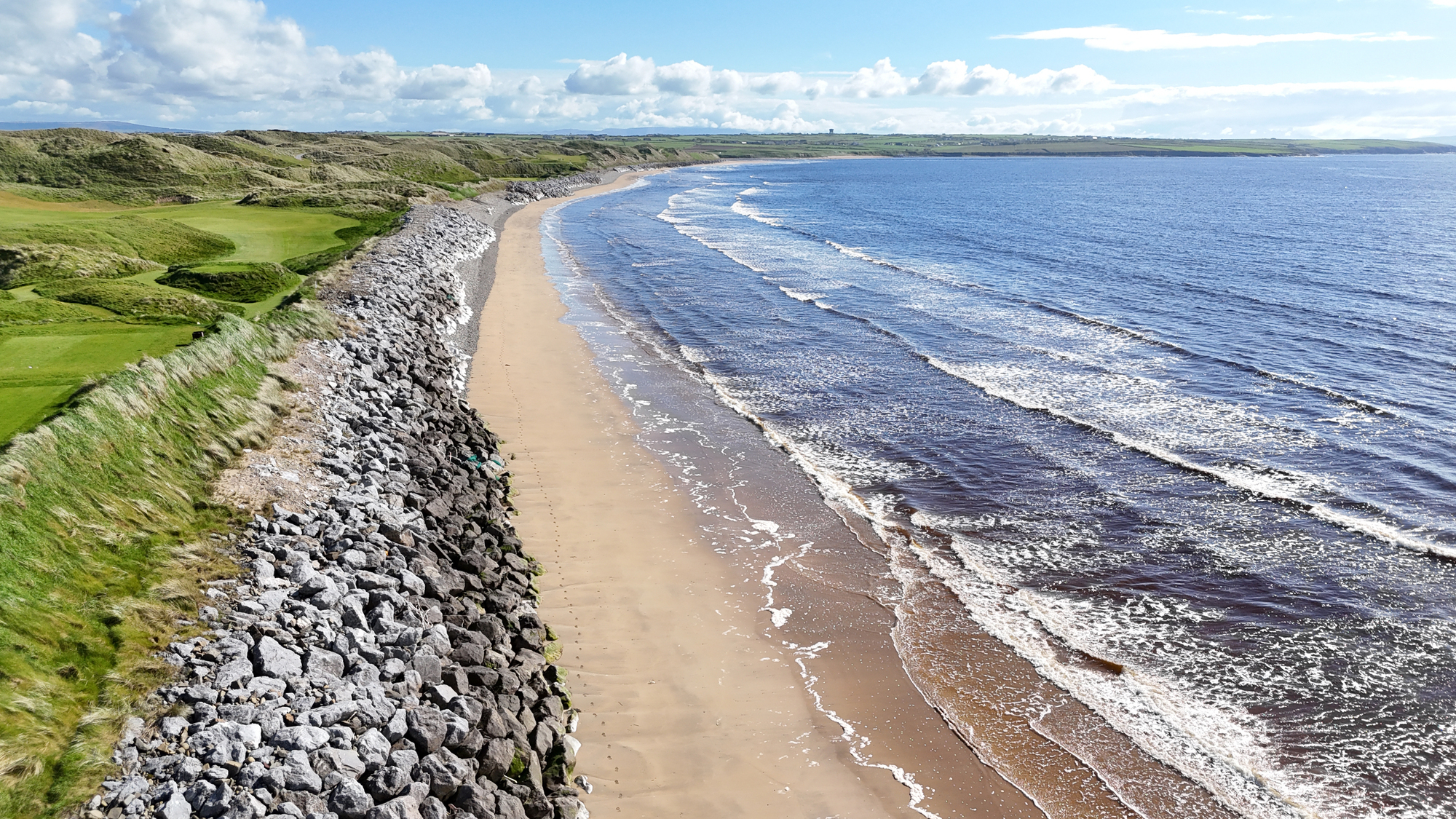
As climate change accelerates, it is expected that freshwater reserves in as many as three quarters of coastal regions around the world will become contaminated, presenting grave threats to water security and agriculture in heavily populated coastal regions. File picture: Larry Cummins
As the dust began to settle over Europe after the chaos and slaughter of the Great War, English novelist HG Wells memorably described human history as becoming "more a race between education and catastrophe".
A century later, does it feel like we’re winning? While the guns are silent, at least over western Europe, the killing continues, but this time the enemy is invisible — yet all around us.
This summer, more than 50,000 people died as a result of deadly heatwaves sweeping the continent, with the majority of fatalities directly attributable to the burning of fossil fuels.
Yet there are no monuments to these victims, no parades, no pageantry and no reckoning. They mostly died at home or in hospital, indistinguishable at first glance to any ordinary deaths.
And unlike previous wars, we are all both victims and culprits, living through the early stages of the most tumultuous period in modern Earth history, a brief few decades in which time human activity has fundamentally altered the basic chemistry of an entire planet.
In the process, we have inadvertently brought a long era of remarkable climatic stability — the very conditions that facilitated the development and flourishing of human civilisation — to an abrupt end.
Read More
The war this time is a war without end, one in which, ultimately, everyone loses. It is the undeclared war being waged by industrial civilisation against the living world.
The signs are everywhere. Sometimes, as in the recent catastrophic glacier collapse and landslide in Nepal, they are brutal and sudden, but more often, they are subtle, as in the recent case in Longyearbyen, a town in northern Norway. Here, rapidly thawing permafrost has leached heavy metals, contaminating the town’s water supply.
Closer to home, the telltale signs of climate breakdown are all around. Last month, UCC researchers produced the first map detailing how exposed parts of Ireland’s coastline are to climate hazards, including rising sea levels and increased storminess.
Densely populated coastal areas of Dublin, including Sandymount, Blackrock and Clontarf, were identified as being at high risk, as were areas of Galway city that are home to almost 10,000 people.
Earlier this month, Uisce Éireann confirmed that tap water in Ballyheigue in north Kerry had become contaminated as a result of what is understood to be Ireland’s first major instance of “saltwater intrusion”, where sea water infiltrates freshwater aquifers.
As climate change accelerates, it is expected that freshwater reserves in as many as three quarters of coastal regions around the world will become contaminated, presenting grave threats to water security and agriculture in heavily populated coastal regions.
The 2026 ‘State of the climate’ report was published in recent weeks and it painted a stark picture. “We are witnessing the rapid destabilization of the Earth’s climate system. This is no longer a warning for the future; it is a diagnosis of the present”, the scientists wrote.
Despite these overwhelming and well documented threats, the gap between scientific understanding and political and societal response is becoming a gaping chasm. From its apex around 2019, public and political engagement on the climate and ecological emergency has plummeted, which is all the more ironic given that the crisis itself is clearly gathering pace.
The 2020s opened with the first global pandemic in a century, then hurtled into the first major war on European soil in 80 years. The rapid resurgence of far-right politics, fuelled by the poisoning of social media and the spread of artificial intelligence controlled by malign billionaire tech oligarchs has created a rich breeding ground for disinformation.
How else to explain how the dire warnings of the scientific community are still going unheeded, even as we see every day in real time the unassailable evidence that our climate system is unravelling.
Ireland has, thus far, been largely shielded from the worst extremes of either weather or politics.
This has, I suspect, led to widespread complacency.
At an international conference on the bioeconomy I attended last week, Taoiseach Micheál Martin remarked that, weather-wise, “we’ve had a great summer”.
Technically speaking, he is not wrong. The summer of 2026 was the hottest ever recorded, leading to widespread and persistent drought conditions across much of the east and south of the country.
Many farmers in particular did not, in fact, have a great summer.
The Taoiseach’s apparent insouciance in the face of our rapidly shifting climate is indicative of his government as a whole.
Between increasing fares for public transport while jacking up fossil fuel subsidies and scrapping the carbon tax, lifting the Dublin Airport cap and promoting data centres while trying to gut the Climate Act, it is clear that this government is completely out to lunch on the gravest crisis of the 21st century.
This year is also the first time on record that temperatures have breached 30C in Ireland for four consecutive months.
While this may feel “great” to some, the same conditions brought lethal heat across much of Europe, with wheat production in France down over seven million tonnes as a result of scorching temperatures.
England, meanwhile, just had its worst harvest on record, while every year since 2020 has seen poor UK harvests due to extreme weather.
A popular meme to represent humanity’s reaction to the climate crisis is that of the frog sitting in a pan of cold water on a stove. As the water begins to warm, the frog may, at first, actually enjoy the warmer temperatures.
However, as the heat increases, the frog fails to react, having become acclimatised to the gradually heating water — until it is too late (frogs, in fact, will sensibly hop out of water once it exceeds 25C).
We’re a lot smarter than frogs, so surely humans would also react to dangerous if insidious changes in our environment? Apparently not. This may be accounted for by a phenomenon known as the shifting baseline syndrome.
For example, our ancestors would have shared the Irish countryside with a vast range of flora and fauna. Several generations later, and much of it has disappeared. So too have the people who remember it as it was.
Many people living in the ecological wasteland that is rural Ireland today or fishing our drastically depleted waters likely have no idea just how much has been lost, and are often indignant when ecologists simply point this out.
A silent apocalypse has already laid waste to much of the natural world, yet we have barely noticed. Consider that at the end of the last Ice Age, humans and our livestock comprised less than 1% of global mammal biomass.
Today, we account for 96%, while countless wild species have either been wiped out or radically diminished in a man-made mass extinction event unparalleled in the last 65 million years.
The irresistible force of human progress is now barreling headlong towards the immovable object of absolute planetary limits. Buckle up for what’s ahead.
- John Gibbons is an environmental journalist and author of

CLIMATE & SUSTAINABILITY HUB
CONNECT WITH US TODAY



Be the first to know the latest news and updates