Rural Ireland Thinks: Just over half of people in rural Ireland consider themselves religious
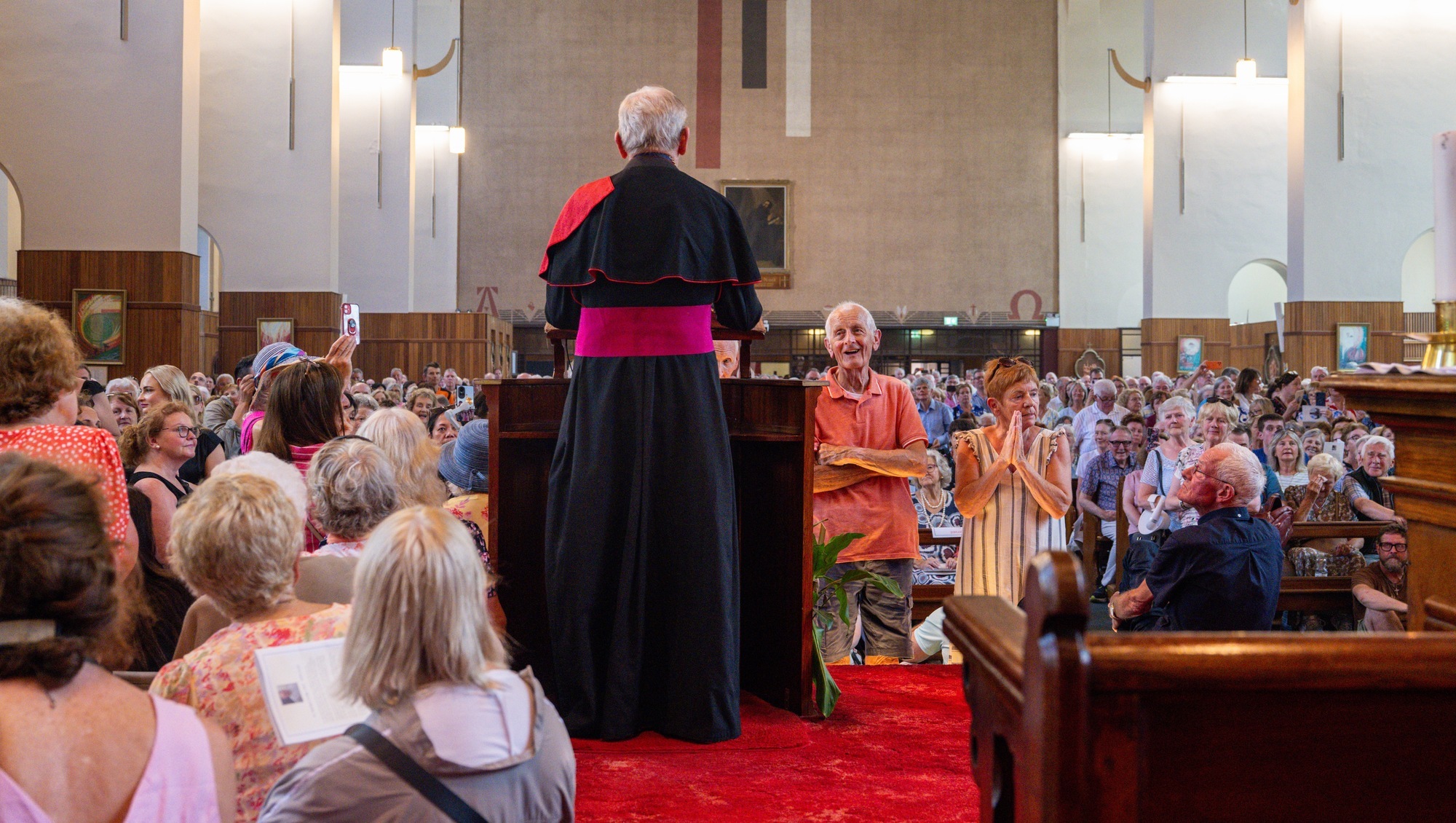
Thousands attended the final Mass at St Augustine’s Church in Cork this summer. Picture: Chani Anderson
Every weekend, the pews of churches across the country play host to the faithful.
But the words of the Catholic hymn are beginning to mean less and less, as falling congregation numbers and a fall off in vocations are in direct opposition to the lyrics of the hymn, which proclaimed faith continued to flourish “in spite of dungeon, fire and sword”.
The days of the penal laws, when Irish Catholics gathered in secret to take part in Mass at rocks dotted across the country, are far behind us.
The Irish Examiner's Rural Ireland Thinks poll, carried out by IPSOS/B&A, shows just 57% of people surveyed consider themselves to be religious, with the highest proportion in the 65+ age cohort (78%).
By contrast, 47% of those aged between 16 and 24 years old consider themselves to be religious, dropping to 34% of people between the ages of 25 and 34.
Geographically, 66% of respondents from Connacht/Ulster consider themselves to be religious, with 57% of Munster respondents and 47% of those in Leinster signalling they considered themselves religious.
Meanwhile, just over a third of respondents said they attended Mass weekly, at 34%.
Read More
When broken down, the least likely to attend Mass were those in the 25 to 34 year age bracket (13%), followed by those in the 35-39 year age cohort (21%) and the 16 to 24 years age group (26%).
The highest rate of Mass attendance was reported by those in the Connacht/Ulster region, with 44% saying they attended Mass weekly.
In the most recent census, undertaken in 2022, more than 3.5 million Roman Catholics were recorded — accounting for 69% of the population.
This showed a 10% reduction compared to the 2016 census.
The next largest religious grouping in Ireland is Church of Ireland/England, Anglican and Episcopalian, which accounted for 124,749 people, an increase of 2% since 2016.
However, the number of people recorded as having no religion was more than 14% of the population, standing at 736,210.
The growing secularisation of Ireland was reflected earlier this year when the Department of Education published the findings of its primary school survey, which found four in 10 parents whose children attended religious-run schools wanted the option of sending their child to a multi-denominational school.
More than 200,000 households participated in the survey.
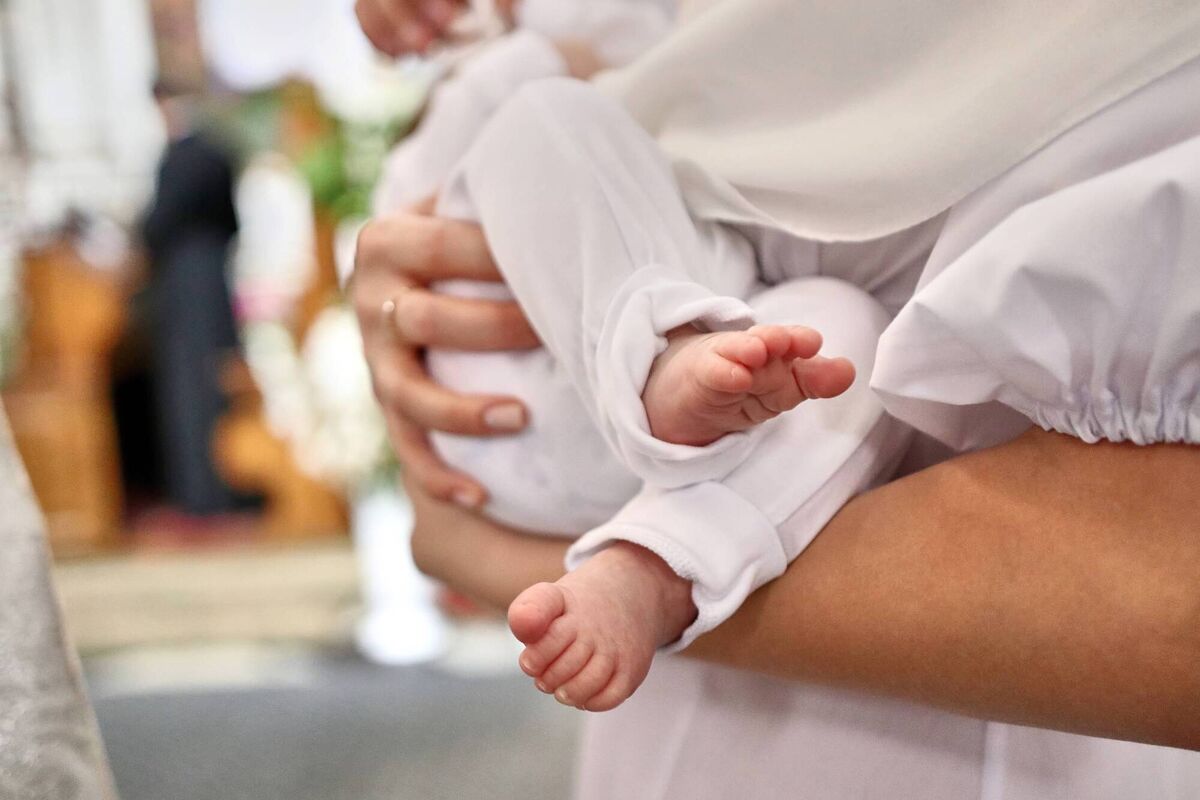
The findings from a paper by the Iona Institute last month also showed secularisation was one of the main contributors to a falling number of baptisms in Ireland.
The institute said over the past 10 years, the number of baptisms taking place annually had fallen by 30%.
“The research finds that the two big drivers of the decline are falling births, and rising secularism. Falling births account for about 60% of the decline, with the rest accounted for by secularisation,” it said.
“We can also see from the baptism figures obtained that there is considerable regional variation in the trend. Dublin archdiocese has seen a 40% fall in the last 10 years, whereas in Kerry diocese the fall has been 22.3%.”
Despite the overall trends, one-off religious events still appear to attract enthusiastic crowds in Ireland, such as when the relics of Saint Carlo Acutis, known as ‘God’s influencer’, were brought to Cork earlier this year.
People flocked to visit the relics at Saints Peter and Paul’s church, while thousands of people of all ages also attended the 100th annual Eucharistic Procession.
Huge crowds also attended the final Mass at St Augustine’s Church on Washington Street in Cork in July.
The church closed after the decision was taken by the Augustinian order due to falling vocations.
Bishop of Cork and Ross, Fintan Gavin, said his own experience, particularly in his current diocese, had been one of meeting young people who “are asking serious questions about faith, meaning, purpose and how they want to live their lives”.
“What I find very encouraging is the depth and intentionality of many of the young people who do engage. They are not simply participating because it is expected of them. They are choosing to explore their faith and, in many cases, wanting to go deeper.
"We see that in our young adult Masses and community retreats, pilgrimages, Youth 2000, Alpha and other opportunities where young people can pray, ask questions, build friendships and encounter Christ.”
He stressed the current situation within the Catholic Church was not one of decline.
“We may be moving from a culture in which faith was largely inherited to one in which it increasingly has to be personally chosen.
"That presents a real challenge to the Church, but also an opportunity. Our task is to listen, to meet people where they are, and to create places where they can genuinely encounter Christ and discover what faith might mean in their own lives. What I am seeing among many young people gives me real hope."
Fr Tim Hazelwood of the Association of Catholic Priests, who ministers in Killeagh in East Cork, acknowledged some younger people were turning to faith but said this was not a big number.
He said the falling numbers attending Masses was not a surprise as “we are looking at it every week”.
In July, the Bishop of Clogher, Larry Duffy, said statistics for his diocese showed 53% of priests there were aged over 70 years.
He said while some are retired fully, others remain in active ministry, often on a part-time basis.
Bishop Duffy’s diocese is one of many to turn to other countries for priests to fill the spaces left in Ireland by a changing and more secular society.
Earlier this month, an orientation course was held in Meath for priests and religious from countries including Nigeria, India, Sri Lanka, Kenya, South Korea, the Philippines, Tanzania and Zambia, to equip them with the pastoral and cultural insight for serving and living in Ireland.
However, Fr Hazelwood believes the church should be looking internally in Ireland to fill the gaps.
“What we are doing is adding more layers of clericalism like we did when we added deacons, instead of allowing people, women, a more active role in the church. I would see it as being no change — we are only upholding what is there already.
"Some people would prefer to bring in someone from outside rather than change. There should be women deacons but there isn’t. That is closed.
"The same about women’s ordination — that is not on the agenda. Do I think it is a good thing — priests coming in? I don’t really.
"If the women doing the work in parishes stopped, we would close down completely.
"It is women who are doing the catechesis in the parishes.”
- The Rural Ireland Thinks survey was funded by the News Reporting Scheme
CONNECT WITH US TODAY



Be the first to know the latest news and updates