TP O'Mahony: The Vatican has never hesitated in serving its own interests
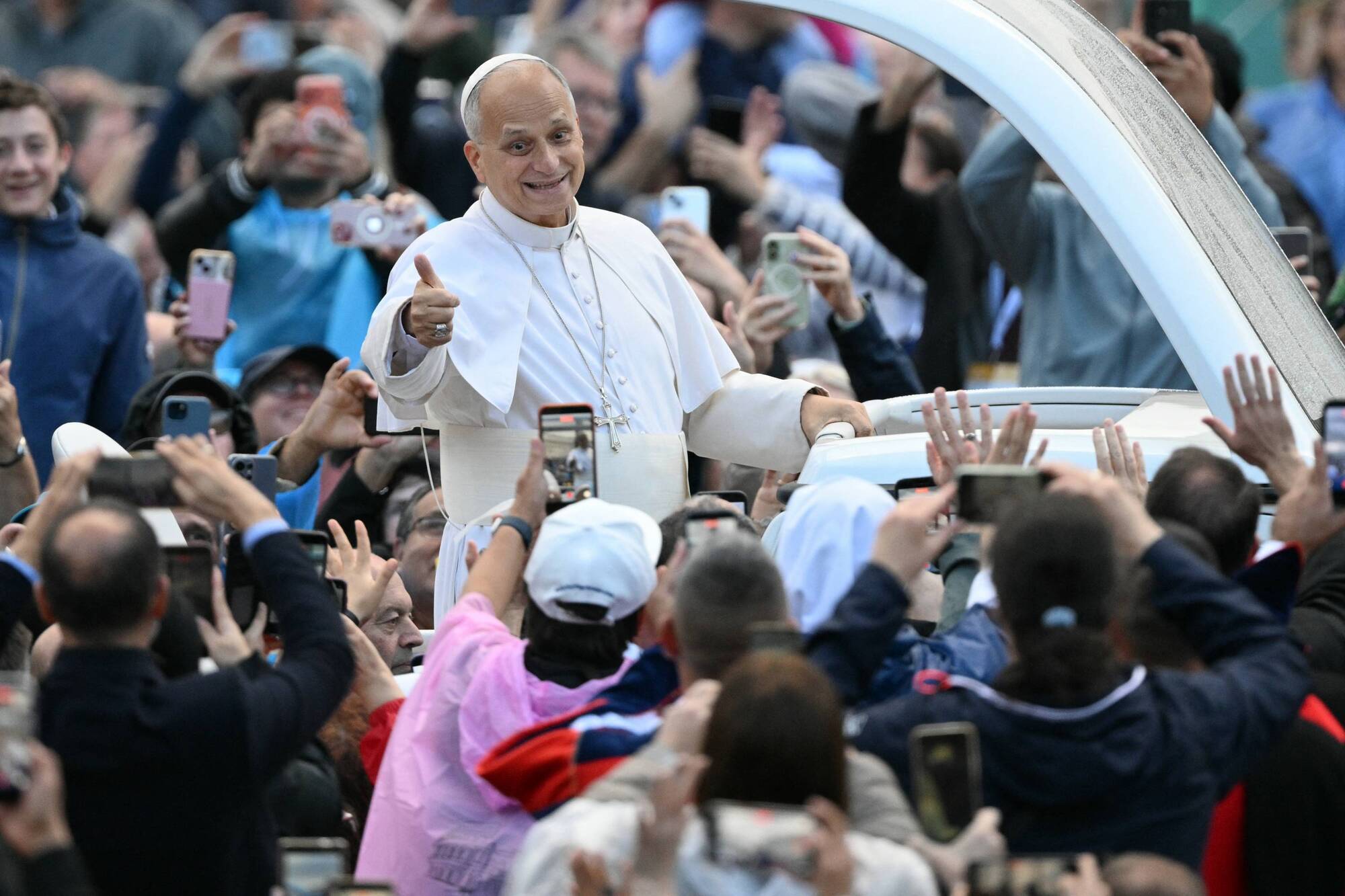
Pope Leo XIV: There is more than a grain of truth in Trump’s claim that: 'He wouldn’t be in the Vatican if I wasn’t in the White House'. Picture: Tiziana Fabi/AFP via Getty Images
In an age which has witnessed the rise of the far right and authoritarian regimes that are openly anti-democratic and often foster violence, the words “fascist” and “fascism” are back in vogue.
Most of us tend to associate fascism with the 1920s and 1930s and with the post-First World War socio-political upheavals in Germany and Italy, and the resulting power grabs by Adolf Hitler and Benito Mussolini.
These traumatic changes happened earlier in Italy, where Mussolini came to power in a coup known as the “March on Rome” in 1922. It was just over a decade later before Hitler ascended to supreme power when he was appointed chancellor in January 1933 following the collapse of the Weimar Republic.
For the papacy, the challenges the emergence of fascism in Europe would pose acute moral problems — made all the more onerous by the pope’s dual role as spiritual leader and head of state. To secure the future of the latter in the uncertain conditions of the 1920s would involve dealing with dictators.
This was considered the only means open to Pius XI, who was pope from 1922 to 1939, of securing a solution to the 'Roman Question'. And doing a deal with Mussolini would prove to be the key to that.
The Roman Question had bewitched the papacy since 1870. After the unification of Italy following the success of a campaign (the Risorgimento in 1860-70) led by Garibaldi, Cavour and Mazzini in in that year, the pope lost all territory which he had governed — the papal states.
History has shown unmistakably, graphically — and shamefully — that there is a dark side to the papacy. And one doesn’t have to assume evidence for this is confined to the era of Pope Alexander VI (1492-1503) and the Borgias.
In much more recent times the papacy has been compromised by morally dubious dealings. It has “flirted with evil” — to quote the title of a new book on the Catholic Church — in the age of total war and globalisation.
To be mindful of this, we need only recall that when Jorge Mario Bergoglio was elected pope in 2013, taking the name of Francis, an old friend rang from Argentina. “Remember Jorge, the Borgias are still in the Vatican.” “I know,” replied the new pope.
Read More
The reference was to a notorious family who dominated Rome in the decade bridging the end of the 15th and the beginning of the 16th centuries. If you have seen any episode of (starring Jeremy Irons as Alexander VI and, coincidentally, scripted by our own Neil Jordan) you’ll have some idea of the bloody intrigue that brought Rodrigo Borgia to the chair of St Peter.
Such was the skullduggery rife during that period it would not be inaccurate to say there were tyrants both within and outside the walls of the Vatican.
Even Alexander VI’s daughter, Lucretia, was not above suspicion of being implicated in a plot to poison one of her father's rivals, which is why she had the reputation of being a femme fatale — not above resorting to murder to advance her family’s ambitions.
Fascism as a form of tyranny has resurfaced in the modern world, but it was the period between the First World War and the Second World War that proved to be most damaging to the moral authority and international standing of the papacy.
Allied to a cult of personality, as we saw in the examples of Hitler, Mussolini, and Franco, and Vidkun Quisling in Norway and Antonio Salazar in Portugal, fascism took another form in Central and South America and in Africa, such as the brutal military dictatorships headed by Batista in Cuba, Somoza in Nicaragua, Pinochet in Chile and tyrants like Mugabe in Zimbabwe and Gaddafi in Libya.
According to the , fascist movements “were all strongly nationalist, violently anti-communist and anti-Marxist; all hated liberalism, democracy and parliamentary parties, which they sought to replace by a new authoritarian state in which there would only be one party, their own, with a monopoly of power, and a single leader with charismatic qualities and dictatorial powers”.
Fascist policies and programmes were unconstrained by any regard for human rights, traditional morality or international law.
US president Donald Trump, in recently banning news outlets CNN, Politico and MS Now from the White House because he objected to their reporting, is displaying these characteristics, in this and in other respects.
This is a fact that may well have influenced the cardinals in electing Robert Prevost as Pope Leo XIV in May 2025 — so that there is more than a grain of truth in Trump’s claim that: “He wouldn’t be in the Vatican if I wasn’t in the White House”.
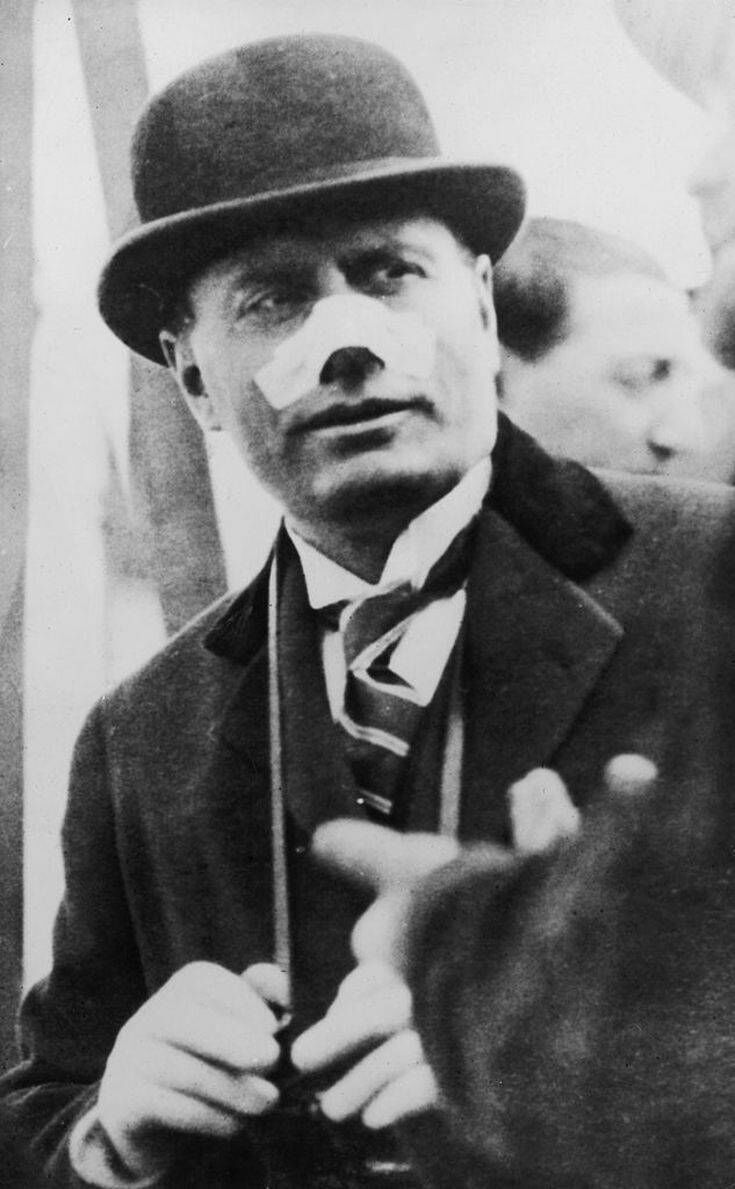
But it was in the period from 1920 up to the end of Second World War in 1945 that the papacy faced the greatest challenge from fascism — a challenge that revealed a willingness on the part of the papacy to resort to a deeply compromising response in order to preserve its own prestige and power. It showed popes were only too ready to place realpolitik above morality.
This was seen above all in the concordats negotiated with Hitler, Franco and Salazar and in the Lateran Treaty negotiated with Mussolini in 1929. This ended the stand-off between the Vatican and the Italian state following the reunification of Italy in 1870, an act which had necessitated the confiscation of the papal states in the middle of the country.
That treaty had three parts: (a) a financial settlement; (b) a concordat, and (c) a territorial agreement under which the Vatican was recognised as a sovereign, independent state (consisting of 108.7 acres) in the heart of Rome.
But the effect, as with the deals involving Hitler, Franco and Salazar, was to give vital legitimacy and support to brutal regimes that had shown scant regard for democracy and human rights.
“The fact that support for fascism meant supporting a dictatorship, and hence dealing a mortal blow to Italian democracy, presented no problem to Pius XI or his secretary of state,” according to Carlo Falconi, author of . Both of them despised democratic forms of government.
“The Vatican had much more in common with the fascist state than with the earlier liberal regimes,” explained Anthony Rhodes in his book .
Circumstances may have forced the papacy to come to terms with democracy — grudgingly, because concepts like “equality” and “democracy” directly challenge the papacy’s claim to autocratic power and its commitment to a male-dominated hierarchical structure — but this was a process that didn’t really begin until the end of World War II in 1945.
And even today, with an American pope (who is now recovering after an operation for lung cancer and who grew up in country that traditionally presented itself to the world as a beacon of democracy) in Rome, the Vatican will not hesitate to side with rich and the powerful regimes (however corrupt and anti-democratic) if that will preserve its power.
Fr Hans Küng, the Swiss theologian who died in 2021, has aptly summed it up: “Just as we have seen over many centuries — in the east-west schism of the 11th century, in the 16th century Reformation and in the First Vatican Council in the 19th century — the Roman thirst for power divides Christianity and damages its own church. It is a tragedy”.

CONNECT WITH US TODAY



Be the first to know the latest news and updates