Rural Ireland Thinks: Just 13% of 25-34-year-olds attend Mass weekly
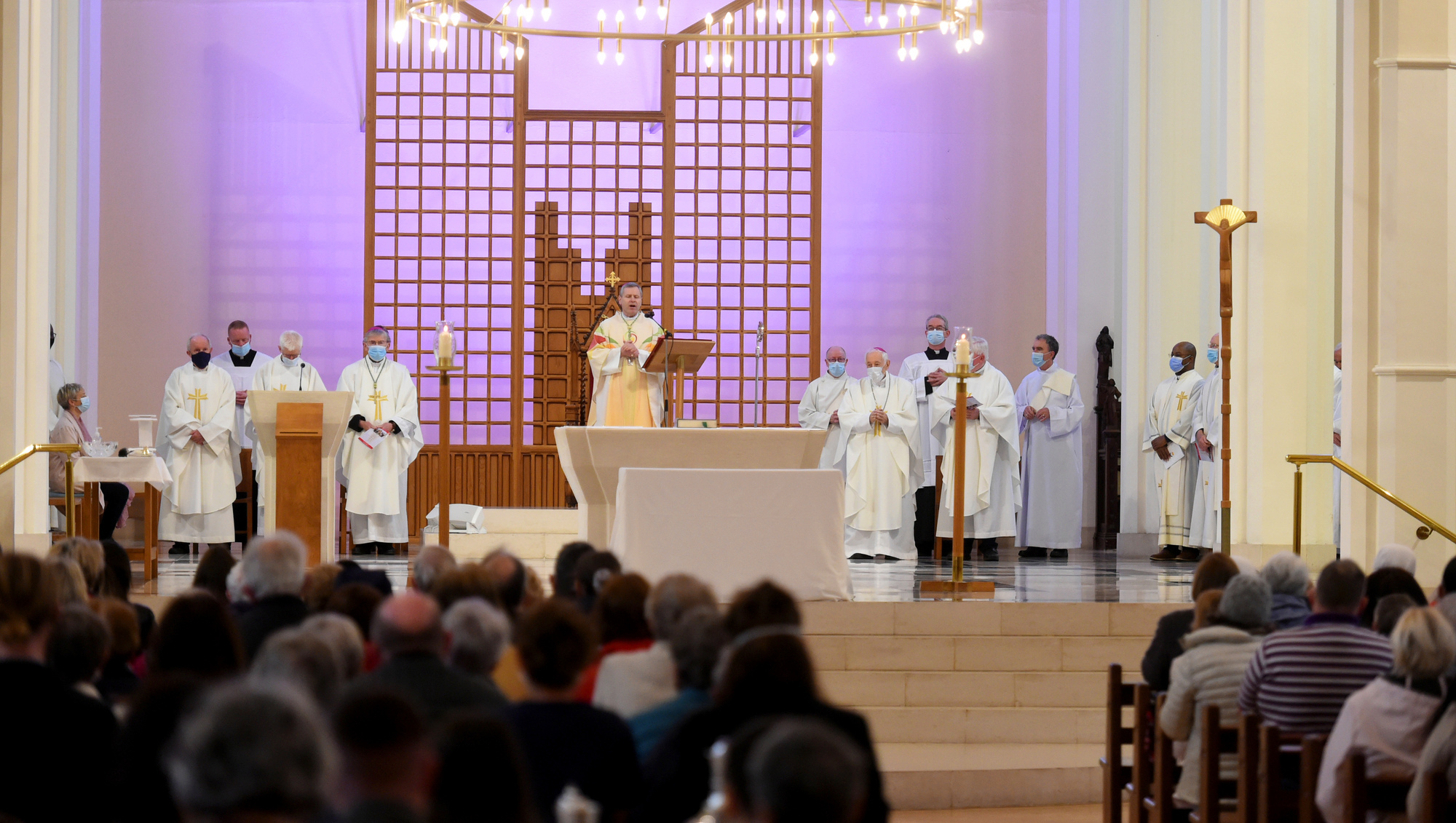
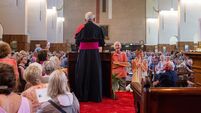
Bishop Fintan Gavin at the Chism Mass at the North Cathedral, Cork on Holy Thursday. Picture: Larry Cummins
Just over a tenth of 25- to 34-year-olds now attend Mass weekly in rural Ireland, a new poll has found, while the shortage of priests has sparked renewed calls for women to be given a greater role in the Church.
The Ipsos/B&A survey of people living in rural Ireland, undertaken for the , also found that more than half of respondents (57%) consider themselves to be religious.
Overall, the poll shows that 34% of people in rural communities go to Mass weekly, but the percentages vary widely, with the youngest and oldest respondents showing the highest attendance.
Just 13% of people aged between 25 and 34 said they are weekly church-goers, but the figure was 26% for the youngest cohort surveyed, those aged 16 to 24.
The poll found that the highest weekly Mass attendance, at 65%, was in the 65+ age group.
Of people living in rural Leinster, just 25% attend Mass weekly, the lowest figure of all regions, with the highest attendance in Connacht/Ulster, where 44% of those surveyed attended weekly services.
The 57% of people who said they considered themselves to be religious was roughly on a par with a similar poll conducted in 2024.
A higher percentage of women (62%) consider themselves to be religious than men (52%).
Of those who attend Mass weekly, 58% said religious services have been curtailed in their area, mainly due to priest shortages.
Read More
Fr Tim Hazelwood, a member of the Association of Catholic Priests, who ministers in Killeagh, Co Cork, said the statistics on declining Mass attendance are no surprise to him because “we are looking at it every week”.
Fr Hazelwood said the Catholic Church must embrace more participation by lay people in the Church, especially women, to help address the increasing workload on priests because of falling vocations in Ireland.
He said: “You have parishes with no priests and they’re getting older, retiring — they are not able to do what they have to do.
“There is huge pressure on older priests now, and the expectations are higher because, before, you had others to help you out, but now you don’t.
“To get someone to cover you for holidays is getting more challenging. It is changing.”
Fr Hazelwood said the use of priests from other countries in Ireland is only “adding more layers of clericalism, like we did when we added deacons, instead of allowing people, women, a more active role in the church.”
He added: “Some would prefer to bring in people from outside rather than change.
“There should be women deacons, but there aren’t. That is closed. It’s the same about women’s ordination — that is not on the agenda.
“Do I think it is a good thing, priests coming in [from other countries]? I don’t, really.”
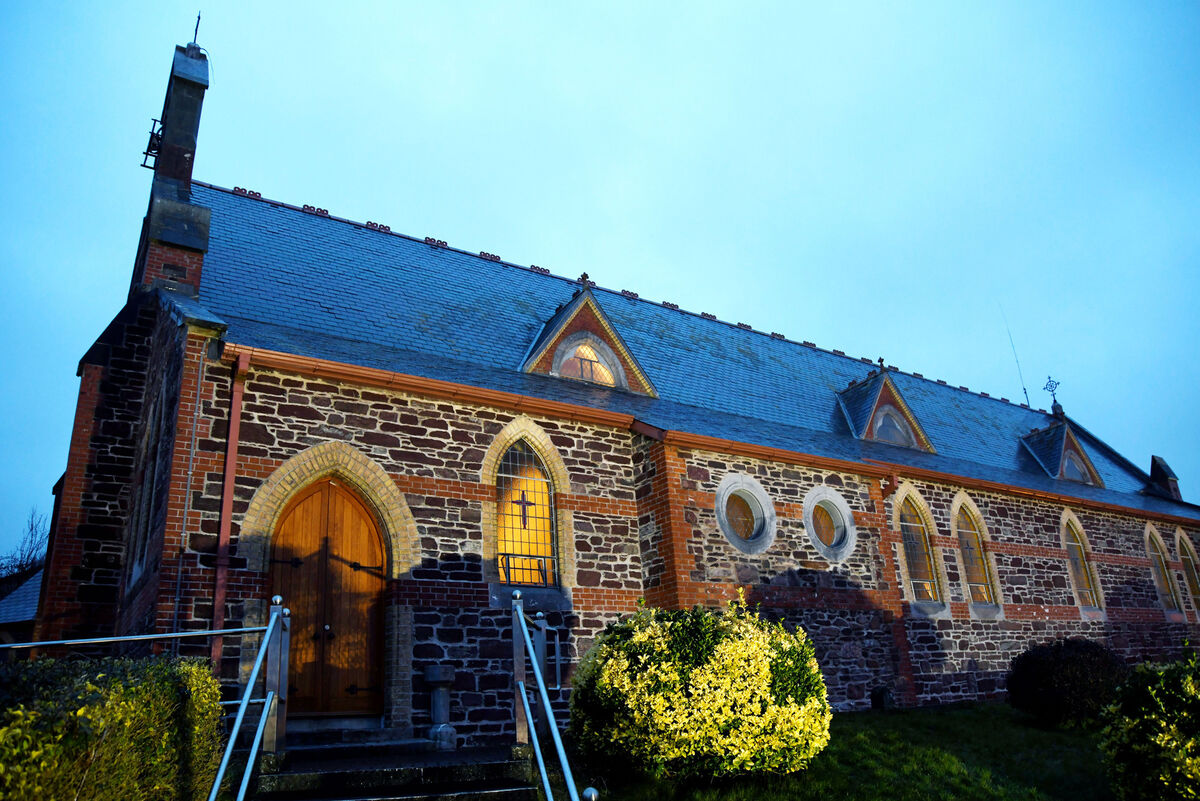
He said women are already doing much of the background work in local churches.
“If the women doing the work in parishes stopped, we would close down completely,” he said.
“Tonight, we have a meeting about First Communion, and it will be two women who will present the programme that we are doing.
“It is women who are doing the catechesis in the parishes.”
He said he hopes that lay people, especially women, would be able to play a more active role in Church life, adding: “Men can go forward as deacons, but women are excluded. It is not acceptable anymore.”
Fintan Gavin, Bishop of Cork and Ross, said the poll figures “reflect a very real change in religious practice in Ireland, and we should not underestimate that”.
He added: “In many places, particularly in rural communities, fewer priests and changing patterns of parish life also mean that the number of Masses and other services cannot simply remain as they were in the past.”
He said that while the Catholic Church may not be seeing the same numbers of worshippers or the same patterns of practice as before, “what I find very encouraging is the depth and intentionality of many of the young people who do engage”.

CONNECT WITH US TODAY



Be the first to know the latest news and updates