Maeve Monaghan: Disabled talent could be key to solving Ireland's labour shortages
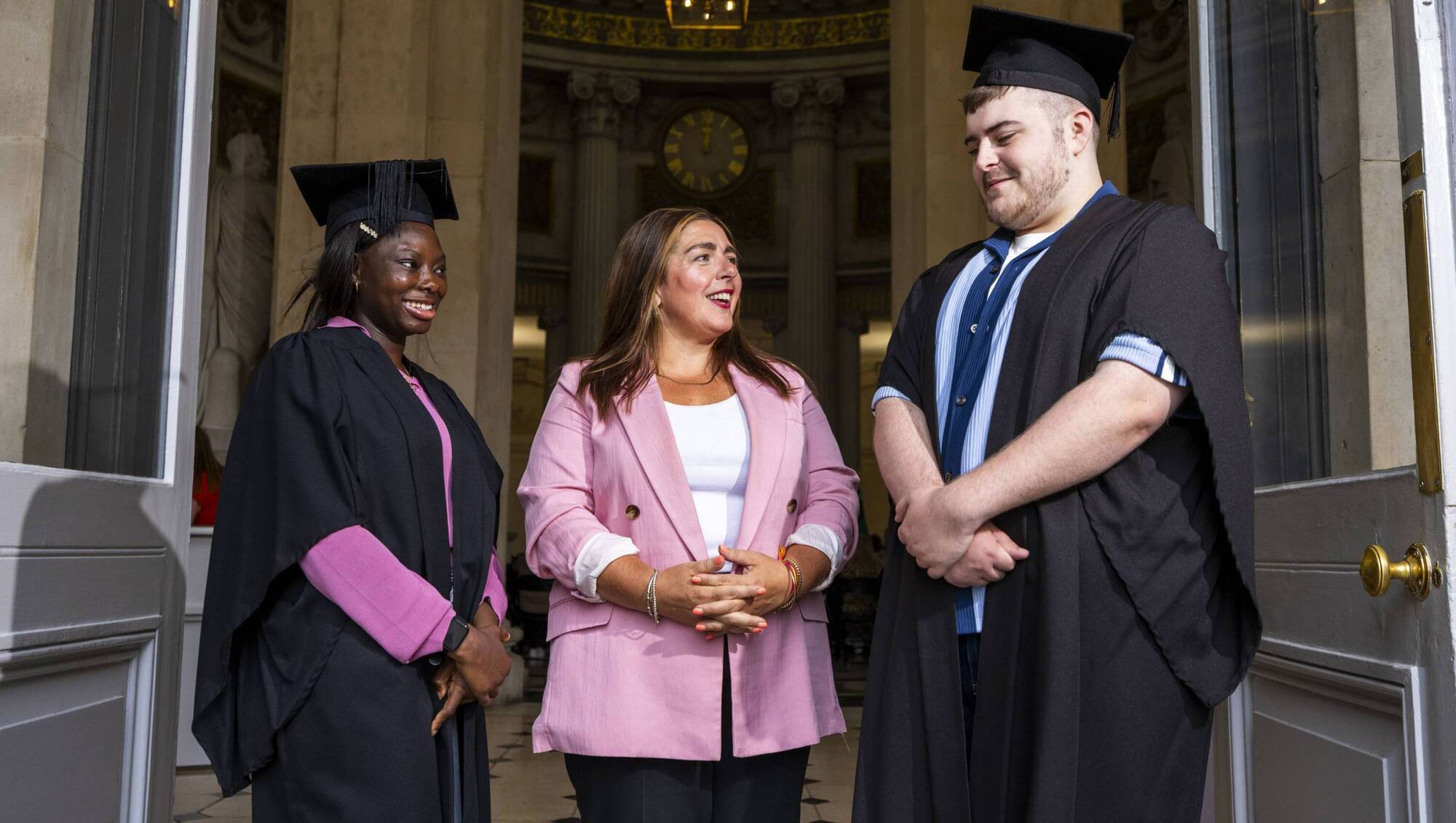
Precious Adesina and Jamie Noonan with NOW chief executive Maeve Monaghan at the NOW Group graduation ceremony in Dublin City Hall. Picture: Fintan Clarke/Coalesce
Businesses have spent the past number of years warning about recruitment difficulties. According to the Central Statistics Office, more than eight in 10 employers are struggling to find the skills they need. From hospitality and retail to financial services and logistics, the conversation has centred on labour shortages, skills gaps and an increasingly competitive jobs market.
Yet thousands of people with disabilities remain outside the workforce, not because they lack ability, but because too many recruitment systems still fail to recognise their potential.
We should stop treating these as separate issues.
In July, 120 people with learning difficulties or who are neurodivergent graduated from NOW Group’s employment programmes at Dublin City Hall. For them, it marked the end of months of training and the beginning of new careers.
For Irish employers, it should be a reminder that one of the country’s biggest workforce challenges isn’t a lack of talent — it’s where we’re looking for it.
Businesses that continue to recruit from the same traditional talent pools will continue to compete for the same people. Those willing to broaden their approach are already finding skilled, committed employees that others have overlooked.
Companies we’ve worked with in this space, including Circle K, Aviva and Boojum, have embraced more inclusive recruitment, not because they were looking to meet a target, but because they needed skilled people. What they discovered was that relatively small adjustments to recruitment and onboarding could unlock a pool of candidates who are loyal, capable and eager to contribute.
Read More
Those adjustments are rarely complicated.
It might mean offering interview questions in advance, focusing on practical assessments instead of traditional interviews, providing clearer induction processes or giving managers the confidence to support different communication styles. These are changes that improve recruitment for many candidates, not just disabled applicants.
It’s the reason why NOW Group programmes are designed around sectors experiencing genuine recruitment challenges, ensuring graduates are prepared for real jobs with real employers. And the results speak for themselves.
Eighty-five per cent of our graduates remain in employment after 12 months. In an economy where retention has become just as pressing a challenge as recruitment, that’s a figure worth paying attention to.
If businesses are serious about tackling labour shortages, they need to think beyond filling today’s vacancies and start planning for tomorrow’s workforce. That means asking whether existing recruitment practices are identifying the best people, or simply the most familiar candidates.
Government also has a role to play.
We know what works. The challenge isn’t designing new initiatives; it’s investing in proven models so they can reach more people and more employers.
Employment programmes that combine industry-relevant training with employer engagement and ongoing workplace support consistently deliver better outcomes for both businesses and participants.
The graduates entering the workforce this summer represent more than their personal achievements alone. They demonstrate what is possible when potential is recognised and the right workforce planning is in place.
The challenge isn't finding more people to work. It's making sure more people have the opportunity to do so.
- Maeve Monaghan is chief executive of NOW Group, a social enterprise supporting people with learning difficulties, autism and neurodivergence into sustainable employment across the island of Ireland. NOW Group works with employers to build inclusive workforces, helping businesses access skilled talent while equipping individuals with the training and support needed to succeed in the workplace


CONNECT WITH US TODAY



Be the first to know the latest news and updates