My Job: The Cork firm aiming to create 1,000 disability jobs by 2030
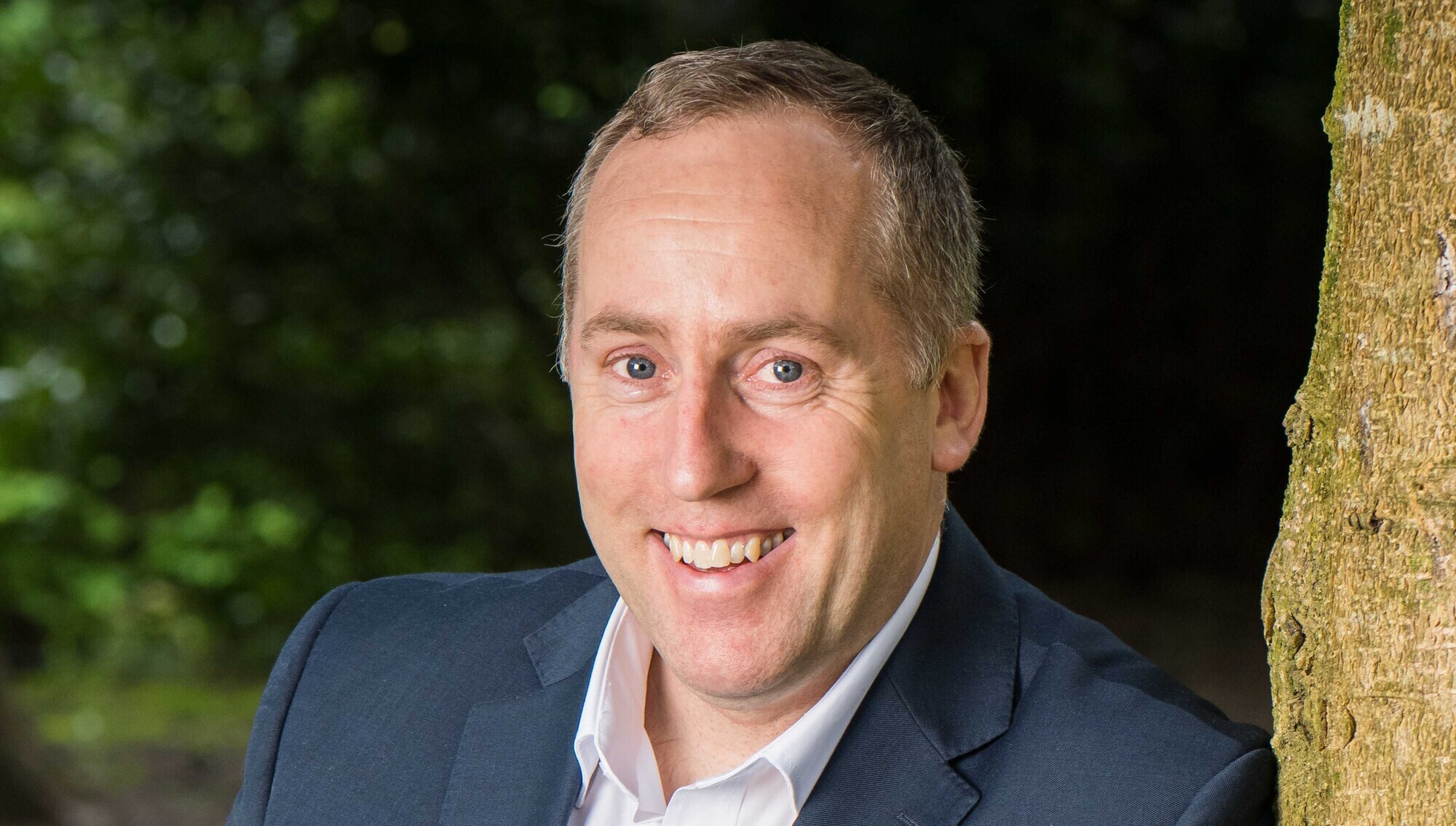
AssistiV Ireland founder Alan Craughwell. Picture: Joleen Cronin
: Alan Craughwell
: CEO, AssistiV Ireland
: A social enterprise company using technology to help people with intellectual and developmental disabilities find employment across a range of sectors
Ireland has one of the worst disability employment records in the EU. With 22% of people living with a disability, less than half (49.3%) of those who are of working age are employed, compared to 70.8% of people living without a disability. This 21.5% employment gap is among the largest in the EU.
“Ireland has one of the lowest disability employment rates in Europe. That is not a talking point, it is a documented fact, and it should concern all of us more than it does,” says founder of AssistiV Alan Craughwell. “The frustrating part is that the policy framework is not bad.”
The Department of Social Protection runs two genuinely valuable programmes, he explains, with the Work and Access scheme funding workplace supports and assistive technology like AssistiV, while the Wage Subsidy Scheme helps employers with the cost of hiring and supporting employees.
Government input is needed, but not simply more of the same. “What is needed is something louder, more joined-up and closer to the ground where the actual work happens. We need to acknowledge that, despite good intentions, progress has been too slow.”
That means sustained investment in the organisations, employment programmes, and innovators doing the hard work in communities every day, work that rarely makes headlines but changes lives quietly and consistently. “If Ireland is serious about closing the disability employment gap, that is where the investment needs to go.”
Read More
AssistiV uses smartphone touchscreen technology to turn what are complex workplace tasks into easy-to-follow pictures, text, or audio clues, enabling people with learning or intellectual disabilities to work independently to the correct standards.
The system effectively levels the playing field in the workplace for people with additional needs. Having worked with adults with disabilities for more than 20 years, Alan is passionate about the role of AssistiV.
AssistiV is currently supporting people across roles in a number of sectors, including hospitality and retail. When the system launched countrywide, it was designed to scale and support up to 1,000 jobs for people with disabilities by 2030. “The mission has not changed from day one: to enable people with learning disabilities and autism to work with confidence and independence. That is still our focus.”
What has changed is his sense of the scale of what is possible, and how fast it needs to happen.
“Three years ago, I would have been quietly delighted with 40 users. Today, 40 feels like the starting point. As social impact partners with Heineken Ireland, we have the potential to reach 7,000 locations across the country where their products are sold. If just 10% of those create a sustainable job using AssistiV, that is 700 lives changed for good.”
Beyond numbers, what has shifted is his understanding of what becomes possible when the right pieces come together. “Across Ireland, there are disability services and employment programmes doing important, high-quality work every day. What AssistiV adds is technology that multiplies that effect, giving job coaches better tools, giving employers greater confidence, and giving individuals the support to stay in work and grow. The goal is not to replace what already exists — it is to help it go further.”
Technology is central to what AssistiV does, but human interaction and empathy also figure prominently in driving the success of the enterprise.
“Technology is actually the last thing we think about, I mean that literally. When we go into a workplace, we start with the person. Who are they, what are their strengths? Where do they get stuck? Then we look at the process. What does the role require day to day? Only after all of that do we ask what technology, if any, fits.”
And when it does fit, it might be something as simple as a short video, a picture prompt or a checklist on a phone that helps someone complete a task independently, without waiting to be told, without losing confidence, without needing someone beside them every minute of the day.
“I was on a warehouse floor last week, watching someone who had never held a job in their life account for every single piece of work they had completed that day, independently, accurately, with no one standing over them.
"Their employer told me recently that this one person alone has saved the business €80,000 this year. This came from an employer willing to think differently, a job coach who knew their person well, and a worker who was finally given the right conditions to show what they could do.”
The technology was the scaffold, he explains, the belief was the foundation. “What we are really talking about is culture. The businesses seeing the best results are not just using our tools, they are changing how they think about process, support and what an employee can genuinely contribute.”
When that shift happens, when technology and a new way of working become part of how a team operates rather than an add-on for one person, the impact multiplies.
“Employers and job coaches who embrace that are not just creating more inclusive workplaces. They are building stronger, more resilient teams. That is the real opportunity, and we are only beginning to see what it looks like at scale.”
AssistiV started in hospitality because that is where the first real ask came from, Alan recalled of the early days. “A person with a learning disability wanted to work behind a bar, so we built a solution around that. A customer places an order on their smartphone, and it comes through visually, step by step, to a smartwatch worn by the person serving. No mental arithmetic, no written notes, and no relying on memory under pressure. It was tested in busy bars and live events, and it worked.”
That told AssistiV something important: If the technology could hold up behind a bar on match day at Musgrave Park and Thomond Park, it could hold up anywhere. Today, it supports workplaces across hospitality, facilities management, warehousing, retail, and community services. It encompasses bar work, housekeeping, stock management, light refurbishing and customer-facing roles.
“The range is broader than most people expect, and it continues to grow. What we have learned is that the model translates well to any role with a repeatable process. A start, a middle and an end. If you can map it, we can support it. The question was never which sectors need inclusion. The question is which sectors are ready to move beyond talking about it and start putting it into practice.”
Ten years ago, Alan founded Sunday’s Well Rebels, Ireland’s first mixed ability rugby team where people with and without disabilities played together. He subsequently played a key role in bringing the International Mixed Ability Rugby Tournament to Cork in 2022, which saw 1,100 players from 14 countries compete in what was the effectively the world cup for mixed ability rugby.
"We ran a fully accessible bar service at the tournament. Two workers with learning disabilities, our technology on their smartwatches, serving orders in real time. It worked perfectly.”
Heineken Ireland was a tournament sponsor, and Barbara Anne Richardson, its sustainability manager, was instrumental in that activation.
“She saw what the technology could do and became one of our greatest champions. The partnership that grew from those conversations is now our biggest national platform and is actively embedding inclusive employment across hotels and bars in a way that would not have happened without her belief in what AssistiV could become.”
The tournament did not just raise a profile, it gave proof of concept in front of exactly the right people at exactly the right time.
“What we see on the sports field can be done in the workplace, true inclusion in action. It was a clear demonstration showing that when the right supports are in place, performance, independence and confidence follow.”