Does the profit justify the suffering? The case for changing the live transport of animals
In 2025, live exports accounted for approximately 2% of Ireland’s €21.2 billion in agri-food exports.
As the Alondra livestock vessel made its voyage from the Port of Waterford to Algeria this January, seven cattle would not make it to their final destination. Twenty-four animals became ill or suffered injuries, while 11 pregnant heifers gave birth prematurely, with two calves stillborn.
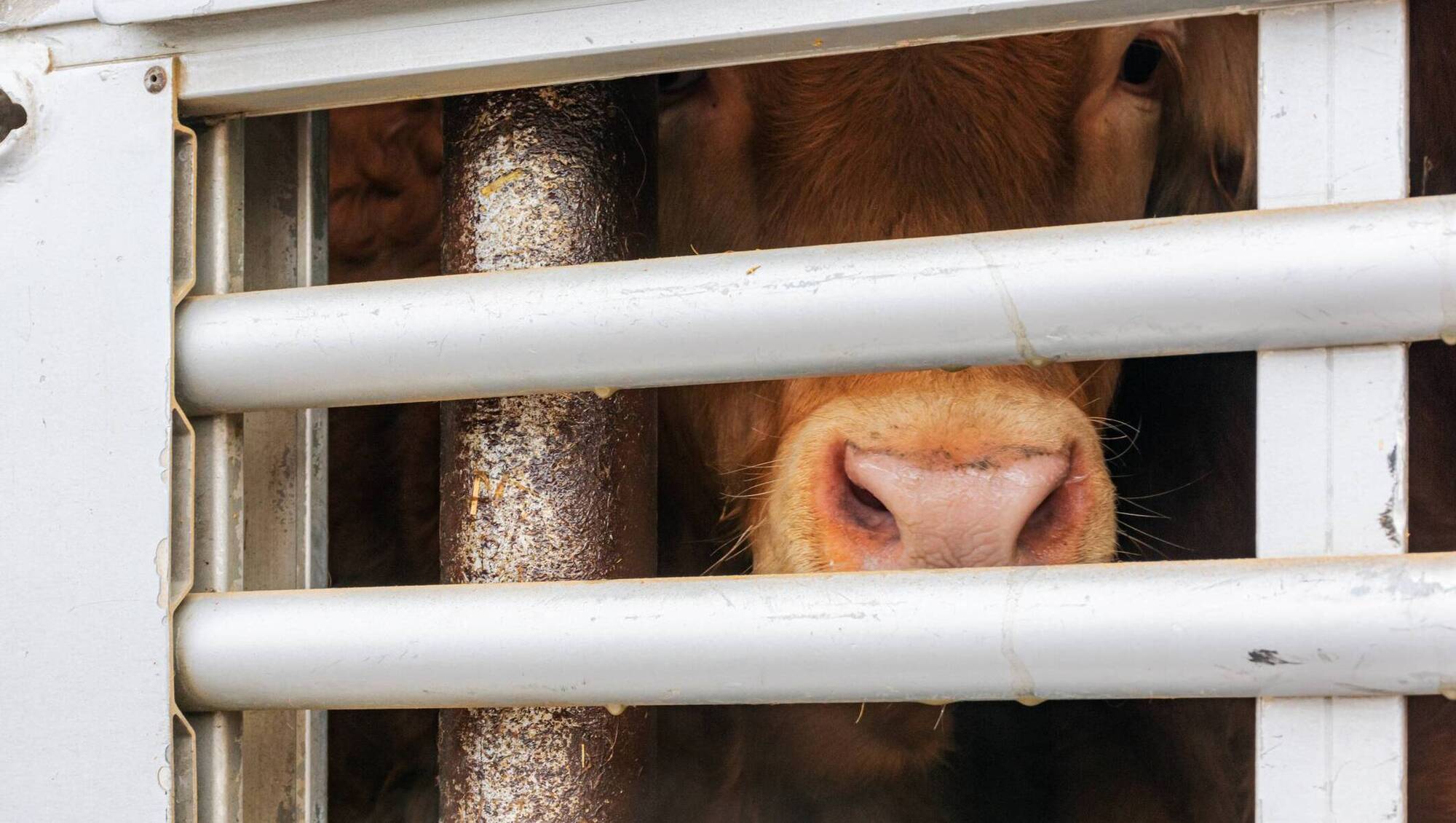
This is one example of the suffering that can occur during long-distance livestock transport, where cattle face risks including pneumonia, leg injuries, heat stress and motion sickness.
Following the NSPCA’s recent joint Oireachtas briefing with Eurogroup for Animals on the future of animal transport rules, which also heard evidence from Ethical Farming Ireland, we must ask ourselves: does the financial gain of live transport justify the suffering?
At the NSPCA, we believe it does not.
The EU Animal Transport Regulation, setting out binding rules to protect animals during commercial transport within and from the European Union, is currently under review, with the Council of the European Union and the European Parliament shaping the outcome.
This is a critical opportunity to strengthen animal welfare protections and address long-standing gaps in the legislation. But the outcome is far from guaranteed, and without meaningful reform, we even risk weakening the protections already in place.
Read More
Recent Eurogroup for Animals polling found that 81% of Irish respondents were concerned about animal welfare during live transport, 84% believed very young or unweaned animals should not be transported long distances, and 85% supported stricter rules or a ban on the export of pregnant animals.
As Ireland holds the presidency of the Council of the EU, now is the time to demonstrate leadership and let our actions speak louder than our words.
The current EU legislation is over 20 years old, while scientific knowledge and understanding of animal welfare have advanced considerably. The case for change is not just a moral one; it is backed by research.
In 2022, the European Food Safety Authority (EFSA) published five scientific opinions on animal welfare during transport, informing the European Commission’s proposed revision of the rules. Proposals included shorter journey times, temperature limits, and stronger protections for vulnerable animals.
But alongside the science, we must also consider the animals’ experience.
Take, for example, unweaned calves. Some are as young as 15 days old and can face journeys as long as 50 hours, over land and sea, despite having specific nutritional and welfare needs.
They require regular access to milk or milk replacers, frequent feeding, and adequate rest.
Currently, calves cannot be milk-fed in trucks, meaning they go 24 to 30 hours without milk on the journey from Ireland to France.
A recent trial of a truck-based feeding system found it difficult to ensure all calves received the milk they needed.
Seven peer-reviewed Teagasc studies, highlighted at the Oireachtas briefing, identified dehydration, fatigue, low energy and respiratory illness in calves following transport.
They also found that prolonged feed deprivation had the greatest impact, while journey length also mattered.
Calf deaths during live transport are not comprehensively recorded in official statistics, leaving gaps in our understanding of the scale of mortality.
Nor are the risks confined to young animals. The deaths on the Alondra, alongside the deaths of 17 young bulls being transported by sea from Ireland to Libya in 2019, demonstrate this.
With all this suffering, we must ask what the financial return amounts to.
In 2025, live exports accounted for approximately 2% of Ireland’s €21.2 billion in agri-food exports. While the trade matters to individual farmers, hauliers and exporters, this figure raises questions about its overall economic value relative to the animal welfare costs.
Research by Eurogroup for Animals comparing live calf exports from Ireland to Spain with a meat and carcass trade model suggests that carcass exports could be more economically and environmentally beneficial, while better protecting animals.
Ireland must use its presidency to champion stronger, science-based animal transport legislation, including shorter journeys, effective temperature limits, adequate space, improved protection for vulnerable animals.
Time spent at sea must also count when calculating journey durations.
But stronger rules alone should not be the end goal. The NSPCA supports a transition away from long-distance live animal transport towards trade in meat and carcasses, with shorter supply chains that reduce the stress and welfare risks for animals.
We recognise that such a transition may have implications for farmers, processors and the wider livestock sector. Any change must support a viable future for those whose livelihoods depend on it.
However, the challenges should not prevent us from pursuing a trading model that better protects animal welfare and is fit for a progressive Europe.
The suffering aboard the Alondra should give urgency to that work.
But the question is not simply how to make live animal transport more humane, but whether we should continue transporting animals over long distances when a better alternative is possible.
- Conor Dowling is director of Advocacy & Policy at the NSPCA

CONNECT WITH US TODAY



Be the first to know the latest news and updates