‘The Odyssey’ is a warning about the perils of xenophobia
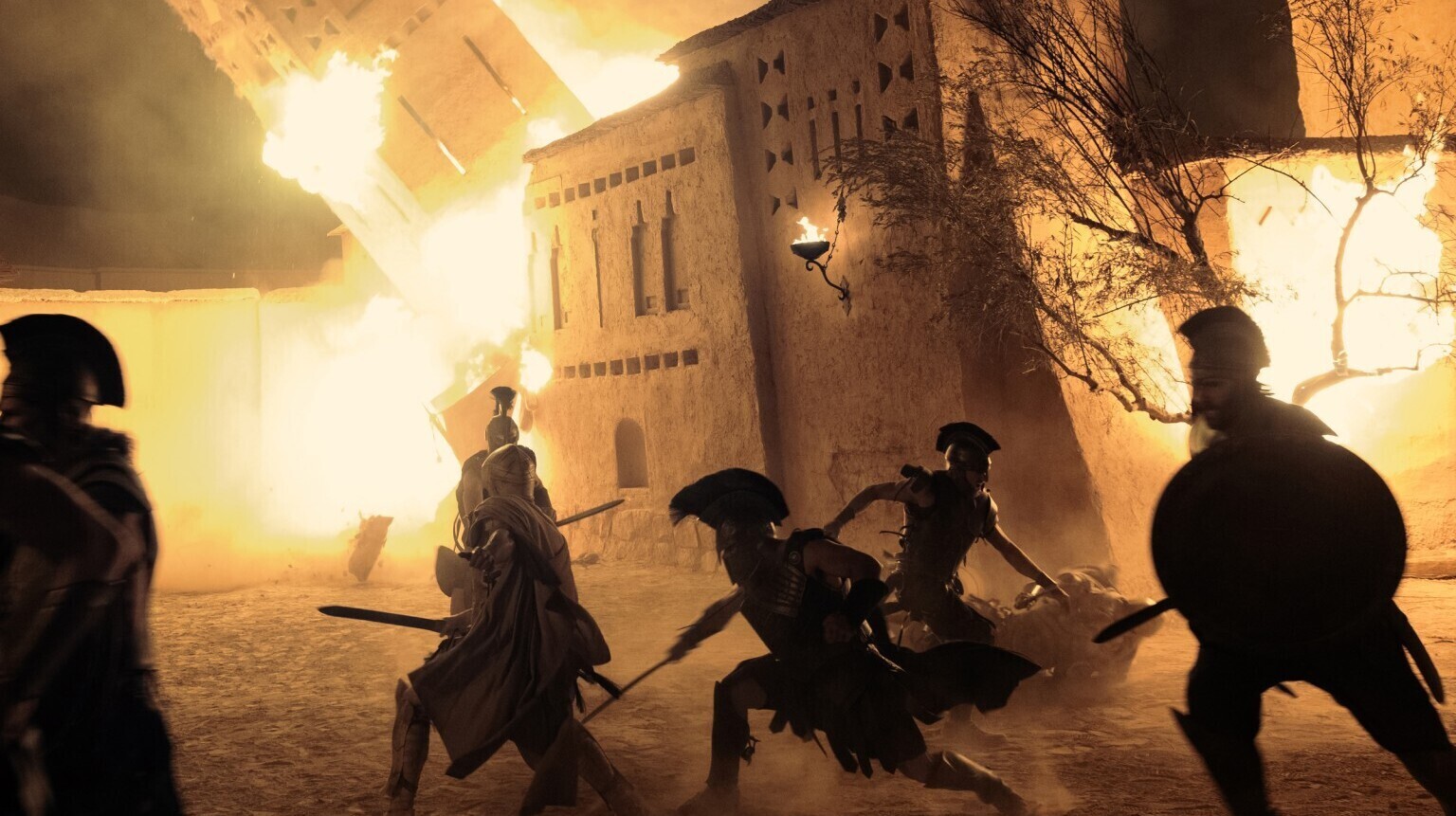
In 'The Odyssey', the deception behind the fall of Troy is a grievous breach of xenia. As Odysseus (Matt Damon) confesses to Penelope (Anne Hathaway) in the movie: 'We violated all that’s ever sacred between people.' Picture: Melinda Sue Gordon/Universal Studios
In the opening minutes of Christopher Nolan’s film, The Odyssey, we are presented with a series of images from the fall of Troy — the wooden horse, the city, and Odysseus, who was the mastermind behind the trick that secured victory for the Greeks after the 10-year war.
The Trojan War has loomed large in ancient and modern imaginations.
Accounts of this myth, from the epic poems of Homer to modern cinema, offer important lessons for modern times. One of these comes through quite strongly in Nolan’s film, which addresses contemporary concerns through the framework of this mythical war.
Throughout the film, we are told about Zeus’s law, the law of hospitality which in ancient Greece was known as ‘xenia’.
In Greek, a ‘xenos’ is both a guest and a stranger, and from this we get the English word xenophobia — the fear and dislike of people from other countries. Treating guest-strangers with honour and respect was enforced by the king of the gods.
According to Zeus’s law, a stranger or foreigner must be welcomed into your home and offered food and comfort before you are permitted to ask them who they are.
The idea behind this, as explained in the movie, is that the person at the mercy of your hospitality could be one of the gods in disguise.
This is reminiscent of the Christian maxim displayed in the Shakespeare and Company bookshop in Paris: “Be not inhospitable to strangers, lest they be angels in disguise.”
In Homer’s epic poem and Nolan’s movie, the Greek hero Odysseus encounters a range of mythical creatures in a series of adventures on his fraught journey home after the Trojan War.
Each of these episodes serves as a lesson on good and bad hospitality. The Cyclops Polyphemus (a one-eyed giant) eating Odysseus’s men seems to be a textbook example of bad hospitality.
For modern readers, though, this episode offers parallels with colonisation, as Odysseus and his men impose themselves and their customs upon the land and physically mutilate the indigenous inhabitant by stabbing him in his one eye.
The witch Circe, played by Samantha Morton, extends a similar welcome to Odysseus’s men by turning them into pigs.
Read More
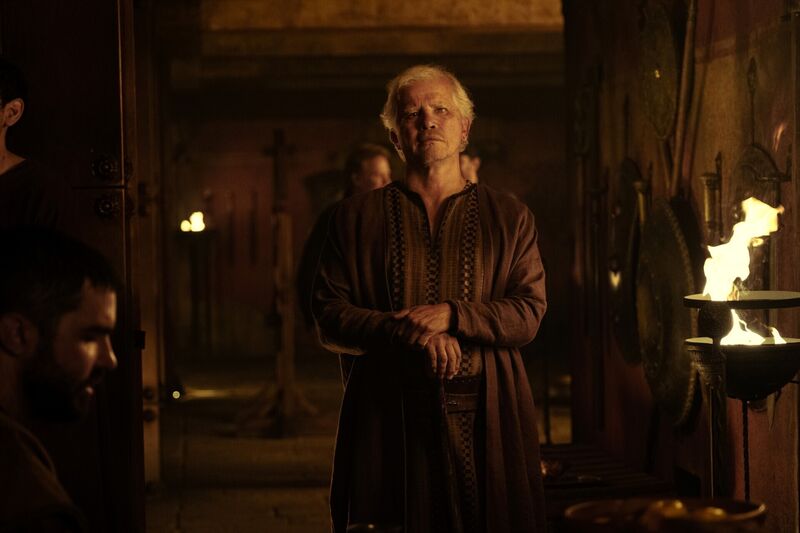
The Greek kings Menelaus and Nestor, who fought with Odysseus at Troy, follow the rules of xenia, as does Eumaeus, an enslaved pig-keeper in Odysseus’s household.
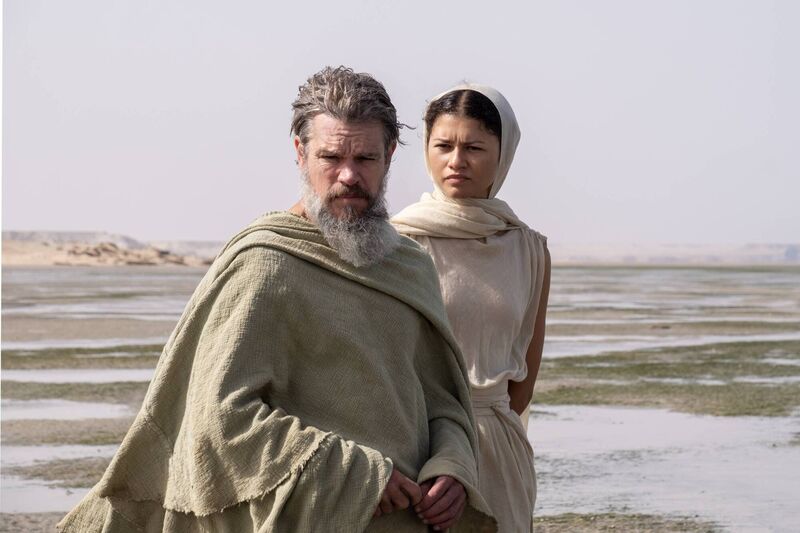
When Odysseus is disguised as a beggar, Eumaeus welcomes him with generosity and, despite having little to offer, gladly gives what he can to Odysseus.
However, the situation is more complex than ‘witches and monsters are bad hosts, and the Greeks are good hosts’, as the Greeks themselves also participate in this bad hospitality by raiding and pillaging on their way home from Troy.
On Odysseus’s homeland of Ithaca, the Greek suitors seeking to marry his wife Penelope and become the new king abuse the hospitality of her household, drinking and eating the house dry night after night.
In Nolan’s movie, the reason for this breakdown in hospitality and civility circles back to the sack of Troy, and the wooden horse used to deceive the Trojans.
The destruction of Troy receives more airtime in the movie than in Homer’s poem.
Nolan returns to the sack of the city at the film’s climax as we see it unfolding through Odysseus’s perspective.
By presenting the Trojans with a
supposed gift for the gods, which was then welcomed by them into their city, the Greeks undermined the concept of xenia with catastrophic consequences.
Matt Damon’s Odysseus equates the capture of Troy with “the breaking of Zeus’s law, spreading like plague”. The symbolism of the white-armoured Trojans serves to drive this point home and suggests that the Trojans possess a moral clarity the Greeks don’t have.
is ultimately about how we treat others, and Nolan’s film brings that theme to the fore.
We don’t have to look far to understand the implications of this message — from the anti-immigration riots on home soil, to the ongoing debates around the weaponisation of the St George’s flag in England, and the atrocities perpetuated by the Trump administration against immigrants.
In Nolan’s telling, when the Greeks emerge from the belly of the horse inside the city of Troy, their actions symbolise a betrayal of cultural norms.
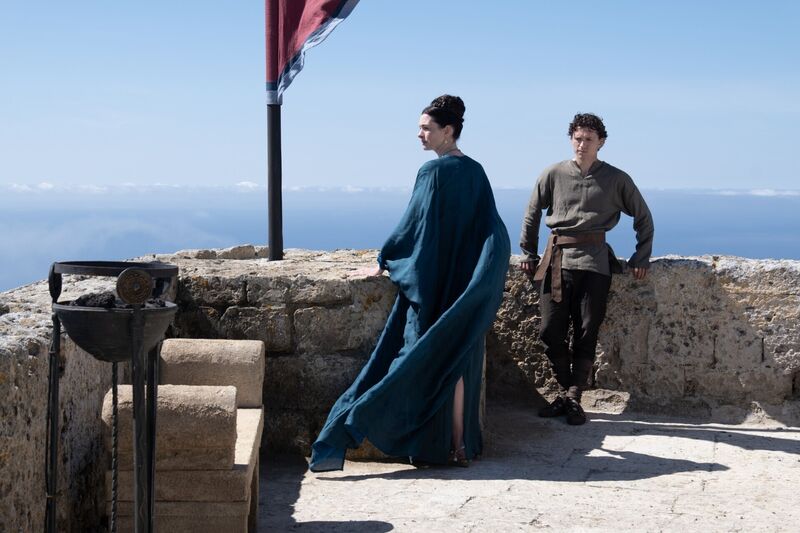
As Odysseus tells Penelope (Anne Hathaway): “We left them a gift, an offering of peace, that they took into their home. We violated all that’s ever sacred between people. It turned a fight into a hunt. To burn the walls of Troy was to burn the world entire.”
By connecting the collapse of civilisation to the sack of Troy, Nolan sends a clear message about the devastating effects of war, and the implications for society of the mistreatment of strangers.
He also adapts an ancient myth in which the Greeks believed that the Trojan War marked a break in civilisation and the end of the ‘age of heroes’.

In this way, Nolan is doing something both ancient and modern with his narrative by incorporating mythical traditions to address contemporary concerns, just as the ancients did. He evokes themes that are also present in his film Oppenheimer, as one man reckons with his role in causing mass destruction.
Emily Wilson, University of Pennsylvania professor of classics and acclaimed translator of Homer’s , has criticised the superficial characterisation of Odysseus in the film — and she is certainly right to point to the depth and complexity of Homer’s protagonist — but Nolan’s Odysseus functions in service of this larger message.
The story that Nolan weaves in causes us to reflect on the lesson that cruelty towards strangers marks the failure of civilisation, and it tells us to remember Zeus’s law — the gods might be watching.
- Lisa Doyle is a Government of Ireland postdoctoral fellow in the Department of Classics at Trinity College Dublin

CONNECT WITH US TODAY



Be the first to know the latest news and updates