Michael Moynihan: Homer's Odyssey is universally applicable, especially to Cork City
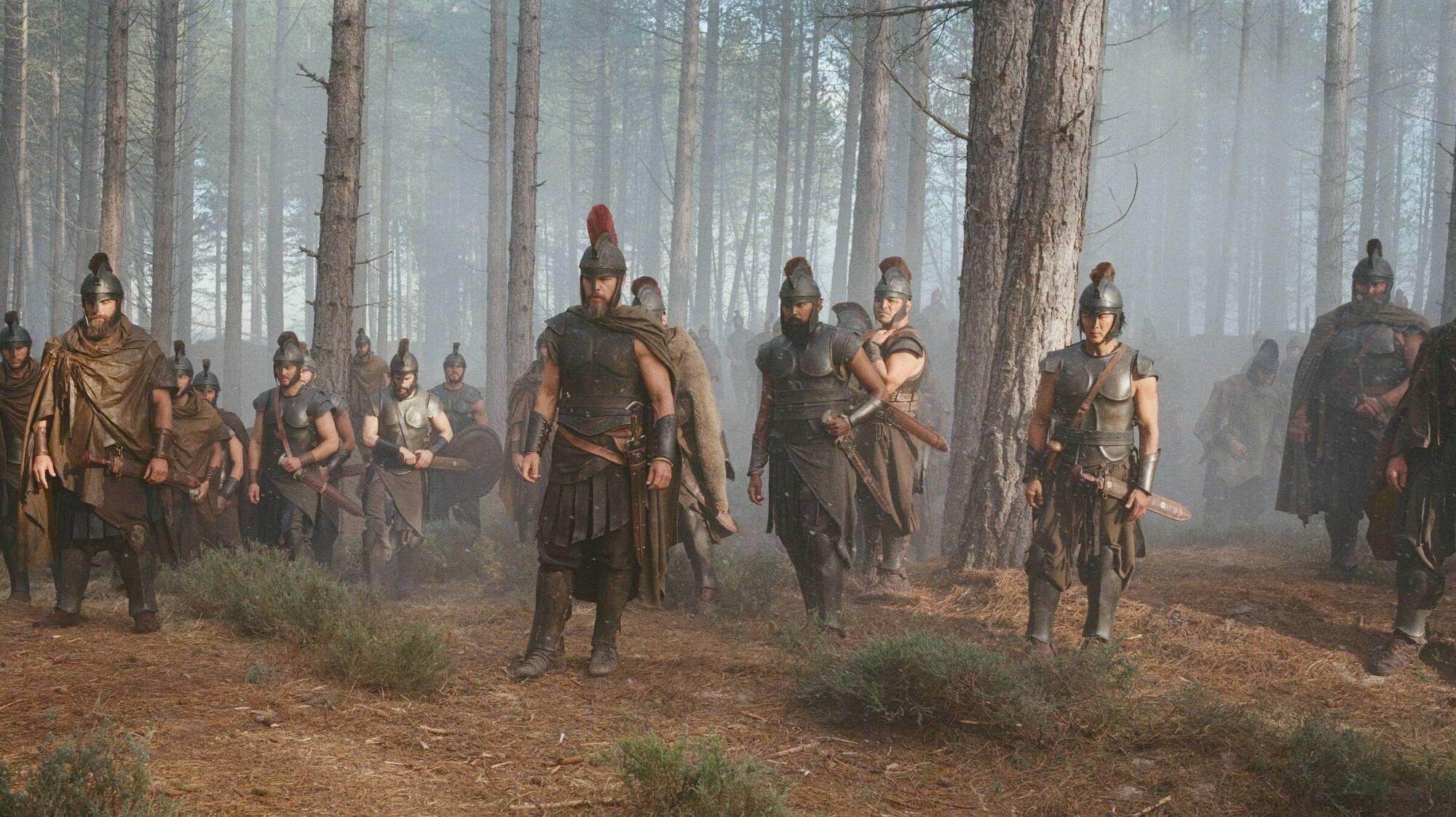
Matt Damon (centre) is Odysseus in a scene from ‘The Odyssey’. Picture: Universal Studios

You’re probably aware the film of the moment, , is currently showing in our nation’s cinemas more or less round the clock.
There’s such a demand for screenings that it looks like it’ll be Christmas before I get to see it.
If I need to, that is.
One of the hallmarks of Homer’s great work, which has survived and thrived for millennia, is its universal applicability.
People have interpreted it to suit their circumstances for hundreds of years, and Corkonians are no different.
Read More
Why, there is even a small but dedicated scholarly group devoted to the notion that Homer is a corruption of O’Meara, and that the composer of the and originally came from the northside of the city (do keep up with cutting-edge developments in classical studies).
I anticipate some scepticism here, but if you doubt me, consider the evidence.
Many people will know the Trojan horse part of the (significant in the film, I believe, though confined to a couple of quick references in the original poem).
Many Cork people will instantly recognise the bones of this concept: an invasion force inveigling itself into a besieged city by presenting itself as a magical gift — only for the invaders to burst out suddenly and try to colonise the city, the unsuspecting inhabitants forced to suffer their barbarian ways and odd customs.
I mean, you saw them yourself last Sunday leaving Croke Park, right?
For a more specific parallel with our everyday experience look at the famous Scylla and Charybdis sequence.
These were the two dangers faced by mariners as they tried to navigate the Straits of Messina, with Scylla usually represented as a monster fond of snatching sailors from the decks of ships with one of her six heads, while Charybdis was a terrifying whirlpool threatening to drag ships underwater.
Steering a middle course which avoided these threats was a formidable challenge, and getting through the straits was no guarantee that all sailors would make it (a few of Odysseus’s crew get eaten along the way).
There could hardly be a clearer counterpart to this ancient test than a specific ordeal faced regularly by modern travellers around Cork.
By which I mean the notorious merging of lanes as you drive off the Michael Collins Bridge and onto Penrose Quay.
Anyone familiar with this stretch of road will be familiar with the decision which has to be made if travelling in the right hand lane: avoid the Scylla of cars drifting out of the left-hand lane towards you while ensuring you don’t get swamped by the Charybdis of vehicles streaming past on your right to head east and out the Lower Glanmire Rd.
O’Meara know his locations when looking for parallels.
Another problem faced by travellers is posed by the sirens. Odysseus explains to his men that these are beautiful women who sit by the sea, combing out their hair and singing to passing sailors.
Unfortunately travellers who hear their song are bewitched by its sweetness and lose their way, and eventually their ships run aground.
Again, many readers will be familiar with a similar phenomenon, particularly on summer nights around particular parts of Cork.
You are heading out to collect someone, or drop someone off, the car window is open to let in the breeze, and then you hear it: a song coming from somewhere, half-heard, familiar, and before you know it you’re too distracted to concentrate on your driving because it’s tormenting you.
What’s that tune?
This is variously described as secondhand Live at the Marquee sounds or wind-dependent Musgrave Park reverberations.
The sound system is good enough to give you a hint but not quite clear enough to allow you to identify the song. Hopefully you don’t actually crash your car while fiddling with Shazam on your phone.
Another significant passage in the sees Odysseus and his men take on Polyphemus, better known to us as the cyclops.
Polyphemus is a giant who lives in a huge cave, and while he’s away, Odysseus and his men raid for food — milk and cheese, mostly.
Unfortunately for them, Polyphemus comes back, rolls a massive boulder in front of the cave, and blocks them in.
Readers may not be aware what O’Meara is understood to have based this passage on — a force of nature barring the way, forcing travellers to stop, and making them wait (and wait, and wait).
However, the ongoing road works and stop-go system on the Douglas Rd and environs should give you some idea.
(Granted, none of the hi-vis lads working the stop-go signs have eaten any drivers, as Polyphemus does with a couple of Odyssesus’ pals. I still think of them as Laestrygonians, mind.)
Not all the parallels work out, however. After Odysseus and his crew escape from Polyphemus, for instance, they get help from Aeolus.
He gives them a bag containing all the winds of the world to fill their sails, but Odysseus’ men open the bag too soon and waste the gift.
When asked for help again Aeolus refuses and lays it on pretty thick (‘Begone from our island with speed, thou vilest of all that live. In no wise may I help or send upon his way that man . . . ‘ etc, etc).
Readers may have their own ideas on the organisations in Cork which might be described as unhelpful and obstructive on one hand, and which enjoy pontificating on the other — literal windbags — but for the life of me I can’t think of one. Answers on a postcard.
O’Meara certainly leaned into the parallels as the book went on.
When he eventually gets home Odysseus does not take kindly to the wooing of his wife, Penelope, by dozens of suitors (“Dogs, did you think that I should not come back from Troy? ... You have feared neither God nor man, and now you shall die”) and carnage ensues.
This will be familiar to anyone who remembers the Grand Parade between the fountain and the river in the post-nightclub hours of the late 1980s, when the rhetoric was usually less high-flown but the carnage reasonably florid.
O’Meara deserves particular credit for capturing the pre-fisticuffs banter, which was usually one-sided and pungent.
Obviously there are some who will probably contest this reading of one of western civilisation’s foundational text.
I know, of course, a Dublin chap wrote something similar years ago about the and the capital (though you might have forgotten that his father came from Cork).
Those doubts are easily dispelled, though. In its various manifestations Odysseus faces many tribulations and challenges but also receives enticing offers.
Calypso offers him immortality, for instance, but she soon recognises his true motivation when he tells her: “Nevertheless, I long to reach my home and see the day of my return. It is my never-failing wish.”
Turning down the life of a god because of his burning desire to see his home place. What could be more Cork than that?

CONNECT WITH US TODAY



Be the first to know the latest news and updates