Development aid to countries in Africa is an investment in global stability
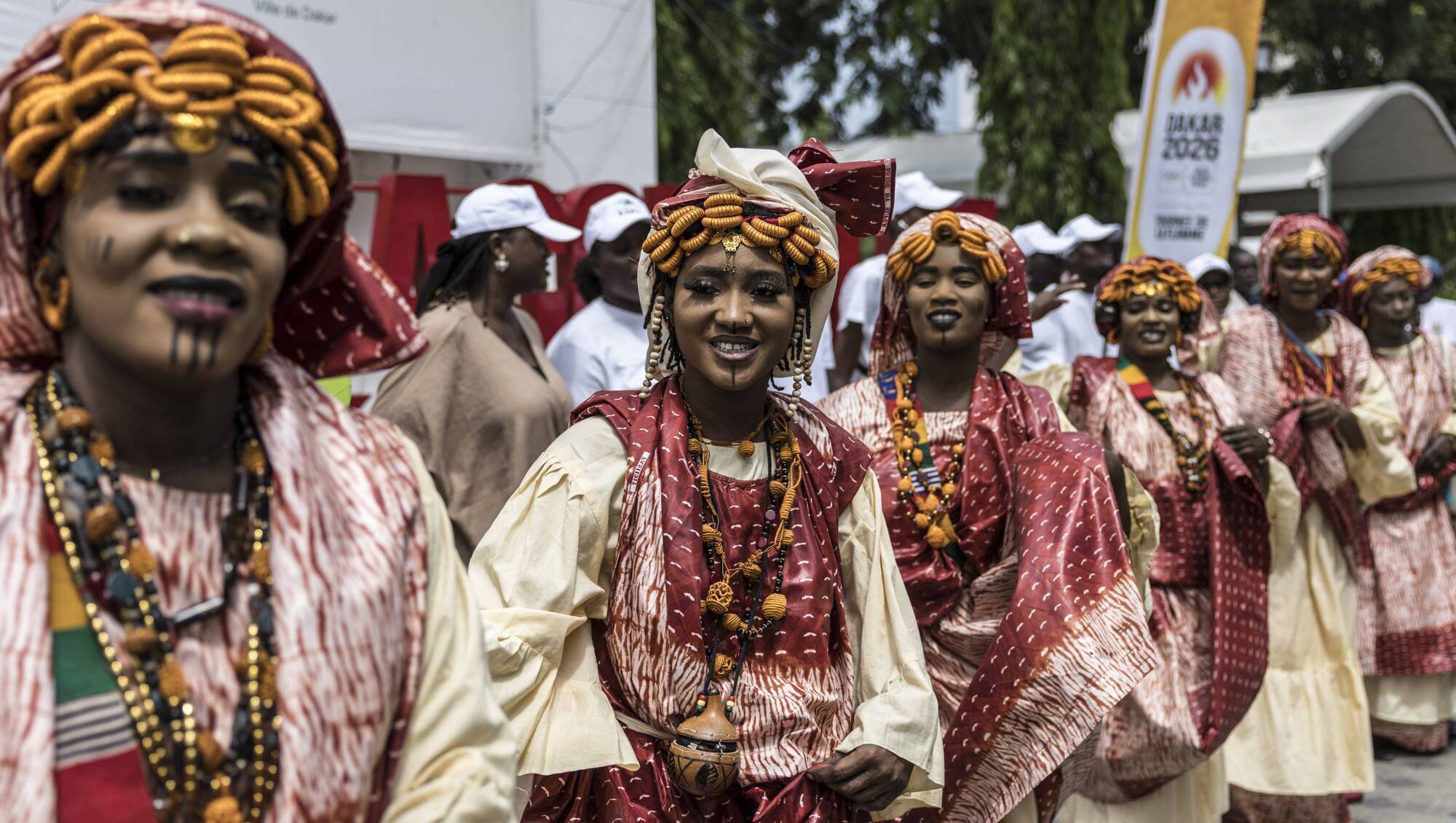
Performers wearing traditional clothes dance during the ceremony marking the start of the Youth Olympic Flame's 46-day tour in Dakar, on September 14, 2026, before Senegal hosts the Summer Youth Olympic Games from October 31 to November 13. Photo: Patrick Meinhardt/ AFP via Getty Images
As an island nation, on the edge of Europe, Ireland can sometimes feel very isolated. However, as an open trading economy, the shifting patterns of geopolitics and the global economy certainly have a major impact on all our lives.
The past year has made that painfully clear, be it at the petrol pumps, on the supermarket shelves or in the bill that drops through the letter box at the end of the month. What happens around the world impacts all of us.
But what happens and where often reflects the impact and whether or not it will be in the short or the medium term. So, beyond the Straits of Hormuz or the Black Sea port of Odessa, what happens in Africa will increasingly have very real consequences for Ireland.
Africa is home to not only the youngest population in the world but also the fastest growing. As a country, we have diplomatic relations of varying degrees with all 54 African states as well as the African Union.
In 2023, the Government opened its 12th embassy in sub–Saharan African in Senegal, a country I visited last week. This is our first embassy in French-speaking West Africa and provides a foothold in an historically important regional city like Dakar.
The work of the Irish Government in Senegal is varied: from trade promotion efforts that seek to grow annual trade from the €75m relationship today to development work such as with partners like Sightsavers that has prevented blindness in tens of thousands of rural Senegalese people.
Whilst visiting a Sightsavers project in Bambey, Senegal, I witnessed the incredible work being done there in partnership with the Senegalese Government and Irish Aid. Thanks to this work, trachoma has been eliminated in Senegal.
This work has protected nine million people from the pain, suffering and blindness caused by the disease. This is incredible and shows the positive impact that development can have.
Senegal is also a country that deals with the very real impact of the instability in the neighbouring Sahel region, a region made up of 15 countries but focussed on Mali, Burkina Faso, Niger, Chad and Mauritania — five countries bedevilled by political instability, conflict, coups, Islamic fundamentalism, hunger, climate change, poverty and massive movement of people.
It is the reason which also saw me in Ghana last week to chair a meeting of the EU-Sahel group.
The situation in the Sahel is one that is rarely talked about, but which is experiencing a growing crisis.
The Sahel region has been in the grips of an ongoing and deteriorating security and humanitarian crisis in recent years.
Within the Sahel region there are significant levels of insecurity, instability and poverty.
The instability in the Sahel region and the growing influence of Russia means that it’s not just neighbouring West African countries like Senegal and Ghana who have to deal with the consequences but also Europe.
The second-highest number of migrants to go to Europe last year came from Mali, for example, driven by poverty, conflict, climate pressures and much else.
The situation in the Sahel is one that is a priority for the EU. But what can be done about the multifaceted crises in the region?
Last year, the EU agreed a Renewed Approach for our engagement with the Sahel. This focuses on political and diplomatic engagement, human security, social cohesion, economic opportunities and people to people ties.
As minister for international development, I visited the UN Humanitarian Hub in Accra last week. This hub, managed by the World Food Programme delivers vital supplies to the most in need and urgent situations across Africa.
What I saw there were tents, jerry cans, blankets, bedding, food. These are all very basic things, but these everyday items are and will make such a difference to groups of people across the Sahel and into Sudan who are facing unprecedented levels of poverty, exploitation, and conflict — all with the spectre of climate change and El Nino hanging over them.
Quite simply, as seen with Sightsavers in Senegal and in many other successful projects across Africa, development works. It keeps children in school, it puts food on family tables, it fights gender-based violence and inequality; simply put it keeps people alive in the most challenging conditions.
When development is cut, we see the devastating results fast. A study by the United Nations Development Programme found that there is a relationship between recruitment for radical extremism and funding cuts.
This is not just a danger to the region in the Sahel, but to us in Europe as well. If you look at the issues that people are concerned with in Ireland today, be it food cost, petrol prices, irregular migration, we can see that these issues all come from global instability.
That is why development in the Sahel — in food programmes, education systems, social services and healthcare — must be seen as an investment in global stability. That is why in Ireland we put such an emphasis on development, through Irish Aid.
It benefits us all.
- Neale Richmond TD is the minister of state with responsibility for international development and diaspora

CONNECT WITH US TODAY



Be the first to know the latest news and updates