Fires in Slievenamon, Connemara and Killarney show our hills are on life support
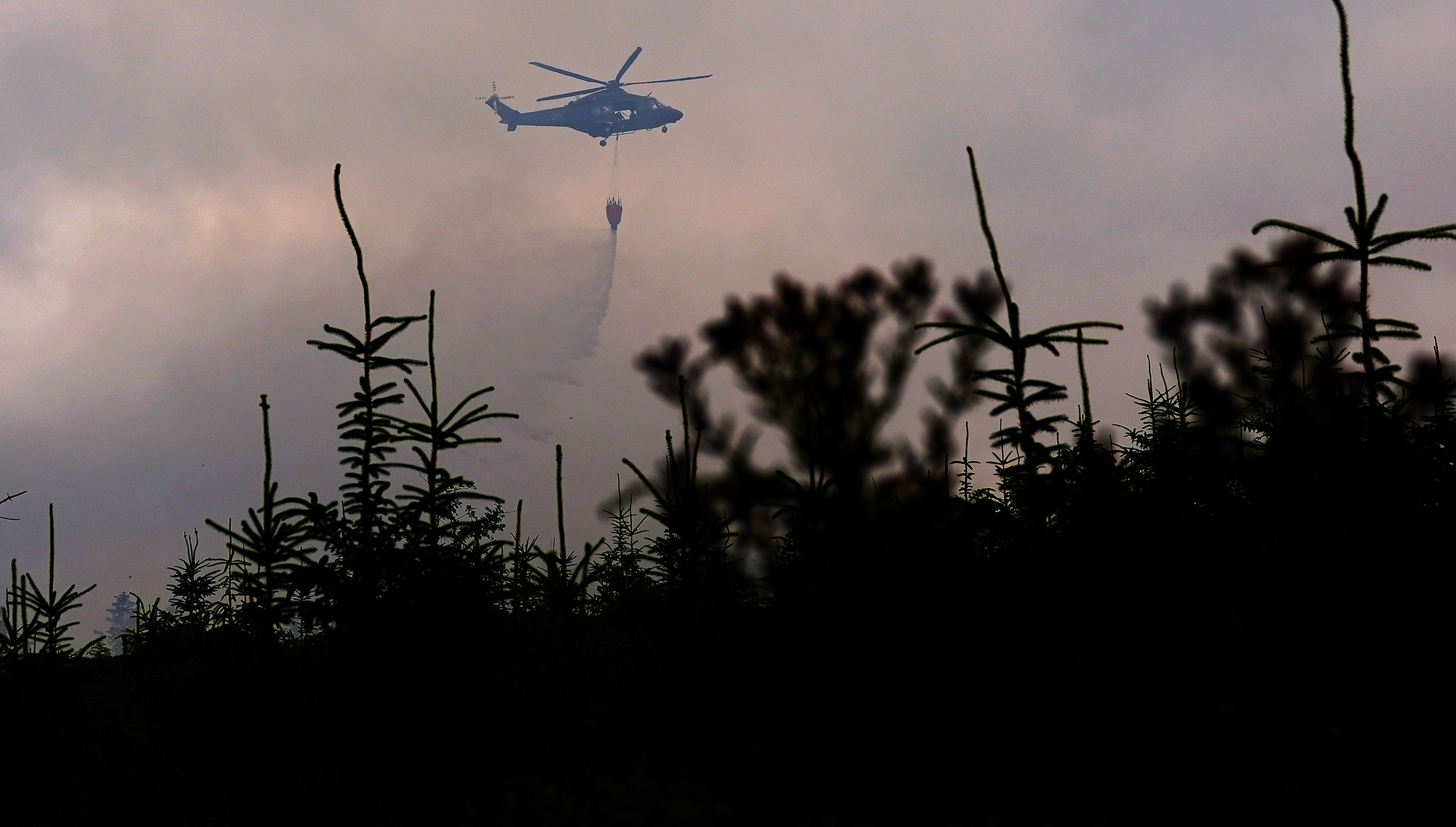
Members of the Irish Air Corps provide aerial support in tackling a major wildfire as it continues to burn at Slievenamon in Co Tipperary.
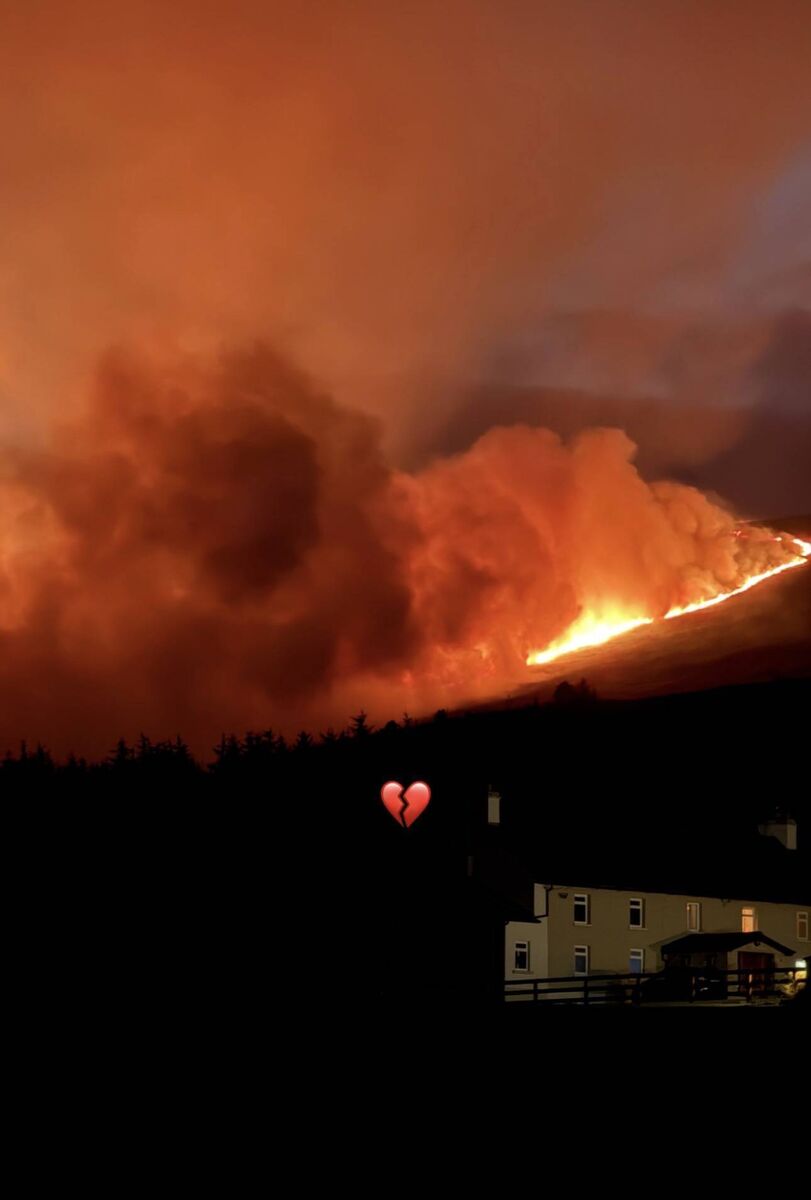
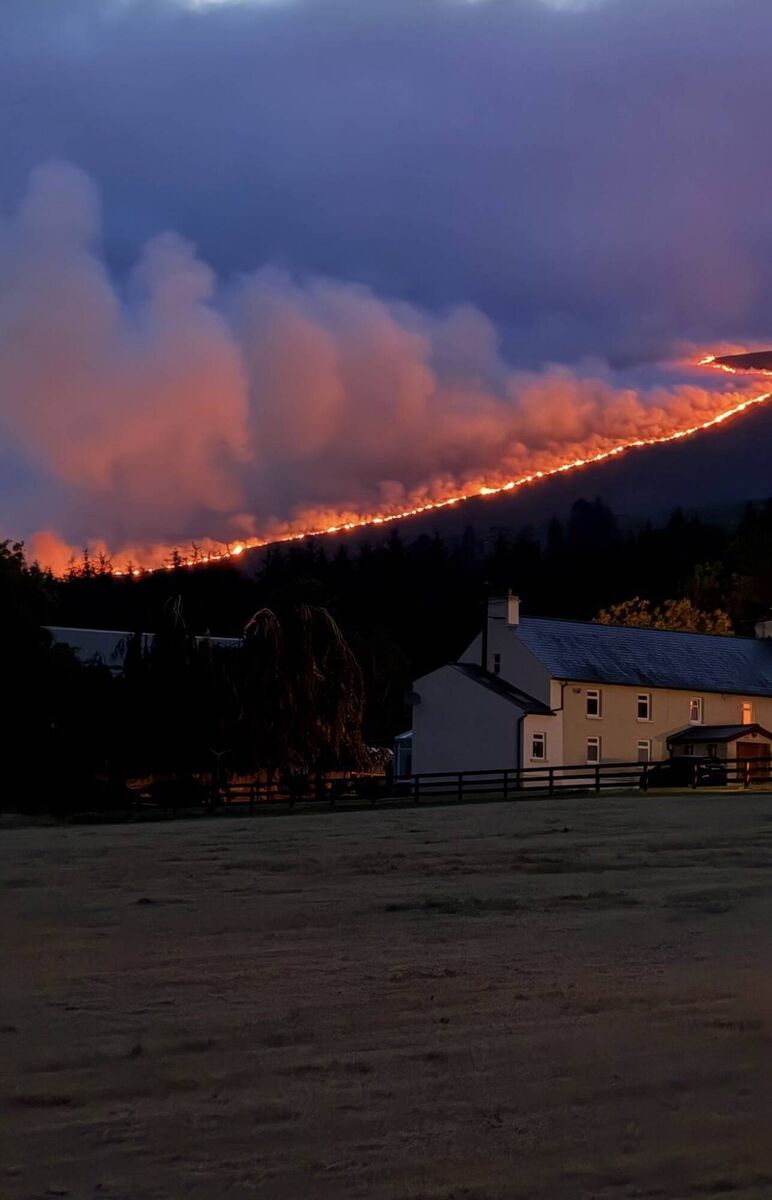
The terrifying sight of flames approaching your house while you hastily gather belongings in the small hours of the night, or of familiar vistas transformed into a wall of smoke, are reminders of our rapidly changing world.
This month, it was the turn of people living around Slievenamon in Co Tipperary, to join communities in south-west France, the hills outside Madrid and the Canadian province of Ontario to taste the acrid smoke in the back of their throats.
Those experiencing this will no doubt be in shock but they should not be surprised. Climate change, ecological degradation and the lethargic political response make for a combustible trifecta.
In fact, according to the european forest fires information service, the area that has burned in Ireland is so far below the average measured between 2006 and 2025. By July 22, their figures state that 2,388 hectares were burned, nearly half of the burned area in 2025 and far lower than the peak recorded of 16,724ha in 2011. Fires, in other words — even big, dangerous ones — have been with us for some time.
Before the fire broke out last week, Slievenamon was a sick and neglected mountain. Ecologically speaking, it was on life support. In 2004, the National Parks and Wildlife Service (NPWS) wrote that the area, which is legally protected as a Natural Heritage Area, “shows evidence of disturbance from burning and grazing”, including old and new fires.
No more recent surveys are available. Nevertheless, we do know from a report submitted to the European Commission last December that all mountain habitats are in bad condition: drained, cut out for turf, overgrazed by sheep and over-run by invasive species.
Read More
The lower slopes of Slievenamon, like many of our uplands, are ringed with monoculture plantations of tightly packed, and flammable, conifers. Gorse, a flammable bush, regenerates well after fire, exacerbating the issue further.
This is all directly related to the fire — because if the land were a combination of wet bog and native forest, the flames would not have taken such a hold.
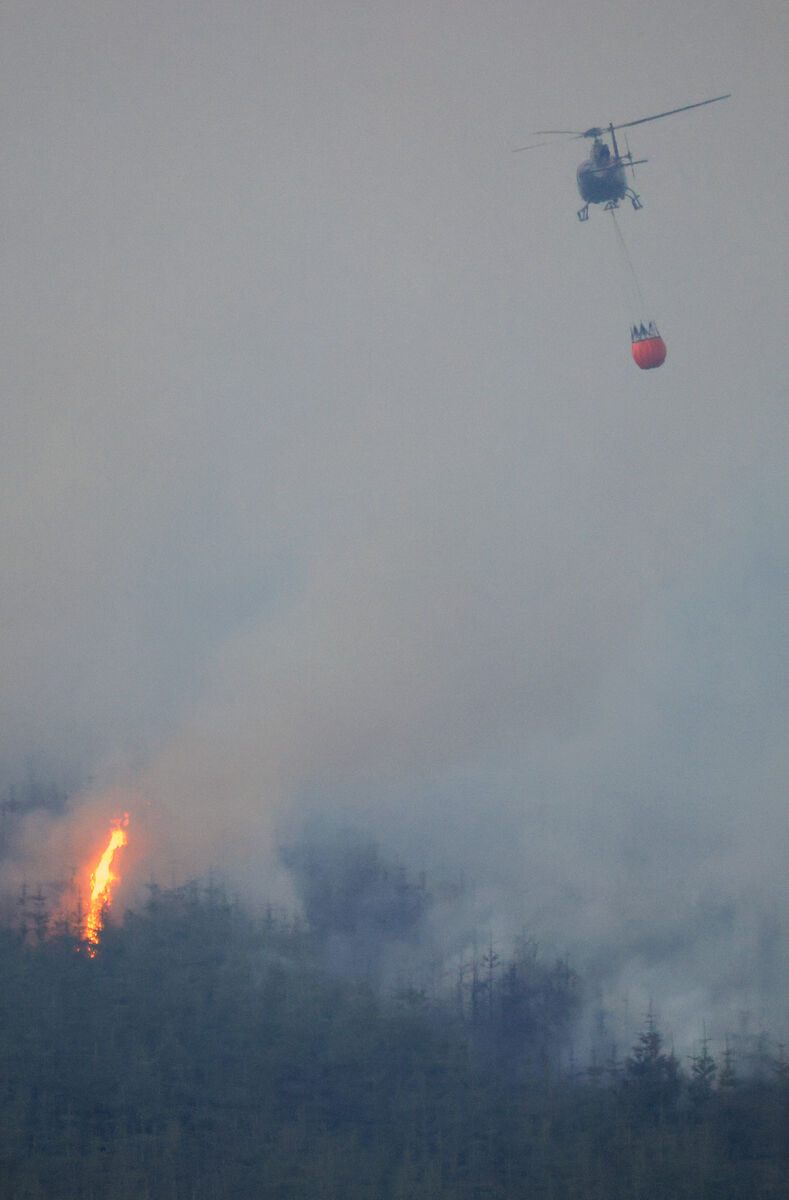
We saw this effect in 2021 when a devastating fire in Killarney National Park swept over the desiccated open moor but stopped when it reached the oak forest. This fire could have been an inflection point.
So might the one in Connemara in 2017 which consumed over 1,000 hectares of Coillte forestry with the smoke visible from Galway City, 30km away. Or so might the hundreds of other fires which have caused incalculable damage over the past decades, including in national parks and nature reserves.
Those who recklessly start fires, maliciously or otherwise are unlikely to face sanction and even in the unlikely event that a prosecution is secured, the fines are not much of a deterrent.
The State has recognised this, with nature and biodiversity minister Christopher O’Sullivan overseeing legislative change, including reform of the Wildlife Act and a proposed new law for national parks. However, this process is extremely slow (the government first committed to passing a law to provide legal backing to national parks in 2002).
Meanwhile, the approach to how our land is used remains stubbornly resistant to reform. This is not for a want of reports, investigations or stakeholder consultations. A review of land use was included in the programme for government in 2020. Phase 1 of this review, which focused on evidence gathering, was published in 2023.
A second phase was completed in April 2025 but was only published in July of this year. This report says it is a “framework” to support decisions around how land is used but the Government felt compelled to state, repeatedly in the report, that it was “not an articulation of Government policy”.
The fires that annually devastate landscapes must be seen as a symptom of the inability of politicians, most notably within the three biggest political parties, to articulate to farmers and foresters what the future for their sectors looks like while complying with all the environmental laws, regulations and policy objectives that have piled up over the last three decades.
Land lies at the intersection of culture, food production, subsidies and imagined notions of rural Ireland: how the landscape should look and which activities are considered acceptable and which are not.
People like me, born in the 1970s, have grown up thinking hills with sheep and conifer plantations are normal and healthy when they are far from it. Vested interests in the farming and forestry sectors have fought hard to maintain the status quo.
Politicians will have to face up to these contradictions eventually. The good news is that there are options. The fire on Slievenamon will be extinguished. New growth will reappear. We could acknowledge this mountain, along with all the others, has been sick for some time and needs help if it is going to recover.
Drains can be blocked, bogs can be wetted, native trees and forests can be established, monocultures can be replaced with diversity, invasive species can be removed. We can invest in the mountain like we invest in schools, roads and hospitals.
This means allocating substantial funding for implementing the forthcoming Nature Restoration Plan and setting out a plan to transition farming and forestry to sustainable models. We can accelerate the passing of laws so there are stiffer fines for setting fires and greater resources to authorities to bring prosecutions.
The fire on Slievenamon will not be the last, but it should be the one that forces a rethink on how we are managing the hills.
- Pádraic Fogarty is an ecologist and the author of

CONNECT WITH US TODAY



Be the first to know the latest news and updates