Localised Russia-Ukraine ceasefire starts in deal brokered by Melania Trump
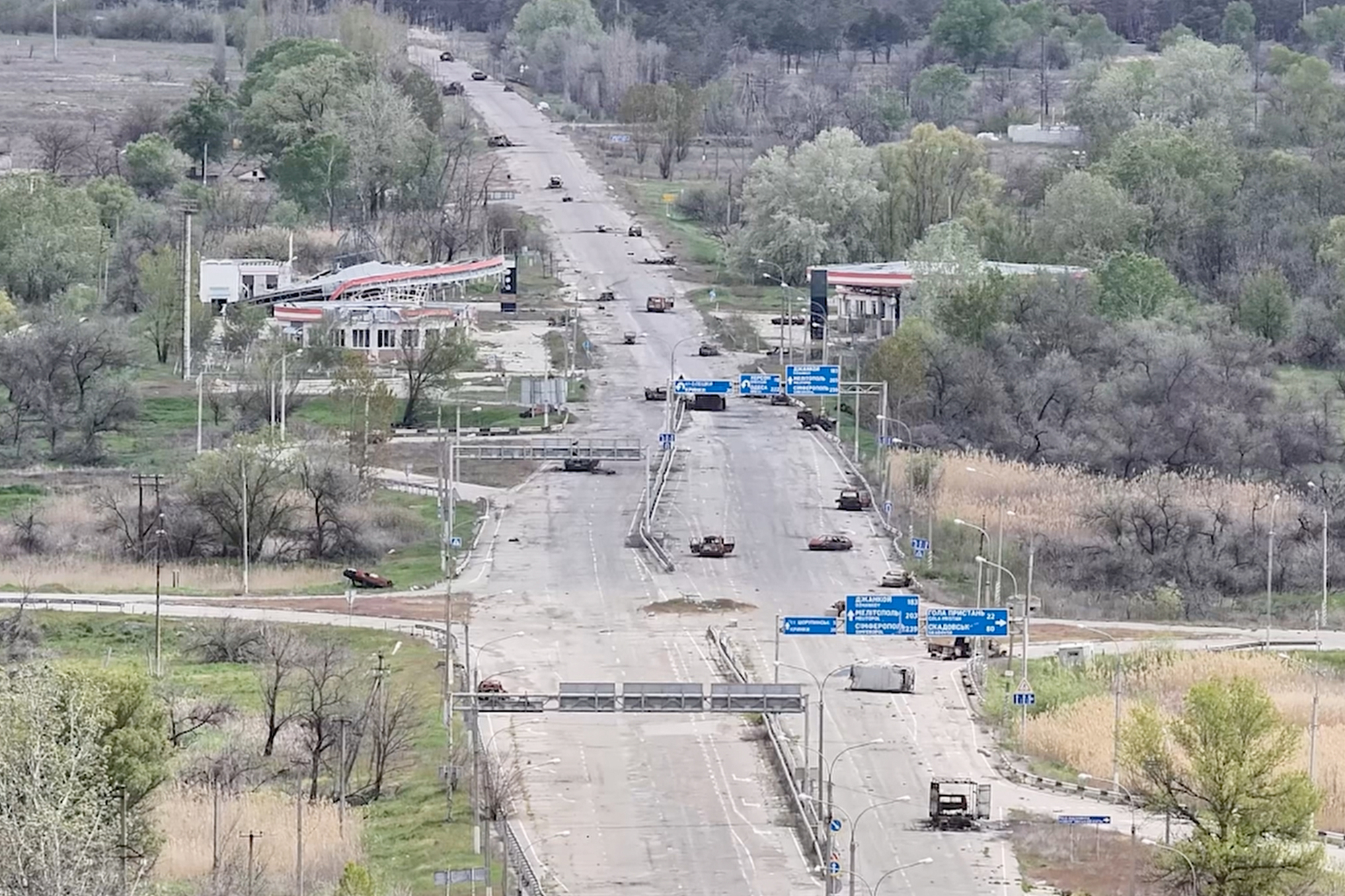
A localised ceasefire between Ukraine and Russia has taken effect ahead of a humanitarian mission led by US first lady Melania Trump, as missile attacks resumed in Kyiv.
Meanwhile, Finland’s president and Norway’s prime minister spoke on the phone to Russian President Vladimir Putin, officials said, in their first-known direct contact since shortly after Russia’s all-out invasion of Ukraine in February 2022.
After the conversation with Mr Putin, the two Nordic leaders had a telephone conversation with Ukrainian President Volodymyr Zelensky, according to Mr Zelensky’s office.
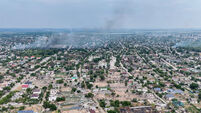
Russia and Ukraine began observing the localised ceasefire in a devastated southern Ukrainian city on Tuesday, before a planned humanitarian mission brokered by the US first lady, but Moscow kept up its deadly missile attacks on other cities in the meantime.
The local pause in fighting started at 3am to allow an aid mission into the Russia-occupied city of Oleshky later this week.
The situation in Oleshky is desperate, with food and medical supplies running perilously low for the up to 2,000 people still there, as drones and land mines restrict movement.
Deep mistrust between Russia and Ukraine, as Moscow’s full-scale invasion nears the five-year mark in February, has undermined previous attempts at limited ceasefires, which quickly unravelled or never took hold.
The humanitarian truce was a high-stakes operation for both Moscow and Kyiv, with both sides keen to win US President Donald Trump’s favour.
Russian and Ukrainian negotiators as well as the militaries of the two countries confirmed in separate statements that the Oleshky ceasefire had begun.
The call, confirmed by the offices of Norwegian Prime Minister Jonas Gahr Store and Finnish President Alexander Stubb, followed a meeting on October 20 in Oslo between the two Nordic leaders, Ukrainian President Volodymyr Zelensky and US special envoy Steve Witkoff.
The call was held in consultation with Ukraine, according to the official statements by the two Nordic countries.
Mr Stubb and Mr Store initiated the call to discuss the war and upcoming trilateral talks involving Russia, Ukraine and the United States that are expected to take place in the United Arab Emirates in November.
The two European leaders spoke on behalf of their own countries and not the whole of Europe, the statements said.
“The discussion was frank and substantive,” Mr Stubb said. “We are neighbouring countries to Russia. The outcome of this war will have a direct impact on our and the broader European security. Ending the war requires direct discussions.”
“The war comes with enormous human and material costs,” Mr Store said. “The suffering and destruction will impact generations. In the call we stressed the importance of de-escalation.”
According to her office, the US first lady led talks with civilian negotiators from Russia and Ukraine after meeting UN officials who briefed her on the situation in Oleshky.
The people stranded in the city are unable to leave because of explosive mines and drone attacks in the area, according to the UN. The partly occupied Kherson region of Ukraine where Oleshky is located is notorious for the dangers of Russian drone attacks on soldiers and civilians.
Kremlin spokesman Dmitry Peskov said on Tuesday that “so far there have been no reports of violations”.
Pope Leo XIV spoke earlier this month with Mr Zelensky and Mr Putin, urging them to allow humanitarian aid into Oleshky and the safe evacuation of civilians, the Vatican said.
Negotiators involved in the aid mission said doctors, medicines, food supplies and water would be taken to Oleshky before evacuation corridors are opened.
The Kremlin said at the time that Mr Putin voiced support for the Vatican’s plea, and an agreement was reached to co-ordinate efforts in this regard.
Moscow and Kyiv have blamed each other for the humanitarian crisis.
Russia, as the occupying power, must under international law ensure that civilians under its occupation live safely. Ukraine has repeatedly tried to negotiate a humanitarian corridor for evacuations and aid delivery with Moscow.
The aid mission is planned ahead of a new round of US-brokered talks between delegations from Russia and Ukraine expected next month that will seek to lay the groundwork for detailed peace negotiations later.
The local ceasefire is due to last through to Saturday, or longer if needed. Its geographical scope was unclear, though it was centred on Oleshky and other nearby parts of the Kherson region.
Oleshky is about 340 miles south-east of Kyiv, where the Dnipro River separates Russian and Ukrainian forces.
Oleshky sits across the Dnipro River from the city of Kherson, the region’s administrative capital. Russian forces seized Kherson in the early stages of the 2022 full-scale invasion, but retreated across the river several months later.
The Ukrainian-held side of the Kherson region was quiet on Tuesday. Only Russian reconnaissance drones were in the sky, local authorities said, though they cautioned it was too early to draw any conclusions and that they did not trust Russia.
“It’s too early to say. Let’s wait and see, because you can’t trust the enemy, especially the Russians,” Yaroslav Shanko, head of the Kherson city administration, told the Associated Press.
“There have been previously announced ceasefires more than once, and they had no effect on Kherson… and, let’s say, a lull like this is sometimes even frightening.”
Mr Shanko acknowledged the situation was unusual. He typically travels with a portable drone detector that constantly picks up drones overhead, but it had gone silent. He said he still kept glancing at it, but it showed nothing.
The quiet stands in contrast to daily life in the city, where people are wounded or killed nearly every day, he said.
City services plan to use the pause to carry out utility work that is usually too dangerous because of constant drone activity.
Minutes after 3am, multiple ballistic missile explosions shook Kyiv and air alerts sounded in multiple parts of the country.
Late Monday, the capital also came under attack, when Russian ballistic missiles damaged the grounds of a university in Kyiv, killing one person and leaving 10 injured, city officials said.
In Kharkiv, Ukraine’s second-largest city, authorities said attacks late Monday killed two people and injured four.
“It is important that the world sees that Russia is showing nothing but a desire to kill and continue waging war,” Mr Zelensky wrote in an online post shortly afterwards.

CONNECT WITH US TODAY



Be the first to know the latest news and updates