The Dreyfus Affair: Lessons from the scandal that divided France
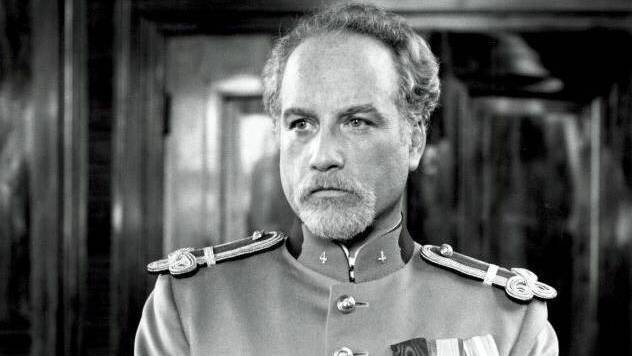
Richard Dreyfuss in the 1991 film 'Prisoner of Honor', in which he played the role of French army captain Alfred Dreyfus. File picture: IMDB
In Ireland’s long and complex history, July 12 stands unmistakably for one key event: the Battle of the Boyne in 1690. Delving deeper into history, we can see it commemorates another date of importance: the 120th anniversary of the exoneration in 1906 of French army captain Alfred Dreyfus on trumped up espionage charges — the famous Dreyfus Affair.
The case was a notable ‘cause celebre’ at the time. It divided France into Dreyfusards and anti-Dreyfusards. It divided families and one-time friends. It pitted the institutions of the French establishment against the liberal and secular forces of a French society in turmoil after the country’s catastrophic defeat in the Franco-Prussian War.
It attracted a huge international following as the ‘Affaire’ unfolded and the depths of the scandal and those implicated were exposed.
The turn of the 19th/20th century also saw a boom in the mass media, with huge growth in the number of newspapers and readers, an era tailor-made for a scandal like the Dreyfus Affair. Protagonists on both sides made effective use of the newspaper media in promoting their passionately expressed opinions. As it would be a couple of decades before the radio came into common use, print media was in the ascendant.
Exploring the context of those times is instructive. 1906 was a year with significant implications for Ireland. The Liberals returned to power in Britain after an absence from government of 11 years, with a commanding majority in the House of Commons. Committed to Home Rule for Ireland, the Liberals’ accession was seen by nationalists as a huge opportunity finally to achieve Home Rule.
HISTORY HUB
If you are interested in this article then no doubt you will enjoy exploring the various history collections and content in our history hub. Check it out HERE and happy reading
Read More
It was busy year internationally. The San Francisco earthquake killed more than 3,000 people and caused huge structural damage. The RMS Lusitania was launched in that year. Its sinking 11 years later off the coast of Cork brought the United States into the First World War, ultimately deciding the war’s outcome.
The naval race between Britain and Germany gathered pace also in that year, a key factor in hostilities leading to the outbreak of war in 1914.
The substance of the case against Dreyfus was that as a French military officer privy to military secrets, he traded these secrets to individuals in the German Embassy in Paris, France’s great enemy and victor over them in 1870.
The secret documentation concerned a new weapon which the French military was developing for potential use against the Germans. Dreyfus was arrested in December 1894 on charges of espionage, convicted and sentenced to life imprisonment in France’s notorious Devil’s Island.
After his conviction, Dreyfus faced the ultimate humiliation of being ‘degraded’ in public view. This involved the buttons and epaulettes of his uniform being stripped away and his army sword broken in half in the courtyard of St Cyr, the French military academy. The humiliation was complete.
The case had all the hallmarks of great drama. Espionage, cover up, deceit, prejudice, intolerance, all played a part in what was the great miscarriage of justice of the era. In an age when the print media in France and worldwide was burgeoning in size and influence, the case made ‘great copy’ for an enthralled public. Newspapers lined up on both sides of the debate.
The case also attracted international attention, such was the furore over the trial and the punishment meted out. In 1896, two years after Dreyfus’s conviction, an investigation by French officer Colonel Piquart discovered it was not Dreyfus, but a Colonel Esterhazy who was responsible for passing the secrets to the Germans and that he and a number of senior French officers effectively colluded in pinning the blame falsely on Dreyfus.
A second trial was arranged to re-examine the facts in 1899, but astonishingly, the initial conviction was upheld and Dreyfus was returned to Devil’s Island.
Dreyfus was a Jew from the eastern region of France bordering Germany. Jewish officers were rare in the French army at the time and subject to the same kinds of prejudice and discrimination faced in other parts of French society and in other eras.
A weak case was trumped up against him by the French military establishment looking for a convenient scapegoat. Antisemitism was strong in the France of the time, a factor which Dreyfus’s defenders drew attention to. Yet, Dreyfus himself avoided reference to such prejudice and maintained throughout, a stance loyal to the army — which alienated many of his supporters.
There were many examples of great drama and heroism in the Dreyfus Case. In 1898, the great French writer Emil Zola, a supporter of Dreyfus, published an excoriating attack on the French establishment, calling for Dreyfus’s release and public accountability for the injustice done to him.
Published in newspaper under the heading ‘J’accuse’, it resonated around the world as the symbol of the Dreyfus defence.
Zola’s piece, moreover, lit a fuse that was to lead ultimately to pressure for Dreyfus’s release. Col Piquart had the difficult task of convincing the authorities the authorities were complicit in framing Dreyfus and covering it up.
Also, Dreyfus’s brother, Mathieu, showed great resilience for providing continued support for Alfred throughout his ordeal.
The Dreyfus affair had many ramifications for French society. Society was divided and governments of the Third Republic were rocked by the Affair. Even as late as 1940, the establishment of the Vichy regime under Marshal Petain was said to be the "revenge of the anti-Dreyfusards".
International exposure of events was enabled by the rise of the mass media and the public’s appetite for scandal.
Ireland has been no stranger to miscarriages of justice. The cases of the Birmingham Six, the Guildford Four and the Maguire Seven in the 1970s were the most notorious and most highly publicised of these. Final exonerations took over 10 years of campaigning and processing through the legal system in Britain.
In Ireland itself, the most egregious have been the 1970s Sallins Mail Robbery Case, the Kerry Babies Case of the 1980s and more recently, the McCabe Case.
To these can be added the litany of institutional abuse cases which have come to light. Despite high-profile miscarriages of justice like the Dreyfus Affair and others, the record shows the continued incapacity of institutions and individuals to learn from past mistakes and to stem over-reaches in the exercise of state power.
Ultimately, it was ‘speaking truth to power’ which unlocked cases like the Dreyfus Affair. Regard for the truth and for human dignity combined with a steely determination to correct serious wrongs despite institutional resistance from powerful entities, are all at the heart of the overturning of that and other miscarriages of justice.
The Dreyfus Affair stands out as the epitome of miscarriages of justice, an historical benchmark against which to measure similar examples.
Importantly, the Dreyfus Affair was not simply the trial of an individual, but also an investigation of a whole system and culture that was seen to have been complicit in his conviction and degradation.
Authoritarianism, intolerance, antisemitism, arrogance, secrecy and institutional corruption were all indissoluble elements of the Affair. They remain potent ingredients of many of the world’s scandals up to the present day.
- Paul McElhinney is a writer and journalist living in Wexford who has also worked in Dublin, London, and Washington. His work has been published in many Irish, British and American journals and his main interests are history, politics, sport and culture


CONNECT WITH US TODAY



Be the first to know the latest news and updates