Clodagh Finn: Remarkable story of Cork's Cummins sisters 
There is so much more to say about the Cummins sisters from Cork city 
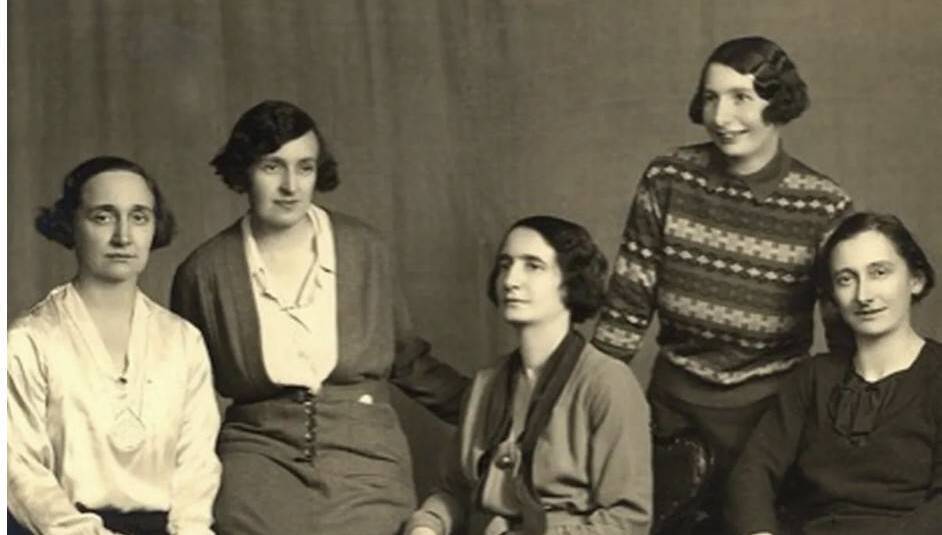
Left to right: Dr Mary Hearn, Dr Jane Mullin, Geraldine Cummins, Phyllis Hayes and Iris Cummins. File picture

Left to right: Dr Mary Hearn, Dr Jane Mullin, Geraldine Cummins, Phyllis Hayes and Iris Cummins. File picture

When Anne Twomey of Shandon Area History Group was trying to think of women who might feature in a documentary about the unsung heroines of Cork City in the 1920s, the name Mary Hearn was running around in her head.

It rang a bell, but there was no file, so to speak, until she asked her mother Joan (O’Callaghan) Twomey about her. Then the floodgates opened. Not only did her mother have vivid memories of an exceptional family doctor who treated everyone regardless of their ability to pay, but all of her aunts remembered a progressive, kind, and deeply empathic woman who touched them deeply.

Her patients recall her skill, her kindness (she often waived her fee), and her ahead-of-her-time advice. As a gynaecologist and obstetrician, she saw women who had frequent pregnancies and were often left to cope on their own. She felt aggrieved that women were treated so unfairly — sometimes being forced into mother and baby homes — while the fathers shirked their responsibilities.

In general terms, she was exceptional too, graduating with first-class honours in medicine from University College Cork (UCC) in 1919. Five years later, she became the first female fellow of the Royal College of Physicians of Ireland (RCPI).

What impresses me, though, is that she left her studies to marry Robert Hearn, later Church of Ireland bishop of Cork, Cloyne and Ross, and — so unusual for the time — he encouraged her to return to university. Her husband and toddler son Robert attended her conferring in a scene that must have been extremely rare, if not a first, at the university.

HISTORY HUB

If you are interested in this article then no doubt you will enjoy exploring the various history collections and content in our history hub. Check it out HERE and happy reading

More than that, as a married woman and mother of two, she continued to work, in her private practice at Sydney Place and at the Victoria Hospital in the city.

It is inspiring and heartening to hear many of her former patients talk about her with such warmth.

One of them, former senator and retired doctor Mary Henry, who was delivered by Dr Hearn, speaks about her in the aforementioned documentary. (If you have a spare half hour, treat yourself to Endurance & Engagement: Cork City Women in the 1920s, which was commissioned by Cork City Council and directed by Ciara Buckley and David Slowo as part of its Decade of Centenaries programme.)

But back to Dr Mary Hearn (1891-1969). Listening to Anne Twomey speak about how she has lived on in the memory of her mother and aunts is deeply moving. On one level, it is a powerful reminder that Irish women have been active for very many decades in places where you might not expect to find them.

More striking than that, perhaps, is how those female pioneers inspired other women by showing them it was possible to look beyond your own circumstances to follow a path you might not have considered.

Inspiring others 

Exposure to that sense of possibility played a big role in the life of Anne Twomey’s Aunt Marie. She was a patient of Dr Mary’s as a young woman and, inspired by her, later considered a life beyond her job in the office at Dunlops in Cork.

Marie (née O’Callaghan) McClelland took a leap of faith, enrolled in a night degree in English and History at UCC, and later ended up as school principal in a primary school in England.

To this day, she remembers Dr Hearn. Here is what she told Irishwoman’s Diary: “I honestly do hold her in enormous esteem. She was way before her time. She had a refined elegance and natural dignity that set her apart. I verify that she employed the same level of courtesy and respect when dealing with me as a mere schoolchild as when she attended my father [at his home] during his many angina attacks.

“Her annual special party at the Victoria Hospital, for her patients, was an innovative and singular Christian event.”

We could fill not only a column but a book on this medical pioneer but, as Anne Twomey found out, she was just one of five high-achieving daughters born to William Edward Ashley Cummins, Professor of Medicine at UCC, and Jane Constable Hall between 1890 and 1907.

All of them got a third-level education and went on to have independent careers thanks to encouragement from their father and the influence of their governess Winifred Holloway.

Oh, to have been able to sit in on Ms Holloway’s lessons, which were designed to imbue her young students with a love of maths and science, and a competitive spirit. Could she have imagined that her charges would go on to shine in the fields of medicine, engineering, and the arts? Actually, I imagine she wouldn’t have been at all surprised.

Sister's lives 

It is only in recent years, though, that the collective work of these sisters has been drawn together.

Anne Twomey happened across Mary Hearn’s elder sister Geraldine (born 1890) while visiting an exhibition on dramatist and suffragist Susanne Rouvier Day. Both women, along with novelist Edith Somerville, were founder members of the Munster Women’s Franchise League, which campaigned for votes for women.

The women regularly spoke at rallies on the streets of Cork and, on one occasion, Geraldine Cummins was stoned by a group of women who clearly didn’t agree with her.

Her activism, though, was just one string to a varied bow. She was a writer, dramatist, medium, spiritualist and, briefly, wife to poet Austin Clarke.

She also, apparently, led a secret life as an agent during the Second World War keeping an eye on Nazi sympathisers in Ireland, according to the College of Psychic Studies website. (She wrote a manuscript on her war work; an eye-popping story to delve into at a later date).

In any event, she was very highly regarded. College secretary Mercy Phillimore spoke of her remarkable intelligence and strength of will.

Of her war activities, she said: "They … reveal physical and moral courage of a degree possessed by few people. It is astounding to find such qualities combined with a delicate psychic constitution and a somewhat shrinking sensitiveness from all the ordinary outward affairs of life.”

We have barely scratched the surface of the life and achievements of these two women and we have yet to mention the three younger sisters: Iris (b 1894) who would go on to become UCC’s first female engineering graduate; Jane (b1899) who became a doctor and squadron officer with the RAF in the Second World War, and Phyllis (b 1907), a scientist who worked with the Metallurgy Atomic Research Station at Harwell in the UK.

There were six high-achieving brothers too — Arthur, William, Robert, Harry, Nicholas, and Fenton — in the large well-to-do Anglican family on Patrick’s Hill. Robert and Nicholas were also doctors and Nicholas introduced the first blood transfusion service to Cork. “I don’t know what it would have been like to be around the table!” says Anne Twomey.

We haven’t even touched on their sporting achievements either — four of the five sisters had international hockey caps for Ireland — or the devastating loss of two brothers during WWI. Harry died at Gallipoli in 1915 while Fenton was killed on the Western Front in 1918.

Don’t worry, though, the story of the remarkable Cummins sisters will be fleshed out in a talk by Anne Twomey on Thursday, July 23, at 7.30pm at the Dance Cork Firkin Crane as part of the ever-inspiring The Spirit of Mother Jones Festival.

And keep an eye on this space too. There is so much more to say about the remarkable Cummins sisters of Cork.

More in this section

Revoiced

Newsletter

Had a busy week? Sign up for some of the best reads from the week gone by. Selected just for you.

Cookie Policy Privacy Policy Brand Safety FAQ Help Contact Us Terms and Conditions

© Examiner Echo Group Limited