Why America's ageing politicians are facing growing calls for term and age limits

Graham’s death and McConnell’s somewhere-in-between state has injected fresh impetus into the ongoing debate about the age profile of America’s political leaders.
It says something about the age profile of the US Congress when the sudden death of senator Lindsey Graham last week sent such massive shockwaves through its ranks.
All the more since Washington DC had been fixated on whether 84-year-old Mitch McConnell, until recently the most powerful senator on Capitol Hill, was dead or alive — or somewhere in between.
McConnell, the longest serving Senate party leader in US history, had been hospitalised several times in recent years and frozen several times when speaking to reporters. On June 14, an ambulance arrived at his DC home.
Dispatch audio confirmed he was unconscious and CPR was performed before he was taken to hospital. For almost four weeks, no updates were provided, other than brief statements from staffers claiming he was recovering and receiving excellent care.
A handful of Republicans issued identikit statements, each claiming to have spoken to him for 20 minutes about the same topics, sparking an avalanche of memes and quips from late night comics.
His wife, former transport secretary Elaine Chao, continued her weeks-long trip to China, suggesting either a remarkably cavalier approach to her husband’s status — or a willingness to participate in a Republican plan to drag his sell-by date past August 3, and thereby avert a special election or a replacement nominated by Kentucky’s Democratic governor.
The ensuing frenzy peaked after Graham’s death. Chao returned from China and a hostage-style proof-of-life photo of McConnell followed; it wouldn’t have inspired much confidence if it was provided in pursuit of a ransom.
The Kentucky senator was snapped seated in a hospital chair, gazing away from the camera, eyes glassy and unfocused, as his smiling wife appeared to prop him up from the side. It indicated he was still breathing but provided little clue as to his cognitive function.
Graham’s death and McConnell’s somewhere-in-between state has injected fresh impetus into the ongoing debate about the age profile of America’s political leaders.
A gerontocracy on Capitol Hill and a kakistocracy in the White House. It’s not a good look for a country, that even as it celebrated its 250th birthday, has placed a premium on its youthfulness, energy, appetite for innovation and willingness to embrace change.

According to Samuel Moyn, a Yale professor and author of the recently published , it’s not just the age profile in Congress, or that Donald Trump and his predecessor celebrated their 80th birthdays in the White House.
These are the symptoms, he believes, of a society that privileges the elderly, blocks the young and “is more set on preservation than on renovation”. Half of the US’s 100 senators are past retirement age.
Of the 535 members of the House and Senate, 134 are aged between 70 and 94. Of the 33 Senate seats up for re-election in November, 25 are held by incumbents that are past retirement age. Four of them — independents Bernie Sanders and Angus King, Democrat Dick Durbin and Republican Jim Risch — are octogenarians.
For more than a decade now, successive polls have shown a significant majority of Americans are no longer willing to be wedded to their political representatives till death do they part.
An NPR/PBS News/Marist survey published last month shows that 83% of adults surveyed support putting a definitive cap on the number of times a candidate can run for office, while 80% favour imposing an age limit that mirrors the retirement age for most American public servants.
Weeding out the gerontocracy seems to be one of the few issues that unite Republicans, Democrats and Independents who support the age- and term-limiting measures in roughly equal numbers. But it’s not as simple as all that.
The stock response from Capitol Hill’s elder lemons is that if the Founding Fathers had wanted term limits, they’d have included them in the Constitution, an assertion that conveniently overlooks the fact that when the Founding Fathers were contemplating such things, the average life expectancy was all of 36 years.
A 1995 attempt to introduce term limits was blocked by the Supreme Court, the justices perhaps concerned they might be next on the chopping block.
Elderly incumbents are protected by donors — and voters. For corporate America and entrenched special interest groups, continuity in Congress equates to a guarantee that the status quo will continue uninterrupted.
And this system is reinforced by the American electorate with 75% of Americans aged 65 or over voting in the 2024 election. That’s 43.4 million votes.
At the other end of the scale fewer than 20 million Gen Z voters between the ages of 18 and 29 turned up at the polls — around 46% of young Americans eligible to vote did so.
In short, America gets what it votes for. An electorate that is dominated by the elderly votes for elderly representatives who run on campaign platforms that appeal to the elderly.
Republicans and Democrats trick out their electoral stalls accordingly, supporting issues that appeal to ‘high propensity voters’ and steering away from issues that don’t.
Elderly Republicans vote for candidates that will lower taxes and pledge no cuts to federal pension and healthcare programmes that benefit the over 65s.
Democrats aren’t much different. While their constituents may support tax increases to pay for healthcare and investment in education and infrastructure, campaigning on a promise to overhaul Social Security, the federal-funded pension system, is political suicide, even though it’s on course to run out of funds in 2032.
Meanwhile, the status quo totters along the corridors of Capitol Hill, in no hurry to change anything. Chuck Grassley, the 93-year-old senator for Iowa is third in line should US president Donald Trump shuffle off before him.
When House Speaker Nancy Pelosi retires in January 2027 aged 86, she will have served 40 years in Congress. Steny Hoyer, her 87-year-old second in command and former House Majority leader, announced his retirement after 45 years in Congress.
Former House Majority Whip Jim Clyburn, who is 86 and has notched up 34 years in Congress, is running for re-election. More than a dozen Republicans are there even longer; Hal Rogers and Chris Smith have each notched up 46 years in the House.
Kay Granger, a member of Congress from Texas, refused to retire despite living in a retirement home and suffering from dementia.
In 2022, the trio stepped down from their leadership roles. But relative youth is no guarantee of effective leadership or fresh ideas.
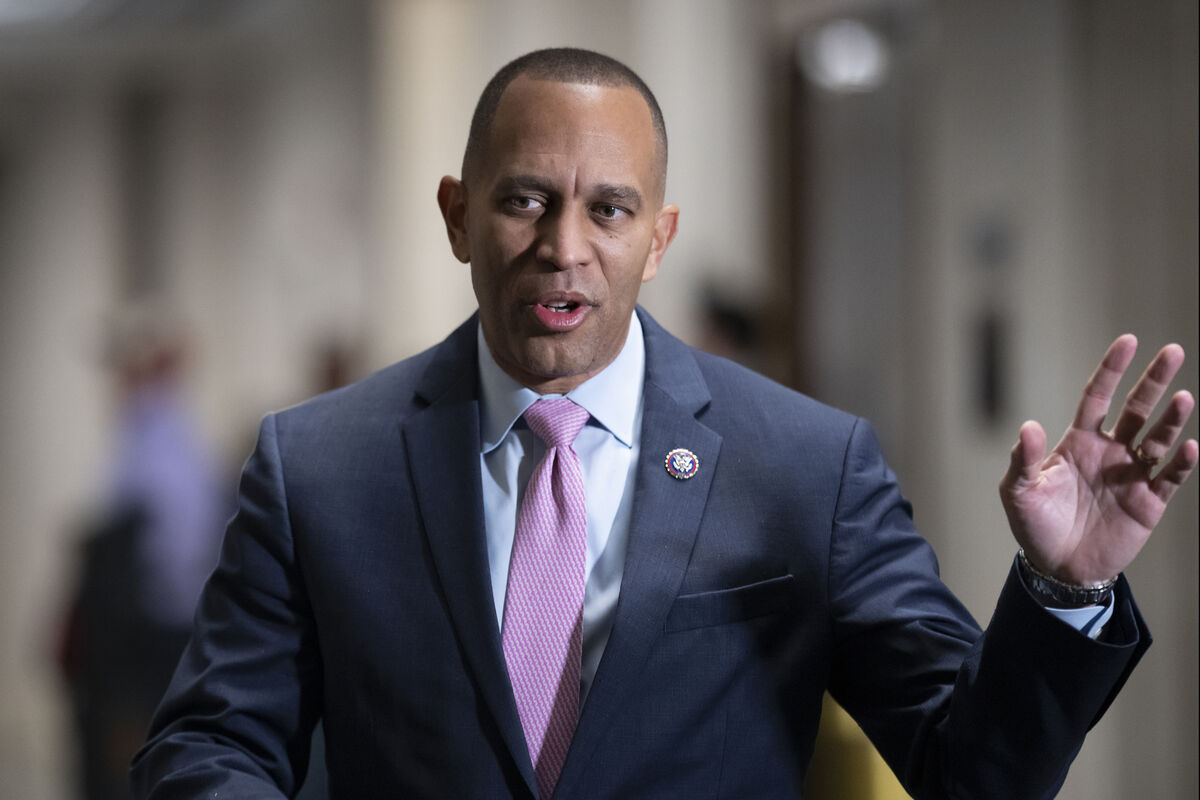
Pelosi’s successor, Hakeem Jeffries, who at 53 is more than three decades her junior, has proven a lot less effective at taking on Trump, disrupting his acolytes in Congress or keeping the Democratic caucus in line.
There are few politicians on Capitol Hill of any age that share Pelosi’s ruthlessness and formidable skill set but younger representatives show at least a willingness to challenge and disrupt and focus on a forward-looking agenda.
While much of the focus is on age limits, term limits are equally important. Age limits would do little to counter the vitriolic flame throwing of Lauren Boebart, or the ethno-nationalist extremism of 30-year-old Brandon Gill.
A limit on the number of times they could run for office would be a far more effective way of weeding out the peddlers of extremist agendas and the Congressional Kardashians who spent most of their time creating clickbait or preening in front of cable news cameras.
But a stubborn appetite for change was apparent in the recent midterm primaries, where a slew of progressive 20- and 30-something challengers ousted Capitol Hill fixtures.
Zohran Mamdani, New York’s 34-year-old mayor has brought a charisma and energy to the job that has landed him the highest approval ratings of any local or national politician in the US.
In Texas, 29-year-old James Talarico is seeking to break the perennial Democratic fever dream of clinching a seat in the Senate.
Meanwhile, Democrats are scrambling to recover from their disastrous decision to select Graham Platner, a 41-year-old populist oyster farmer to challenge 73-year Republican Susan Collins for her Senate seat.
They have less than two weeks to find a young, charismatic challenger who can break Collins’ 30-year lock on the Senate seat in Maine.
The chances may seem slim but the national mood is sour and angry and Trump’s approval ratings are mired in the mid-30’s, suggesting there is a real opportunity for a new generation of politicians willing to tackle issues that are important to Americans.
CONNECT WITH US TODAY



Be the first to know the latest news and updates