From Cape Verde's fairytale to Messi magic: The defining stories of World Cup 2026
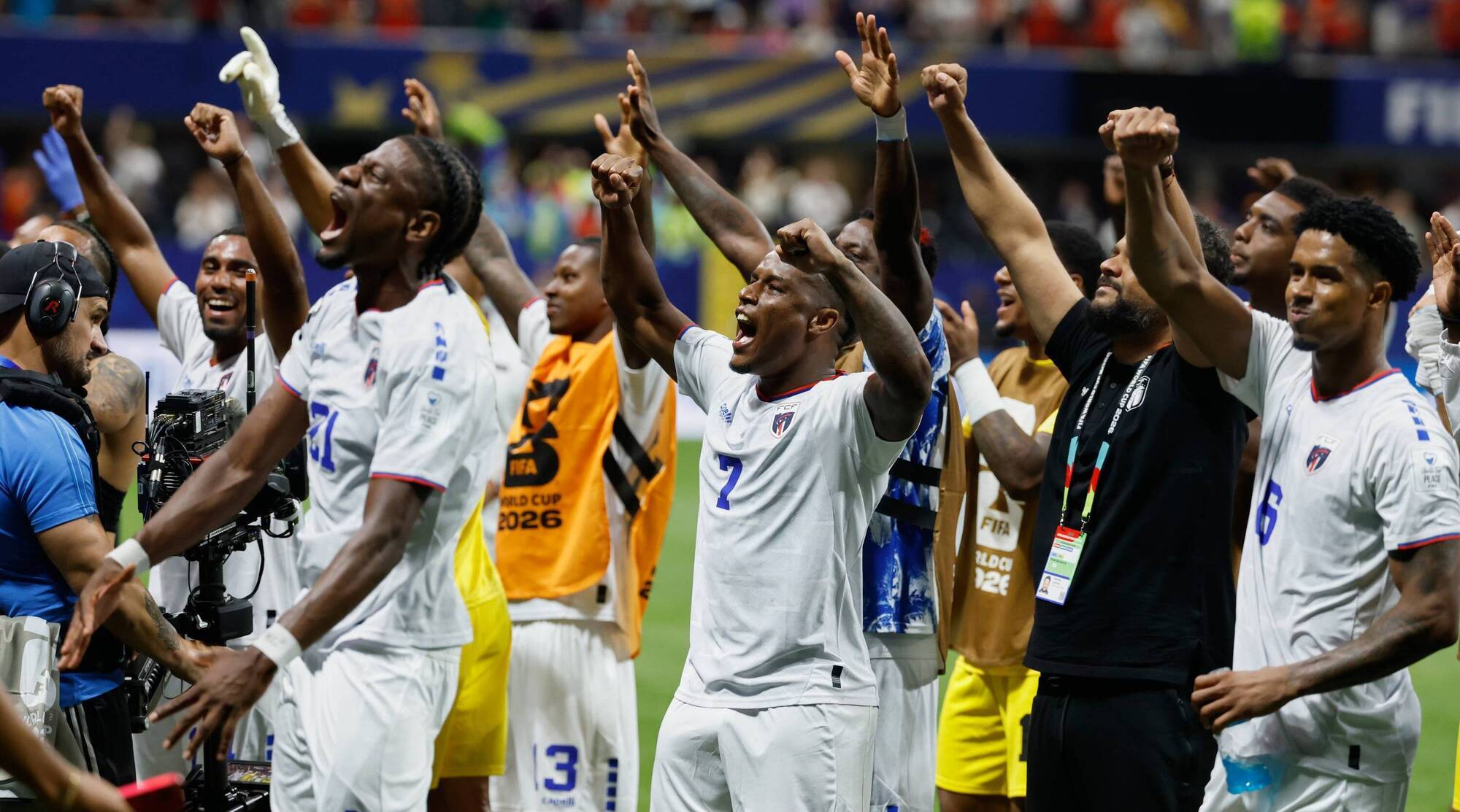
Cape Verde players celebrate after their draw with Spain. The so-called minnows brought reigning champions Argentina to the wire, losing out 3-2 in extra time to bow out of the tournament. Photo: AP/Erik S. Lesser
The 2026 World Cup has been one of unprecedented scale and excess — 48 teams, 104 matches, 16 host cities spread across three host nations in North America.
The tournament’s record-breaking revenues and scale have further bolstered the idea of football as not just a game for the masses, but as a commercial behemoth.
The 2026 edition stands in stark contrast with its humble beginnings in 1930, when 13 amateur and semi-pro teams arrived in Uruguay, with all 18 games played in the capital of Montevideo.
While football, or soccer, is typically viewed as the fifth or sixth most popular sport in the United States, New Yorkers say the city and the wider country have embraced the World Cup fever.
Read More
Emily Foy from Harlem said the tournament has served as a potent reminder of the US as a melting pot of cultures and diasporas, and sport as a conduit towards uniting people.
“You see people that you would consider just New Yorkers, and not really think about where they might be from or where their family is, and then to see them really embrace a national identity that you didn't know they had, it's a great way for people to be able to share those kind of experiences,” she said.
“Everyone's got a bit of a story, even if it's they're supporting Germany because you know their great great great granddad came to Ellis Island, there's something cool about that.”
For many, travelling fans have brought new life into the country, even if just for a fleeting summer.
Cape Verde’s fairytale run was the near-unanimous pick for fans’ favourite moment of the World Cup.
They came into the tournament ranked 47th of the 48 teams by population. Former English striker and Talksport pundit Gabby Agbonlahor predicted a 7-0 drubbing in their opener against Spain.
The game finished 0-0. They’re still the only team in the tournament who have managed to maintain a clean sheet against the Spaniards.
Two more draws in the group stage saw a ticket to the Round of 32, where they brought reigning champions Argentina to the wire, losing out 3-2 in extra time.
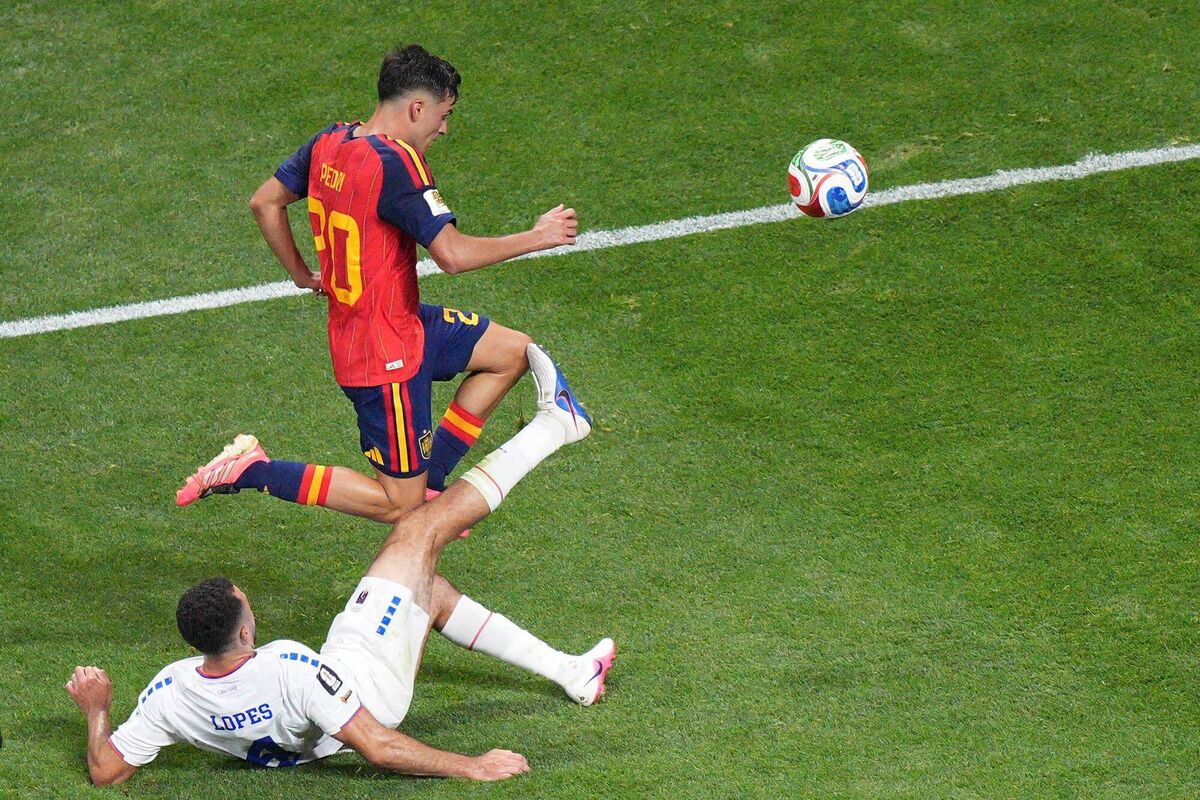
At the heart of their rock-solid defence was Shamrock Rovers centre half and Crumlin native Pico Lopes — Ireland’s de facto poster boy for the World Cup.
But Lopes’ increasing celebrity wasn’t just contained to one side of the Atlantic.
Sean Doran, who owns the Honey Fitz bar in Queens, Astoria, was initially left pondering what to do without a home nation to rally behind.
The idea to turn Honey Fitz into “the official New York bar of Cape Verde” soon materialised, pulling in around 30 or 40 viewers on the opening game. Doran was left thinking it was a successful night.
Doran's brother, who works with Shamrock Rovers, messaged Lopes who then endorsed the bar’s status as the go-to for Cape Verdeans in the US.
“It just kind of blew up,” Doran said.
“Word got out and then it was a good mix of people from Cape Verde and then also Irish that live in the neighbourhood as well."
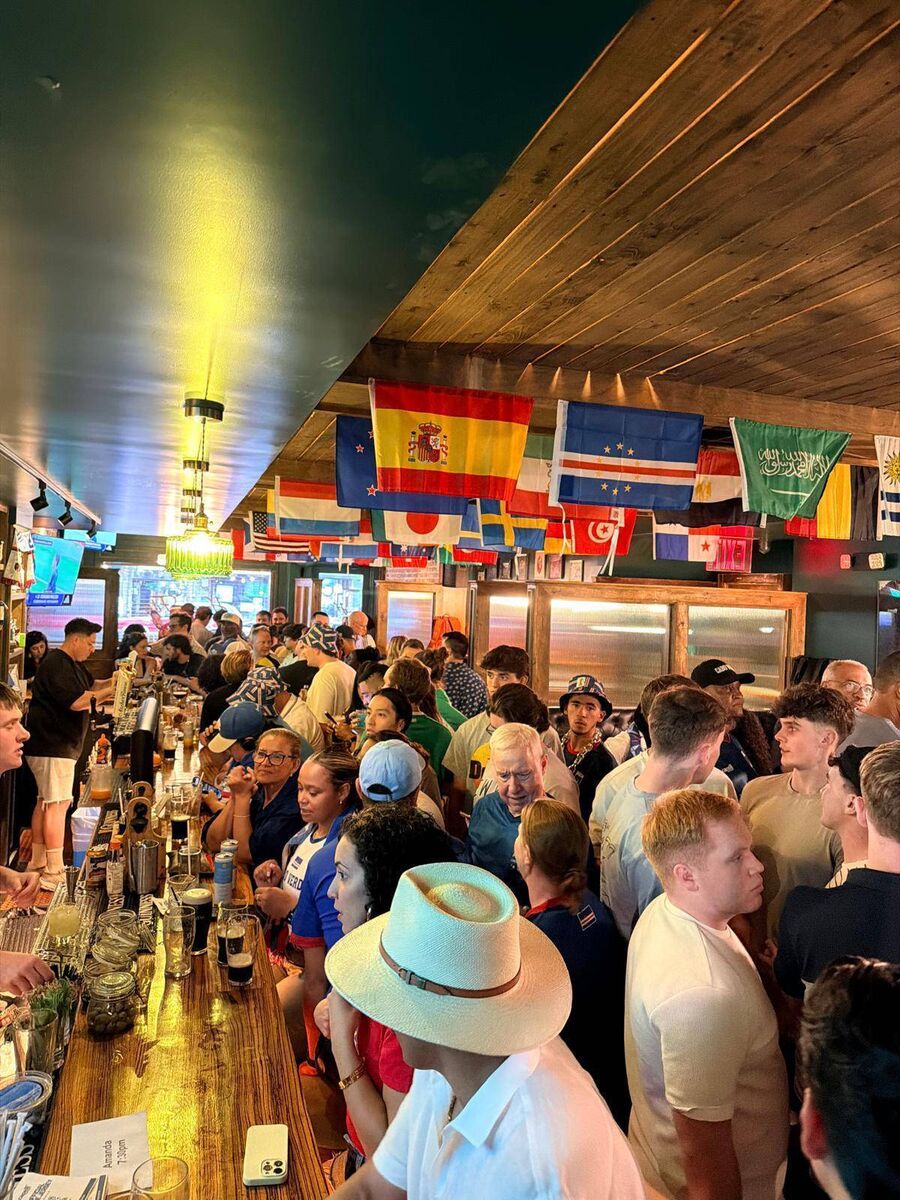
Some even made the three-and-a-half-hour drive from Brockton, Massachusetts, the largest base of Cape Verde’s diaspora in America. The bar eventually earned a feature in
“It was a great atmosphere. Very nice people. Everybody was chatting together amongst each other, Irish and people from Cape Verde.
“It's been amazing… we didn't anticipate what would happen…it was just a packed bar. Even the game against Argentina, there was a heat wave here. It was over 40℃ and the place was jam-packed; there was a line down the street, it was mad.”
Travelling fans from Scotland and Norway have also enjoyed the warm embrace of American fans.
While the Scots were seen to take over Boston for their opening game against Morocco, belting out ‘Flower of Scotland’ at Fenway Park, the Norwegians have fascinated unwitting Americans with their Viking Row celebration and their idiosyncratic goal machine Erling Haaland.
English fans often don’t enjoy the same reputation.
“I think a lot of us were curious to see how English fans would go down in America, especially based on how America’s policed,” said Glen Galvin, owner of the Hairy Lemon in Manhattan’s East Village.
“They’re one of the few countries in the world where police officers have guns and they have a lot more power to deal with problems than other places…by all accounts (England fans) have been really well embraced and have added super energy to the city.”
“I want to give out about them but I can’t,” quipped Paddy Teehan, owner of the Station Bar in Queens.
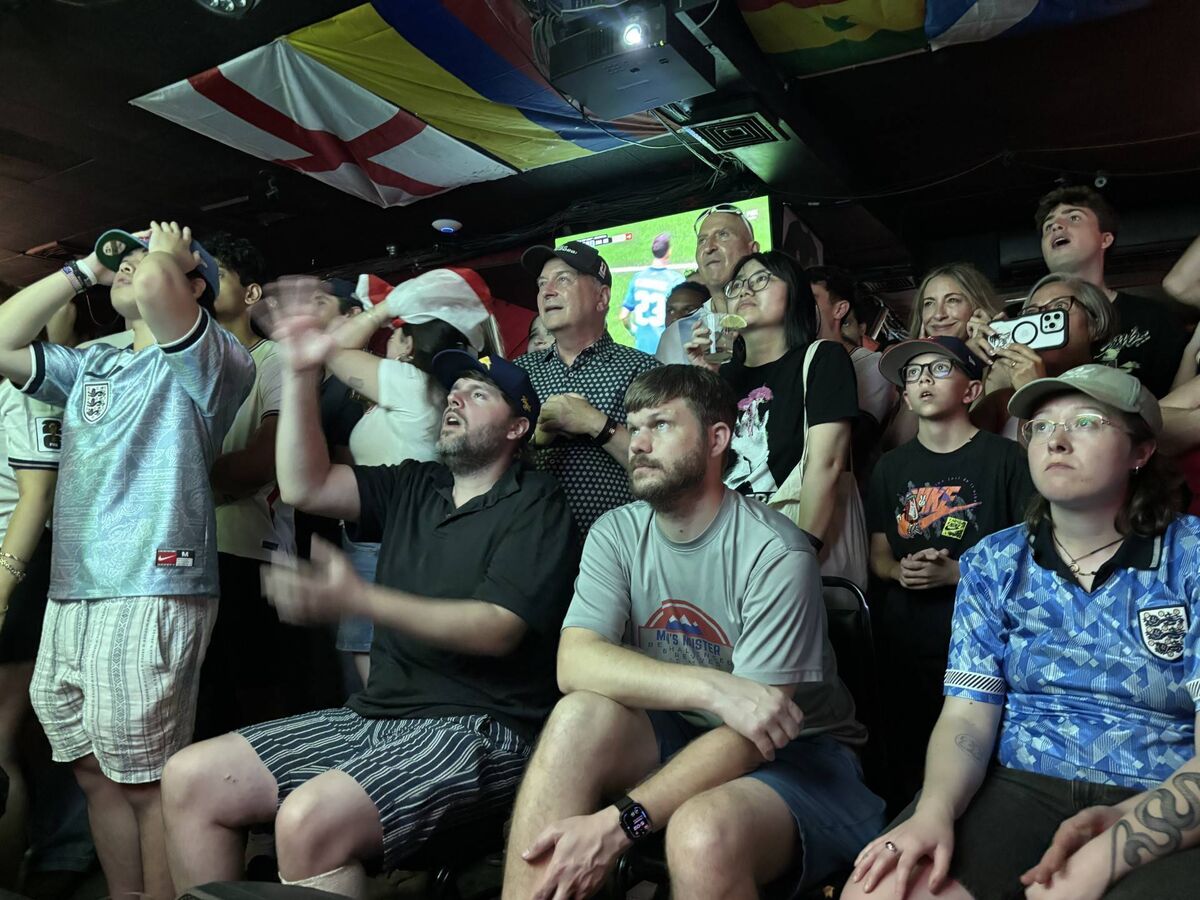
At the Red Lion on Bleeker Street, English fans rammed through the door in the hopes of seeing their country make their first World Cup final in 60 years.
Many were quick to lay down their mark.
“100% it’s coming home,” said Dawn LaFranca.
“This team, I think we can take them (the Argentines)…we’ve got a guy who can take us further, a bit more discipline and a great team,” Paul Watson told the
“I feel it in my bones, I think it’s ours,” said Georgina Malone.
For 85 minutes, they looked to have made good on their predictions. Then came an old familiar unravelling.
A late equaliser from Enzo Fernández was followed by a tantalising cross delivered by Lionel Messi that found the head of Lautaro Martínez, completing another Argentine comeback from purgatory.
The long wait for football ‘to come home’ will have to stretch on a bit longer.
Football’s glimmering moments have also been tarnished by occasional controversies.
While fears around the presence of ICE forces in the World Cup failed to materialise, many saw Somalian referee Omar Artan's denial of entry to the US at the beginning of the tournament as further proof of a country becoming increasingly intolerant.
A US official said Artan was denied because of his "association with suspected members of terror organisations".
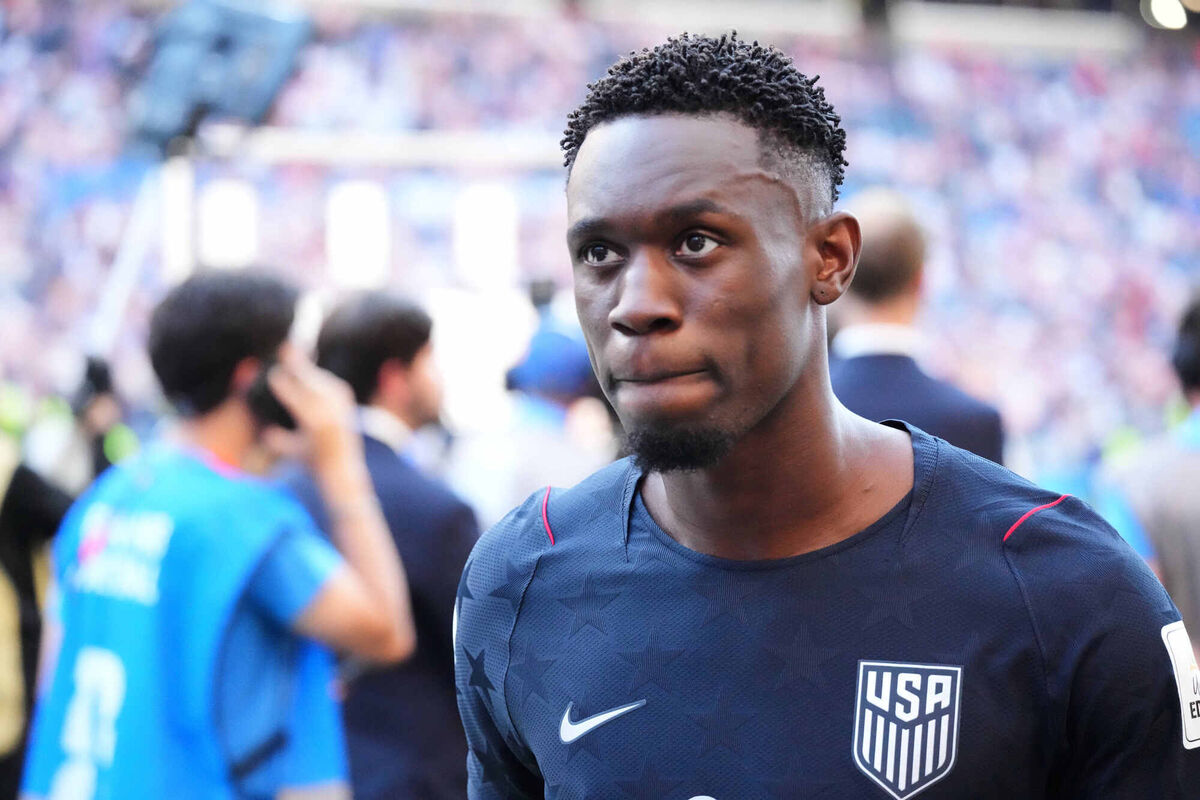
The decision to overturn US striker Folarin Balogun’s red card against DR Congo was another sordid moment that raised questions around Fifa president Gianni Infantino’s close proximity to Donald Trump.
Lionel Messi has dazzled at this World Cup — notching up eight goals and four assists while seemingly playing most of his football at a canter — but some have accused the Argentinians of foul play and conspiracy.
“We have been cheated unfairly today; we have suffered injustice… Perhaps they wanted to keep the world champions in the competition,” said Egyptian head coach Hossam Hassan after collapsing to a late 2-3 defeat to Argentina in the round of 16.
For chroniclers of the game, the four-year cycle of the World Cup offers not just an insight into football's evolution, but also the tectonic movements of the time.
The 1934 and 1978 World Cups took place with nations under autocratic dictators in Italy and Argentina. 2022 offered a glimpse into the increasing influence of oil states on the world order and brought the concept of sportswashing into sharp focus.
For some, 2026, the most expensive World Cup on record, marks a further insight into football’s self-cannibalism.
Kieran Maguire, a professor of football finance at the University of Liverpool and host of The Price of Football podcast, said the current World Cup’s economic model is poised to be the blueprint for further editions.
“Football has changed in the sense that it's no longer opera for the working classes. It is now a middle-class form of entertainment. It's not even sports, it's just another extension of the world of entertainment, and Fifa are pricing it accordingly.”
A large part of Fifa’s projected revenue of $12 billion will be dispersed across the wider footballing ecosystem.
“It won’t be possible to get the genie back in the bottle because all those doing business with and around the World Cup will become accustomed to, if not reliant on, the incremental revenue,” warned David M. Carter, a professor of sport economics at the University of Southern California.
Some concerned fans in New York raised fears that the game, which is consumed by billions, is now becoming an experience for a select few. Yet others stick to a devout belief that the World Cup has the power to transcend all sorts of price brackets.
Argentina fan Juan Delgado paid $7,000 for his ticket to the World Cup final. “It’s worth all of the prices because Messi could be retiring in this place, so I have to share that with my kids, that’s my vision of life.”
CONNECT WITH US TODAY



Be the first to know the latest news and updates