World Cup 2026: It's more than just football — the magic still exists
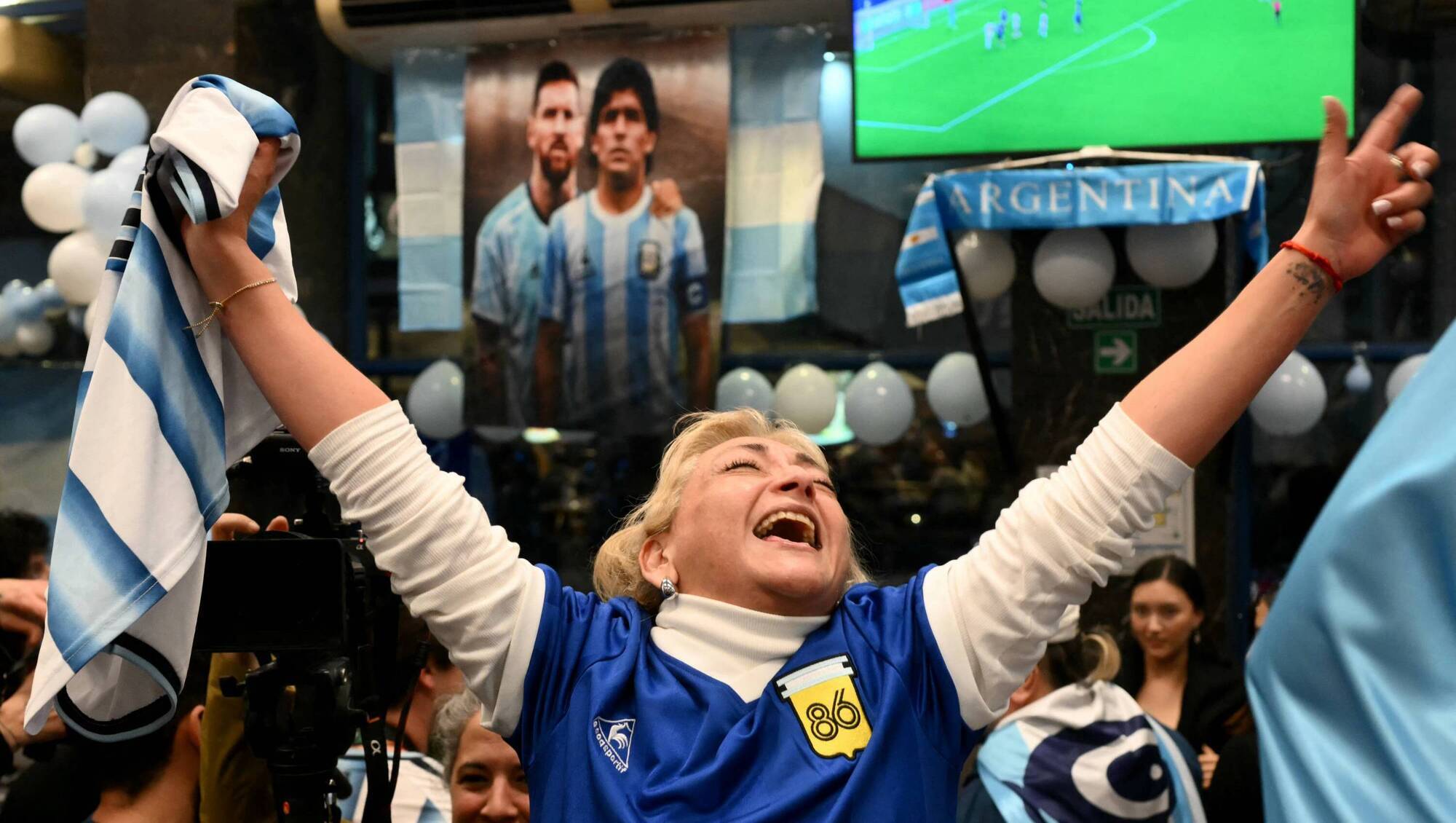
A fan celebrates at a restaurant in Buenos Aires after Argentina beat England in the semi-final on July 15. Picture: Luis Robayo/AFP via Getty
The temptation, as every World Cup draws to a close, is to rank it.
Was it better than Qatar? Better than Russia? Better than France in 1998?
Perhaps a better question is this: What did this World Cup tell us?
Because by the time either Argentina or Spain lifts the trophy on Sunday evening, this tournament will have become about far more than football.
It has been a month of extraordinary matches, extraordinary goals, and extraordinary stories. It has also been a month in which football once again found itself colliding with politics, commerce, history, and ego.
On the pitch, it has been difficult to complain.
There have been moments of genuine brilliance, emerging stars who will shape the next decade, established giants who reminded us why they remain giants, and matches that justified football's claim to be the world's game.
It is easy to become cynical about modern sport, to lament the endless commercialisation and the billion-euro industry surrounding it.
Then a player produces a pass that should not exist, or a goalkeeper pulls off a save that defies physics, and we remember why billions of people willingly surrender a month of their lives every four years.
There is something quietly magical about the way a World Cup turns every living room into a classroom.
Children point at unfamiliar flags and ask impossible questions.
Adults discover how embarrassingly little they know.
Why are Morocco and France such fierce sporting rivals?

Why does Belgium playing an African nation carry historical weight?
Why do Argentina and Spain evoke entirely different chapters of global history despite sharing a language?
Every fixture offers an invitation to wander into history, geography, and culture.
World Cups teach in ways our schoolbooks never managed. Football has a remarkable ability to make distant places suddenly feel familiar, if only because we have spent ninety minutes cheering or despairing alongside them.
That, more than anything Fifa could ever market, remains the tournament's greatest legacy.
It raises an uncomfortable question about another of Fifa's favourite slogans: Growing the game.
Every World Cup arrives with grand promises about inspiring the next generation, transforming the host nation, and leaving behind a lasting football culture.
Perhaps it will happen here. Perhaps thousands of American children will now swap baseball gloves for football boots.
Perhaps Major League Soccer will enjoy another surge.
But we have heard these promises before.
The United States has hosted a World Cup already.
Japan and South Korea were transformed economically by hosting, but football's place in their sporting cultures evolved far more gradually than any marketing campaign suggested.
Maybe we are asking the wrong question.
Football hardly needs converting anymore. It is already the world's language.
The real legacy of modern World Cups may not be what they leave behind in the host nation but what they reinforce everywhere else: The extraordinary ability of one sport to command the attention of billions of people who otherwise agree on almost nothing.
Unfortunately, football no longer arrives on its own.
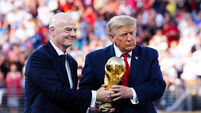
This tournament has also been a reminder that Fifa seems increasingly comfortable blurring the line between sport and political theatre.
Gianni Infantino's extraordinary closeness to Donald Trump has often felt less like diplomacy than deference.
The governing body appeared remarkably willing to adapt itself to the rhythms and demands of its hosts, whether through awkward political choreography, controversies that might once have prompted firmer resistance, or simply an acceptance that football should accommodate power rather than challenge it.
The contrast with Qatar four years ago is revealing.
Qatar rightly faced relentless scrutiny over migrant workers, human rights, and civil liberties. Whether its reforms were sincere, sufficient, or largely cosmetic is a matter of continuing debate.
There was an effort, however imperfect, to persuade the world that change was taking place.
The United States has approached things rather differently.
There has been little attempt to seek approval, little interest in explaining itself, and even less concern about outside criticism.
If Qatar's World Cup was an exercise in reputation management, this one often felt like an exercise in reputation indifference.

That is not simply an American story. It is a story about the political age we now inhabit, where institutions increasingly seem to believe that legitimacy no longer needs to be earned, only asserted.
And yet, despite all of that, football somehow prevailed.
Perhaps that is the enduring miracle of the World Cup. It survives its administrators. It survives politicians eager to borrow its spotlight. It survives sponsors, television executives, and governing bodies that are convinced they are the main attraction. They never are.
Long after the speeches have been forgotten and the photo opportunities filed away, what remains are the goals we will replay for years, the impossible saves, the emerging stars, the conversations around kitchen tables, and the children who now know where countries like Morocco, Ghana, or Ecuador are on a map.
On Sunday night, Argentina or Spain will become world champions. Fifa will congratulate itself on another successful tournament. Politicians will claim their share of the glory. Economists will calculate the financial impact. They will all, in their own way, miss the point.
The real legacy of this World Cup will not be measured in visitor numbers, television ratings, or balance sheets.
It will be found in millions of ordinary moments: A child asking "but why?", a parent reaching for an atlas, a family discovering a country they had never previously thought about, and billions of people, for 90 minutes at a time, remembering that, despite everything politics can do to divide us, football still possesses a rare and precious ability to bring us together.