Joyce Fegan: We need a housing system that offers a greater choice than living under abuse
Almost 1,900 women were turned away from domestic abuse services over a six-month period with the housing crisis identified 'as the single greatest barrier to safety and recovery'
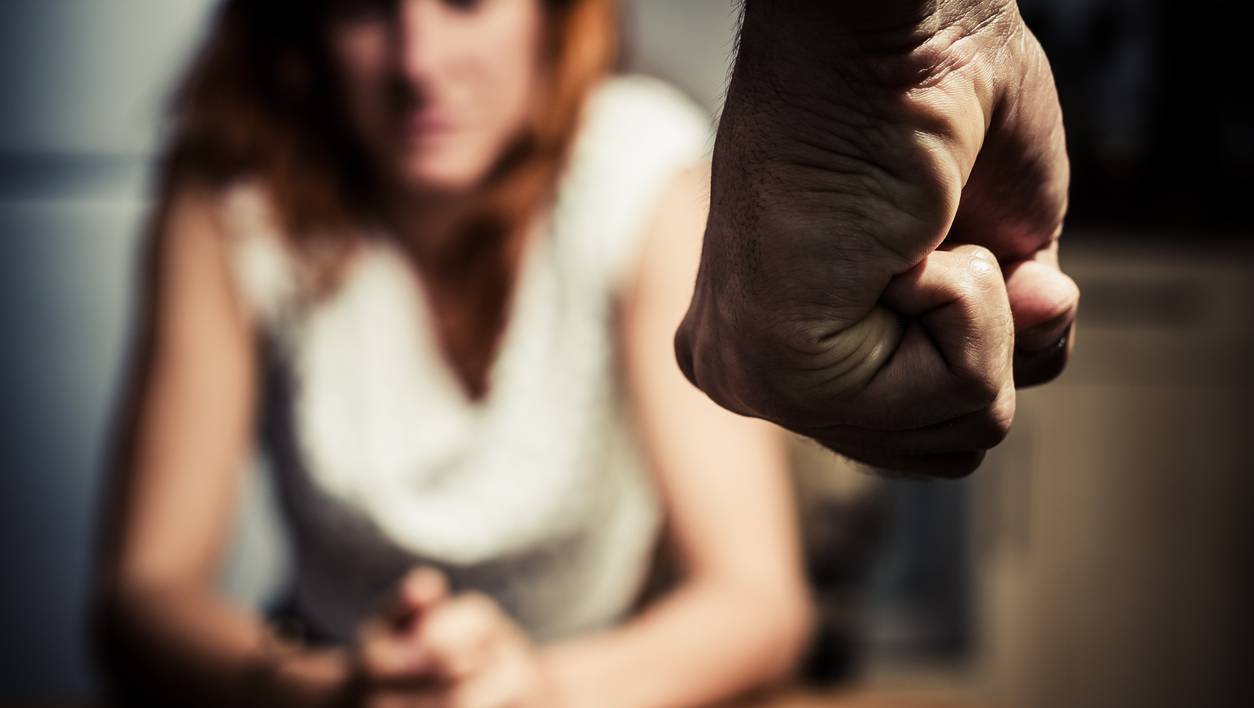
In 2026, the State left 1,892 women who were fleeing violence, abuse, sexual assault, and coercive control with nowhere, absolutely nowhere to go. File picture: Stock image

In 2026, the State left 1,892 women who were fleeing violence, abuse, sexual assault, and coercive control with nowhere, absolutely nowhere to go. File picture: Stock image

The late Australian journalist John Pilger once said: “There are times when one tragedy, one crime, tells us how an entire system works.”

He was talking specifically about the mass eviction of all people from the turquoise-watered, white-sanded Chagos islands that began in 1967, in order to create the British Indian Ocean territory, now a US-UK military base.

This week, it was revealed that almost 1,900 women were turned away from domestic abuse services over a six-month period — the housing crisis identified “as the single greatest barrier to safety and recovery” by Safe Ireland.

The housing crisis is not new — it has been a crisis for years. 

Nine years ago this week, a Fine Gael government missed its own July 1 deadline to move homeless families out of hotels, in its bid to address this “crisis”.

Nine years on, there are more than 5,000 children in homeless services, with more than 4,500 women in emergency accommodation, according to a National Women’s Council Ireland (NCWI) paper published in February.

As for the causes, take your pick —the legacy of negative equity; low housing stock; continually rising house prices; rental costs; a lack of building supplies; a lack of skilled labour, and very recently, humans fleeing war. 

As for the solutions, we’re still waiting for ones that will make a material difference.

That’s cold comfort to the 1,872 women turned away at their most courageous moment as they sought help. 

These women, some with children to rear, were fleeing violence, abuse, sexual assault, and coercive control of every crooked method imaginable. 

And we left them with absolutely and utterly nowhere to go.

Before the housing crisis, women could at least attempt to leave their abusers, meet rent and bills somewhere, maybe even cover a mortgage on a small place. 

The housing market at least, the criminal justice system notwithstanding, made a new start possible, for some.

1,892 women had absolutely nowhere to go

In 2026, this is not the case. In 2026, the State left 1,892 women with nowhere, absolutely nowhere to go.

While John Pilger’s words were documenting modern-day colonialism, his idea that a singular incident can cut to the core of a system, seems acutely accurate here.

Perhaps, it’s not just stock, nor labour, nor any human to blame for this decade-long “crisis”, but a legacy of policies that never really went for the jugular to fix our housing system, instead merely toyed around with schemes such as: rent caps in rent pressure zones; the tax-free rent-a-room; the cost-rental model for building and the mortgage-to-rent to deal with arrears.

But here we are, years in, dealing with sex for rent exploitation and now, nearly 1,900 women being turned away from domestic abuse services.

Safe Ireland, which held a one-day census on January 28, looked at life across 38 specialist domestic violence services, and found 850 adults and 324 children receiving support and refuge.

The one-day census of domestic abuse services came just days after new statistics from the Central Statistics Office (CSO) showed an 8% increase in criminal assaults against female victims compared with the same period in 2025.

And the day before the CSO figures were published, Women’s Aid released its 2025 impact report showing a 33% increase in reports of domestic abuse, with now one in three women saying they experienced abuse by a current or former partner.

While your home is meant to be your refuge from the world, your work, your stresses, for many, it’s the exact place where the crimes against them are relentlessly perpetrated. And so, new housing, not just temporary refuge, is key.

Move-on housing unavailable so many women remain in refuge accommodation

Safe Ireland said this week that many women “remain in refuge accommodation longer than intended because suitable move-on housing is unavailable”.


And there is no way we can ever say this is a “we didn’t know” problem, because in just six months we have had four robust reports, from the NCWI, the CSO, Women’s Aid, and Safe Ireland.

And we can’t really say this is a “we don’t have the money” problem either.

In 2014, the Dublin Region Homeless Executive was spending approximately €29m a year on emergency accommodation. In 2021, that annual spend had risen to €119m.

Of the €305m homeless expenditure in Dublin in 2024, emergency accommodation accounted for 88% of it.

Nationally, in the 2024 budget, a total of €385m was allocated to homeless services, but 94% of that, or €361m was spent on emergency accommodation, according to the Focus Ireland and Trinity College Dublin, “focusing on homelessness”.

So much data, and so much money, so you really have to wonder why we continue to direct so much of our resources to emergency accommodation, instead of long-term solutions?

Is there a will to find a way to create a robust and mixed housing system?

If we don’t create proper housing stock by a multitude of methods, the people already in emergency accommodation will have nowhere to move onto, and the people needing emergency accommodation today or tomorrow will have no access to any, as was the case with the 1,892 women we turned away.

However, behind these vast sums and massive statistics are people, a woman, a caring mother. 

She bided her time, tossed the idea of leaving over and over in her mind a thousand times, then she discreetly packed a bag of essentials, she left not a trace, especially not digital.

She doubted herself, and told no one, she weighed up the pros and cons of leaving the father of her children, she second guessed the move she was about to make. 

She timed his schedule to the second, and prepared her exit with exact precision, knowing that the most dangerous time for any victim is the time they attempt to leave.

She arrived at the door of the service she walked to a hundred times on Google Maps, a child on her hip, a glance over her shoulder, and how did we receive her? She was turned away.

What did she do then? Where did she go? What fate met her on her return? And will she ever summon the courage to try again?

But most of all, what will we do, the voter, the policy maker, the social media poster — will we make sure, 12 years after we started calling housing a “crisis” that there is, for once and for all, a housing system that offers greater choices than living under abuse because there was literally no room at any inn?

x

More in this section

Revoiced

Newsletter

Had a busy week? Sign up for some of the best reads from the week gone by. Selected just for you.

Cookie Policy Privacy Policy Brand Safety FAQ Help Contact Us Terms and Conditions

© Examiner Echo Group Limited