Meta accused of covering up research on teen social media addiction
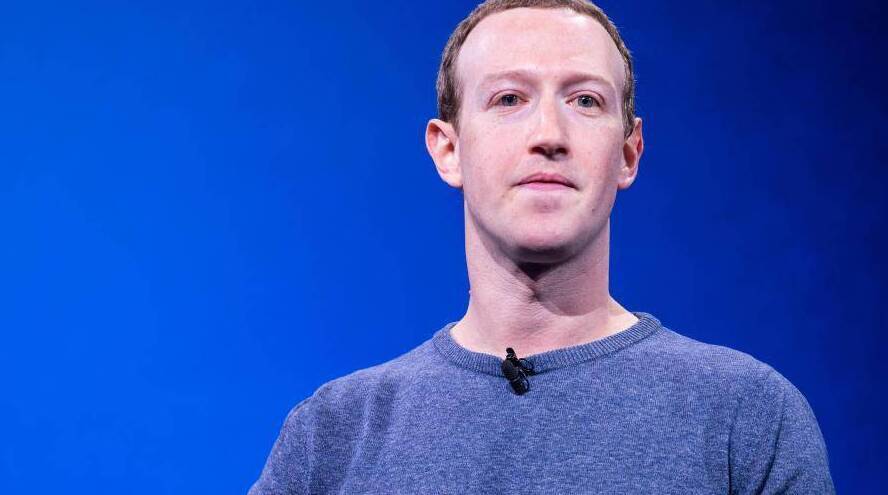
Mark Zuckerberg, CEO of Meta which is accused of covering up research on teen social media addiction
Lawyers representing 29 US states have accused Meta of covering up internal research that showed that Instagram was addictive for teenagers.
In a packed courtroom on the opening day of a landmark legal challenge, they said the company knew its products harmed children but hid that information from the public.

In her opening statement, California’s deputy attorney general, Megan O’Neill, told jurors that she would be giving them a preview of what they could expect to see over the course of the trial, which would include testimony from expert witnesses and Meta employees, along with internal documents that the attorneys general uncovered while investigating the social media company.
She referenced an internal 2019 survey and other documents including one that said, “the young ones are the best ones”. In another document, Meta stated: “Teens are hooked despite how it makes them feel. Instagram is addictive.”
“They knew,” O’Neill said. “Time and again, profits won. If you aren’t paying for the product, you are the product. Kids are a product, and Meta took their data and used it.”
The unprecedented lawsuit against Meta accuses the parent company of Instagram and Facebook of deliberately designing addictive products that lured in young people and damaging their mental health.
The jury trial is taking place in federal court in Oakland, California, and is expected to last between six and eight weeks. The jury will hear from Meta CEO Mark Zuckerberg, Instagram CEO Adam Mosseri and employee turned whistleblower Arturo Béjar.
The 233-page lawsuit, first filed in October 2023, alleges that Meta regularly collects data on children under the age of 13 without parental permission in violation of federal and state laws. The lawmakers claim in court documents that Meta “refuses to abandon its use of known harmful features” and that its motives are based solely on profit to “maximize its financial gains”.
The suit was filed jointly by 29 state attorneys general in what is known as multidistrict litigation, though the trial proceedings will be led by attorneys for California, along with lawyers representing Colorado, Kentucky and New Jersey.
The sweeping legal proceedings could have profound consequences for the social media company. The attorneys general say that if Meta is found liable, damages could be as high as $200bn (€173bn) — an amount equivalent to the company’s 2025 annual revenue.
The lawmakers are also asking that Meta be compelled to change the design of its products to make them safer for children, which may have longer-term effects than a fine.
Meta denies all allegations. A company spokesperson said in a statement: “Rather than sticking to the facts or the law, the states have instead decided to chase an outlandish payout.
“The State AGs may call this a landmark case, but their limited claims are unsubstantiated and their financial demands are vastly disproportionate. The AGs offer no proof anyone in their states was misled, claim benign features like having an additional Instagram account somehow harmed their residents, and attempt to penalize Meta for industry-wide challenges like age verification.”
The attorneys general disagree, saying Meta “developed and refined a set of psychologically manipulative” features designed to maximize people’s time on its apps. Those include an infinite scrolling recommendation algorithm, constant notification alerts, thumbs-up “likes”, and visual filters for altering one’s image.
The lawmakers say young people are especially vulnerable to falling prey to such features and that excessive time online can lead to increased depression, anxiety, eating disorders and other mental health issues.
Internal research conducted by Meta is expected to be presented at the trial, including, for instance, a survey of 2,500 teens conducted in 2019.
“Young people are acutely aware that Instagram can be bad for their mental health, yet are compelled to spend time on the app for fear of missing out on cultural and social trends,” the results read.
The federal trial comes just two weeks after a judge ordered Meta to pay $567m (€490m) to New Mexico in a similar case brought by the state’s attorney general. This was the second court-ordered financial penalty for Meta in New Mexico, bringing the total it is responsible for paying the state to $942m (€814m).
A state trial in Tennessee is also now under way.
Families, school districts and other attorneys general have brought thousands of lawsuits against Meta and other social media companies in recent years. The plaintiffs hope a death-by-a-thousand-cuts legal strategy will induce Meta to change its social networks to be safer for children.
In California, thousands of coordinated cases have been filed in state court against Meta, YouTube, TikTok and Snap. Meta and YouTube lost the first of those cases to go to trial in February, being ordered to pay $6m to the young woman who brought the suit. (TikTok and Snap settled before the case went to trial.) Two more lawsuits slated to go to trial this summer, one federal and one in California state court, also settled for undisclosed sums.
The lawsuits have borrowed from the legal approach used against tobacco companies in the 1990s, which focused on cigarettes’ addictive qualities and the makers’ knowledge that their products caused harm. Those thousands of suits resulted in a $200bn payout by the four largest companies in 1998 and also enforced changes to to their marketing practices.
- The Guardian