Irish unity is not a manifesto item for electoral advantage
From the Social Democratic and Labour Party’s (SDLP) “New Ireland”, Micheál Martin’s “Shared Island”, Sinn Féin’s “Irish Unity”, and now Fine Gael’s “Unified Island”, party political strategists have worked hard to put their party’s slant on uniting Ireland.
By treating the constitutional future of Ireland as a proprietary branding exercise, political parties limit the reach of genuine debate and risk alienating the very people needed to deliver a successful border poll — wider society.
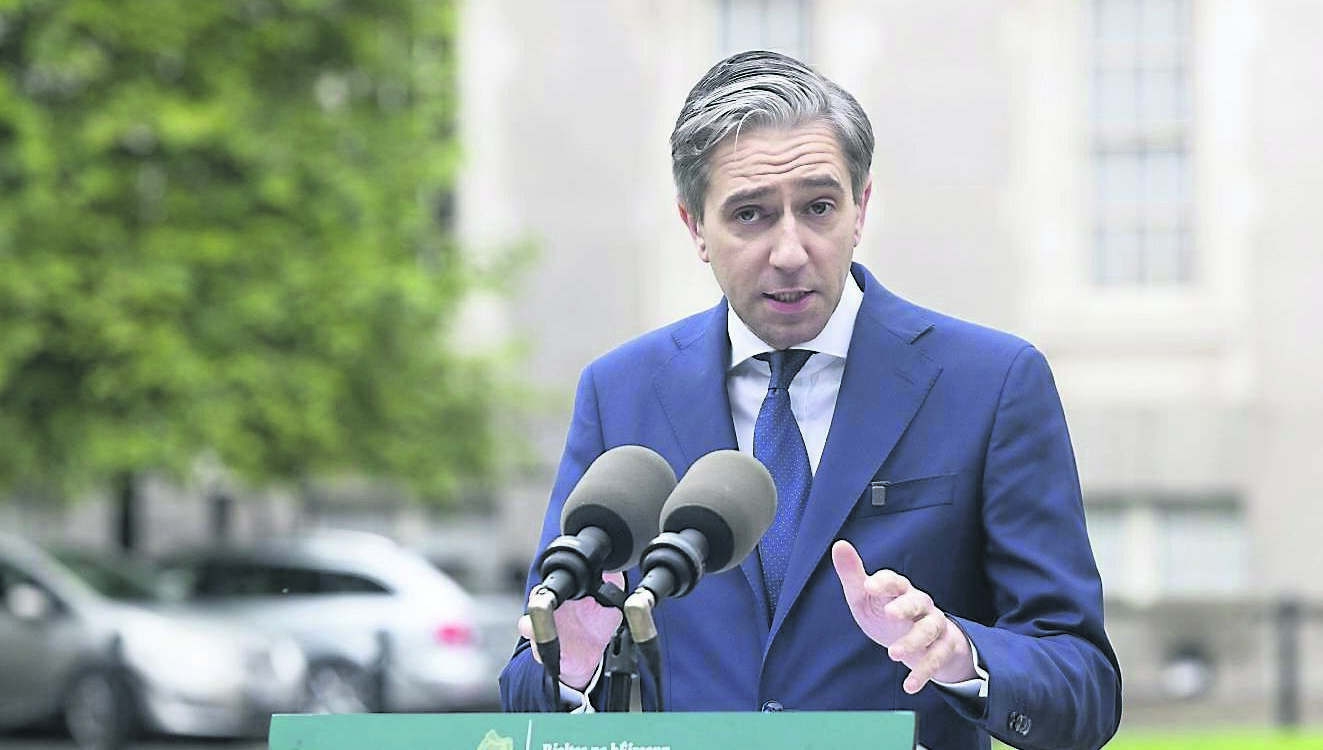
Harris confirmed Fine Gael’s blueprint would be launched at the party’s ard fheis in November. The timeline is no coincidence; Harris is due to become Taoiseach in the Government’s coalition deal on November 16. A sceptic might view this as a manifesto item cynically deployed for electoral advantage.
The principle of consent under the Good Friday Agreement notes that it is for the “people” of Ireland alone to “bring about a united Ireland”. It is not a loaded term, but rather, a central term to which the people of Ireland — North and South — agreed in the 1998 referendum.
Read More
To date, pro-unity parties have not succeeded in creating the kind of movement needed to deliver a successful border poll because each has been working in isolation, limiting their potential. The SDLP launched its New Ireland Commission in 2021 to create an ambitious blueprint; in reality, it failed to produce a single paper.
Colum Eastwood recommitted to the work of the commission when he stepped down as party leader in 2024, stating he would be giving his “full commitment” to leading a New Ireland. Nothing materialised. The social media channels for the commission have been dormant for over six months.
The party finally released a policy paper in March this year. The document made no reference to the New Ireland Commission, and its upcoming New Ireland event features no branding or reference of the commission either. A slow, quiet, death of what appears to have been a former leader’s pet project rather than a well-planned and executed vehicle for change.

Sinn Féin has been the most productive, having published several papers and running a series of so-called people’s assemblies — the issue is that these gatherings are largely composed of party members.
Martin’s Shared Island Unit appears to be designed to facilitate anything but constitutional change. Fine Gael is following suit, seeking to stake its claim to our shared future.
It is a deeply divided approach to what ultimately is a process intended to bring about unity. When political parties seek to brand constitutional change, they restrict participation, inadvertently or by design. Consensus is not built in a vacuum.
The success of the Good Friday Agreement was not down to the actions of political parties alone, but through the concerted efforts of civil society, who mobilised communities to cast their ballot and take a chance on a new future.
Unification requires a similar approach. If political parties truly want to reach wider society they need to set aside electoral competition and enlist civil society groups to bring wider society to the table.
In South Africa, as part of the country’s transition from apartheid, the 1994 congress doubled as a constitutional assembly and launched a massive public participation programme that included daily educational radio programmes in 11 languages, weekly national broadcast programmes, in-person town halls, and targeted civil society forums. The assembly received 1.7 million submissions to assist in designing the country’s constitutional future.
Following the 2008 financial crash, Iceland launched a national forum of 950 randomly selected citizens to establish the core principles of a new constitution. The forum broadcast its meetings live and uploaded its evolving constitutional drafts, with the finished draft constitution having been approved by 67% of voters in a national referendum. While ultimately, parliament sought to retake power and veto the work of the forum, it stands as a compelling example of the potential of citizen participation in constitutional design.
In Ireland, citizens’ assemblies have long demonstrated the capacity for citizens to engage in complex constitutional debates. This approach needs to be scaled-up to meet the challenge of addressing a century of division.
Fine Gael’s decision to enter the fray on the constitutional debate is significant, but rather than fall foul to becoming another party’s pet project, it should spur a serious conversation about building an all-of-parliament approach that empowers civil society and the wider public to become partners, not witnesses, in preparing this island for a referendum.