On Ireland AIDS Awareness Day, we need to talk about women and HIV
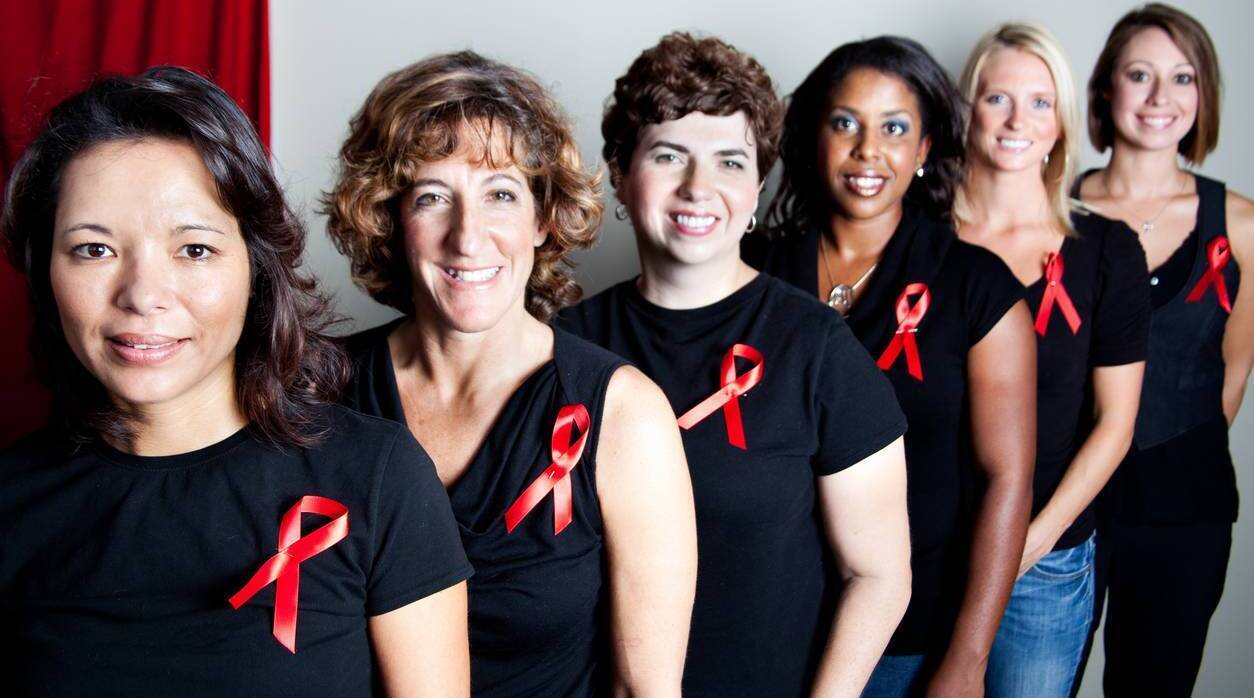
There are rising rates of HIV among women in Ireland. File picture
Why do I, a queer man living with HIV, feel I should write about the rise of HIV among women, in Ireland?
The LBGT+ community, has always known how to turn silence and invisibility into action. We have done it before in a variety of different settings.
In court rooms, in various community centres, in Pride marches, in hospital wards. Places where we have shouted or whispered, you are not alone. This history matters now more than ever, because women in Ireland are facing a rise in HIV diagnoses that has gone largely unspoken.
Women and HIV is an almost silent and invisible subject. And the LBGT+ community are experts, when it comes to making the invisible, visible and the unspoken heard. This is why I feel I can at least attempt to give voice to, and make seen, the plight of women living with HIV in Ireland.
This isn’t a story about despair. It is a story about possibility — should we choose to listen.
“We have survived stigma before. We know how to build something better.” That’s how activist Aoife Ní Mhuirí framed it when asked about the rise in diagnoses among women.
Read More
The queer community has already shown Ireland what solidarity looks like. Women deserve that same solidarity now-not pity, not panic, but partnership.
Women have always been part of the HIV story in Ireland, but they have too often been ignored or reduced to a footnote. Women in Ireland are being diagnosed across every background: Irish-born, migrant, queer, straight, partnered, single, parenting. Yet public health messaging still treats women as an afterthought.
But history offers a simple lesson from the LGBT+ community in Ireland: when people are included in the conversation and placed at the centre of their own care, outcomes improve. Women must be fully included and placed at the heart of HIV care in Ireland.
History has shown us when they are excluded, stigma grows. Women aren’t invisible, they are just not being looked for or largely excluded from HIV health care in Ireland. Once they are included, looked for with intention, and listened to, the possibilities for change are enormous, in fact, we can then begin to change everything.

We can begin to tackle stigma, unfortunately stigma is real, but so is resilience: Women living with HIV in Ireland still face judgement in maternity care, misinformation about breastfeeding, and assumptions about their sexuality, their sexual behaviour, and their morality.
But they also show extraordinary strength in dealing with all of the above. Despite such negativity, they manage to raise families, build careers, form welcoming communities, and they refuse to be defined by a diagnosis.
A woman I spoke to who is living with HIV said to me: “I thought HIV would be the end of my life. Yes, it changed my life, but I am still here, a wife, a mother to my children, still planning for their future and my own. I really want other women to know that HIV is not a death sentence.
She added:
Another woman said to me: “No one ever told me HIV was something women needed to think about.”
For decades, HIV has been framed as something that happens to, “other people,” people of a certain sexuality, other communities, like the gay community, drug users, and sex workers, but not to women.
However, the numbers tell a different story, one that Ireland has been very slow to acknowledge.
In 2024, Ireland saw a significant rise in first-time diagnoses among women, the sharpest increase in over a decade. Women aged 25-29 now represent the highest number of new diagnoses, while women aged 45-49 saw the steepest proportional jump. (source: HIV Ireland).
Behind every statistic is a real woman, a woman who had been told directly or indirectly, HIV was not her story. Sexual health campaigns have overwhelmingly targeted men. School sex education barely mentions HIV at all.
In GP surgeries women report being offered pregnancy tests, smear tests, but never a HIV test, unless they specifically ask.
When it comes to HIV, women are not seen, they are not offered testing for HIV, and quite often when they manage to get tested, they are diagnosed late.
Late diagnosis is not a personal failure — it is a failure of the system.
In 2024, 41% of all first-time diagnoses in Ireland were late. For women the reasons are painfully predictable. Symptoms are often dismissed as stress, menopause, or that great catch-all — women’s problems.
Some women only find out they are living with HIV at the first scan when they are pregnant.
As long as our healthcare system continues to treat HIV as a kind of niche issue rather than a public health priority, women will continue to be diagnosed late.
Women may not be avoiding testing, even if they are afraid of judgment and stigma, they simply are not being offered testing.
As long as women are not seen or heard when it comes to HIV, they have no chance, or vey little chance of hearing about all of the positive developments in the treating and prevention of HIV.
One of the greatest developments is U=U — Undetectable=Untransmittable. When a person is on effective HIV treatment and their viral load becomes undetectable, they cannot pass on their HIV. Not unlikely to, not low risk, zero risk of transmission, according to the Centre for disease Control(/url] (CDC).
Every woman living with HIV has the right to know this life-changing fact.
PrEP (pre-exposure prophylaxis), is highly effective at preventing HIV in women. PrEP is a medication regimen for individuals who do not have HIV but may consider themselves at risk of exposure.
Women may not consider themselves at risk, and therefore, they may not know about PrEP, and even if they do, they may not know how to avail of it, as most health campaigns are not targeted at women.
The effectiveness of PrEP for women. High Efficacy: when taken consistently it can reduce the risk of HIV from sex by about 99% and from injection drug use by at least 74%. (CDC)
Knowledge of PrEP would empower women and other individuals who have receptive vaginal sex to take control of their HIV independently.
For women engaging in receptive vaginal sex, it can take up to 21 days for PrEP to reach its full protective effect after starting the medication.
Normally I would advise anyone thinking of starting PrEP to talk to their healthcare provider, to determine if it is the right choice for them.
However, for as long as women are not thought of as being at risk of contracting HIV, who would they talk to?
The important fact is, PrEP is a safe and effective method for preventing HIV in women, providing a significant level of protection when taken as directed, and this needs to be made widely known among the women of Ireland.
PEP, or post-exposure prophylaxis, is an emergency HIV-prevention treatment that offers women a vital safety net after possible exposure to HIV.
It involves a 28-day course of HIV medication that must begin within 72 hours — ideally as soon as possible — to stop the virus from taking hold.
In Ireland, PEP is available through sexual health and STI clinics, as well as hospital emergency departments, where clinicians assess whether treatment is needed.
Unlike PrEP, which is taken before exposure as an ongoing prevention strategy, PEP is used only in urgent situations such as condom failure, sexual assault, or contact with blood from someone who may be HIV positive.
National resources, including HIV Ireland and the HSE, provide clear guidance on access and follow-up care, underscoring PEP’s role as a crucial, time-sensitive intervention in women’s sexual health.
The question arises why women do not know, or are unaware of these facts, because if they were, we would not be seeing the rise of new infections among women in Ireland.
I hope I have made it clear that because I am a queer man living with HIV in Ireland and the history of the LBGT+ community, I felt I could speak about women and HIV in Ireland. My hope is that women themselves will come to learn that they are the experts on women’s health and HIV.
My hope is that by highlighting the lack of knowledge and awareness around HIV and women in Ireland, it may encourage women to arm themselves with knowledge and the strength to speak out on their own behalf.
If Ireland is serious about ending HIV transmission, then women must be at the centre, not the margins or a footnote in their healthcare. Here are just some steps that our government and healthcare system could enact.
- Make HIV testing routine in women’s healthcare. HIV testing should be as normal as a blood pressure check in all of these centres.
- Fund campaigns that are aimed at and speak directly to women.
- Tackle stigma with the same energy as we tackle HIV prevention and transmission.
- Invest in migrant and women-led HIV organisations, because with lived experience they know what works for them.
At the beginning of this article, I said it was not about despair, but about possibilities and hope. I look at the history of my own community, the LBGT+ community in Ireland and I see how far we have come and the great changes I have seen in my 68 years.
That is why I urge women to engage, with their own healthcare, work with others living with HIV, share knowledge, teach each other and the greater population about what life is like for a woman living with HIV in Ireland today, and how we can prevent new HIV transmissions.
June 15t Ireland Aids Awareness Day is not just a day on a calendar. It is an invitation. I invite women to speak openly with their friends, to challenge stigma, to make women the centre of their own stories.
To demand a healthcare system that sees them, hears them, but not just sees and hears them, but also acts on their demands and concerns.
Women are not footnotes in Ireland's HIV story, they are the missing chapter, and it is time they wrote it, loudly, honestly and together.
- Will Kennedy is a Cork-based activist.