Tracy Martin: Over a million Irish people have a disability, but nowhere is accessible
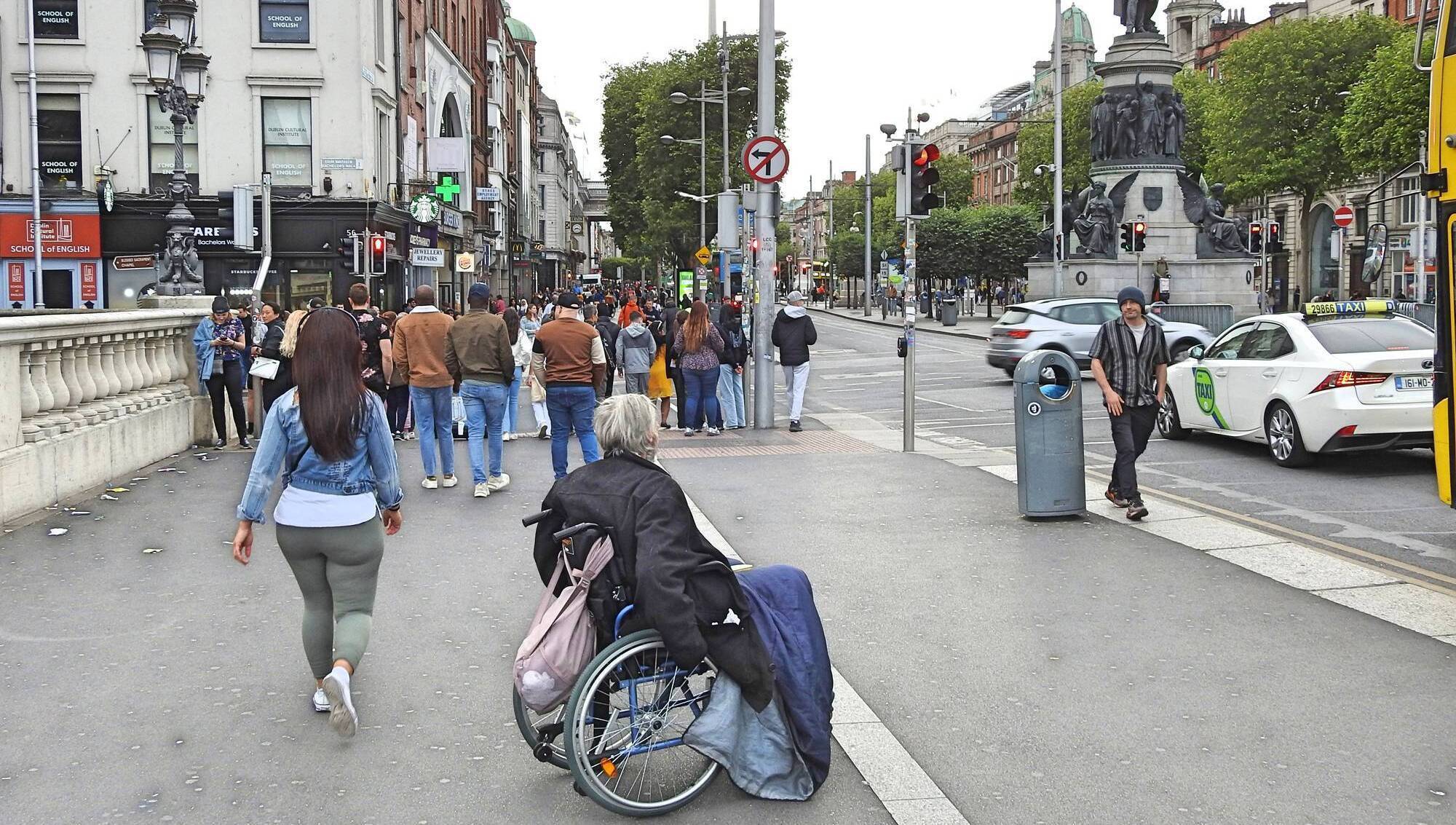
The country has grown shinier, more coffee shops, more apps, more ways to pay for parking, but the basics when you are disabled, the ramps, the doors, the toilets, the footpaths, are still stuck somewhere between 1987 and wishful thinking, writes Tracy Martin. Picture: File photo
More than 1.1 million people in Ireland — that's 22% of the population — are living with a disability or long-term condition. That figure from the most recent census has risen dramatically from 643,131 in 2016.
I have been in a wheelchair for 37 years, long enough to have watched Ireland grow up, modernise, digitalise, caffeinate itself to death, and still forget to put in ramps.
Read More
The thing about ageing with a disability is that everyone assumes you have figured it all out by now, as if experience automatically translates into ease. It does not. I am older, yes. Wiser, maybe. But Ireland still feels like it is daring me to complete an obstacle course every time I leave the house.
And I am not talking about dramatic, cinematic obstacles. I mean the small, stupid ones: the lip on a doorway that is half an inch too high, the ramp that is technically a ramp but might as well be a ski slope, the so-called accessible entrance that requires a sherpa and a prayer.
I turned a corner the other day and nearly took out a sandwich board advertising Ireland’s Best Accessibility Award Winning Café. The irony nearly killed me before the kerb did. We are great at giving ourselves medals in this country. If there is a plaque to be hung or a ribbon to be cut, we are there with bells on.
We also love patting ourselves on the back, but I cannot do that anymore because my shoulders are at me. To be fair, I was never great at it anyway, even though there are people who would argue with that. But you get the idea. Ireland loves celebrating its own good intentions.
People think accessibility is about big things like lifts, ramps, wide doors. And it is. But it is also about the tiny, daily frictions that wear you down. The ones that remind you, quietly but consistently, that the world was not built with you in mind. What I could muscle through at 20, I cannot, and should not have to, at 55.
At this stage, I am like one of those old lads who remembers when all this was fields, except in my case it is: “I remember when all this was inaccessible, and look, it still is.” Ageing with a disability in Ireland is a bit like being stuck in a long-running sitcom where the punchline never changes.
The country keeps promising a big accessibility reveal, and I keep trying to squeeze through the same narrow doorways, deal with the same broken lifts, the same “Ah sorry, love, we didn’t think of that”.
I have lived in County Monaghan where I am back living now after having lived in Greystones, Galway and Madrid. And in every one of those places I came across inaccessibility.
In Ireland, I have discovered that the closer you live to the Pale, the better things get, or so it seems. Maybe the engineers up there have read more of the guidelines. Maybe they have studied them so hard they have forgotten that most of them do not actually work for real wheelchair users.
You really notice the Dublin/country divide when you need something as basic as a bathroom. I was in a public building near me recently, built in 2011 so hardly old, and the bathrooms were a masterclass in how not to do accessibility. No separate accessible toilet. No grab rails. I could not even close the door behind me.
It all gave the impression that whoever signed off on the plans assumed disabled people were theoretical. For a modern building, it was odd. Odd, and quietly disappointing.
Living back in the county where the accident happened — the one that left me paralysed 37 years ago — has brought a lot to the surface. Not much has changed. The same buildings still have the same inaccessible entrances, the same impossible toilets, the same token gestures toward disability access.
Meanwhile, my body has changed. I have moved from a manual chair to a power chair because of pain and deterioration in my spine. But the buildings are still the same. Still the tokenism. Still the “Shure, it’s grand, isn’t it?” approach.
We were promised better. The European Accessibility Act, adopted in 2019, was meant to usher in a new era of access by 2025 and beyond. I am not sure where this accessibility is hiding. Maybe I am just going to the wrong places.
The only places I can reliably access are the ones that were already accessible by accident rather than design. And that is not a plan. It is not progress. It is a letdown, if I am honest.

In the past, I have written the emails. I have fought the fights. But lately, I do not have the energy to keep repeating myself. Because how many times can you tell a hotel that their accessible toilet is so small you cannot turn around to open the door. That you might be stuck in there until someone wonders if you have actually died.
That the sink is the size of a bird feeder, and when you turn on the tap it splashes all over you so you come out looking like you have wet yourself. That the flush is located somewhere near the equator. And that you could not bring someone in with you to help because there is no room for two humans and a wheelchair in the entire space.
The strange thing about ageing with a disability is that the world assumes you are used to it by now, as if familiarity makes it easier. It does not. If anything, it makes the gaps more obvious. When you are 20, you can power through things you should not have to. When you are in your 50s, your body starts sending polite but firm memos: we are not doing that anymore.
The country has grown shinier, more coffee shops, more apps, more ways to pay for parking, but the basics when you are disabled, the ramps, the doors, the toilets, the footpaths, they are still stuck somewhere between 1987 and wishful thinking.
I am not looking for applause or another glossy launch about inclusion. I am not even looking for perfection. I am looking for the kind of access that lets a person move through their own county and country without feeling like a footnote.
People with disabilities are not asking for the moon. We are asking for the ground beneath us to be level. And if even that feels like too much to ask in 2026, then someone somewhere needs to take a long hard look at themselves.
- Tracy Martin is a writer and wheelchair user


CONNECT WITH US TODAY



Be the first to know the latest news and updates