Elaine Loughlin: Jovial spirit among Fianna Fáil members despite by-election woes
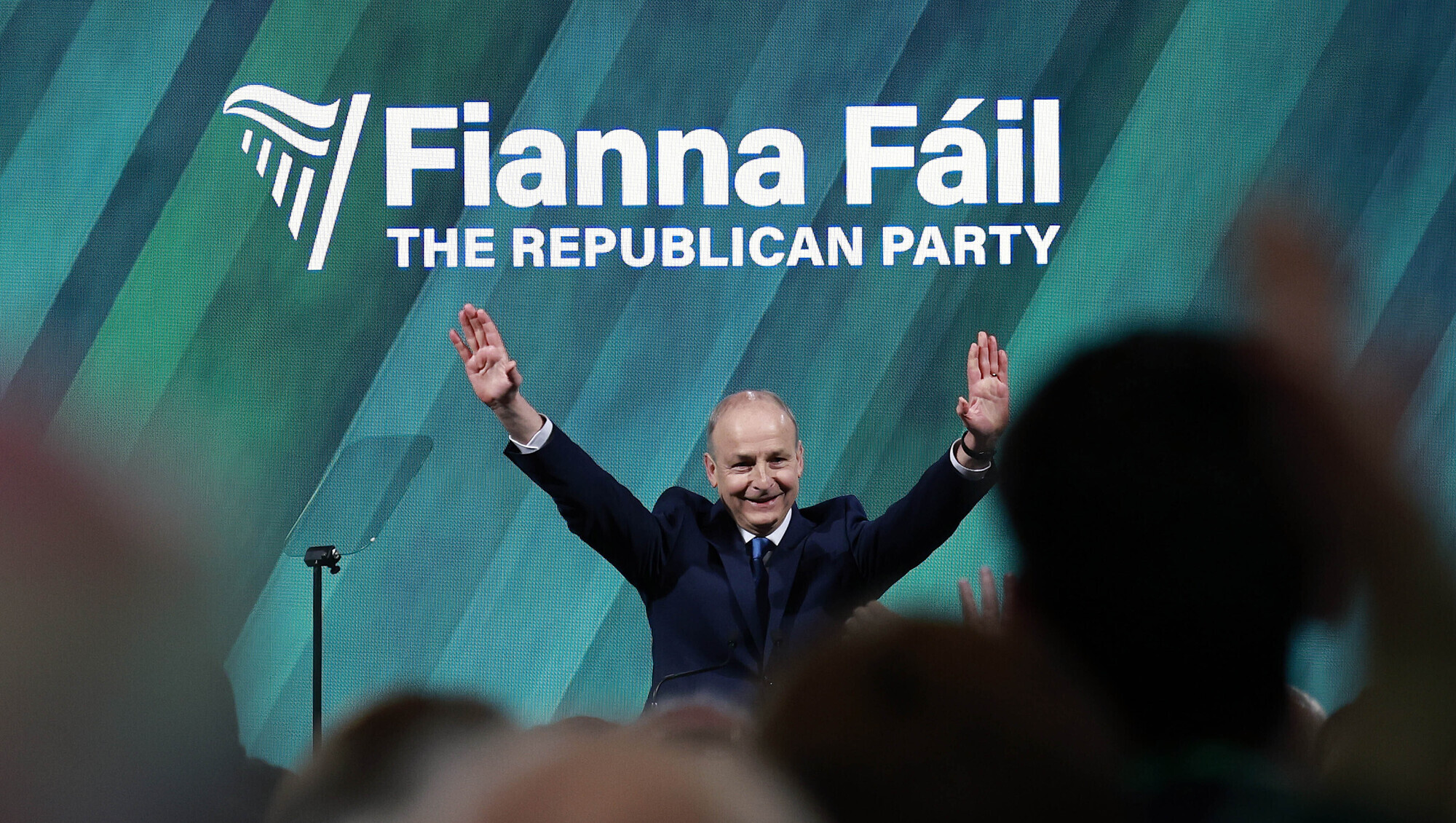
An ard fheis is like a wedding without the bride and groom according to one upbeat TD 
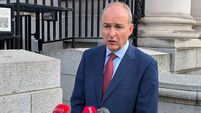
Some have mused that party leader Micheál Martin will want to remain on until the end of next year when the Taoiseach’s position rotates again or to see out the completion of the Narrow Water Bridge, a passion project of his, which is scheduled to open in late 2027. Picture: Conor Ó Mearáin/PA

Some have mused that party leader Micheál Martin will want to remain on until the end of next year when the Taoiseach’s position rotates again or to see out the completion of the Narrow Water Bridge, a passion project of his, which is scheduled to open in late 2027. Picture: Conor Ó Mearáin/PA

A century on from its foundation, Fianna Fáil now faces dilemmas of identity, leadership, and direction.

A botched presidential campaign, a gruelling few weeks of fuel protests, and a disgruntled rump of TDs who want Micheál Martin out has taken its toll, especially among elected representatives.

But the mood was buoyant at the party’s ard fheis over the weekend as Gen-Z members mingled with stalwarts from the 60s, 70s, and even 80s.

Tellingly, the group of millennials in the middle was almost non-existent at the gathering; a lingering sign of just how toxic the post-crash years were and continue to be for the party.

An ard fheis is like a wedding without the bride and groom, was how one upbeat TD put it, people come to meet each other and have a good time, forgetting, at least for one day, the usual family tensions.

However, the touchy subjects of the upcoming by-elections, which party members are bracing themselves for, along with the Micheál question, linger.

A recent poll put Fianna Fáil’s Dublin Central candidate John Stephens on a dismal 4%. In Galway West Cillian Keane is doing better but is still an ‘also ran’ on 8%.

“I think if it goes badly as I think it will, I think the men in the grey suits are going to have to go to Micheál and say ‘we will give you the presidency of the EU, but then you must go’,” said one party stalwart.

However, another senior member downplayed the impact of what is expected to be a very bad day at the polls on Friday, simply stating: “It will be used by those who are always looking for reasons, but that’s it for now.”

Martin remains resolute that he is going nowhere and despite ongoing rumblings, party members have never managed to mobilise fully against him.

“He stares them down and wins,” said one member.

A senior minister also pointed out that while the party’s three youngest TDs James O’Connor, Ryan O’Meara, and Albert Dolan raised eyebrows with their recent highly critical open letter, “the centre hasn’t moved”, and Martin still has the support of the silent majority of the parliamentary party, who don’t agitate in either direction when the leadership issue is discussed.

Indeed, many believe that instead of precipitating a heave, the letter drafted by the three young guns pushed a change of leadership further down the road, with one minister describing them as “the three blind mice”.

There is an agreement however, that Martin, who took control of Fianna Fáil post-crash with just 20 elected TDs, should step aside at the end of Ireland’s EU presidency in January.

“My view is that we are 16 months into this Government and everyone needs to focus on the job at hand,” Mr Martin said when this timeline was put to him by RTÉ’s Paul Cunningham yesterday.

Some have mused that Martin will want to remain on until the end of next year when the Taoiseach’s position rotates again or to see out the completion of the Narrow Water Bridge, a passion project of his, which is scheduled to open in late 2027.

What becomes of Fianna Fáil into the future, with or without Martin, is a more complex issue.

Fianna Fáil returned as the largest party following the 2024 General Election, but with 48 TDs it’s a far cry from the heady days and decades of Dev, Lemass, Lynch, Haughey, and Bertie when the Soldiers of Destiny always expected to secure upwards of 70 seats and even top 80 on a good day.

The splintering of politics in Ireland has put an end to the two-and-a-half party system which ruled for much of Fianna Fáil’s first hundred years.

“Every era politics evolves, every era brings something new. We are in a particular era at the moment, in terms of a lot of what I would term ‘external pressures’ on political systems across Europe,” the Taoiseach said at the ard fheis.

“The vast majority of governments now are coalition governments. In some countries you have five or six parties in government. I don’t think that’s ideal”, before adding that “one can never be definitive in terms of the next election... or indeed the election after that”.

More in this section

Revoiced

Newsletter

Had a busy week? Sign up for some of the best reads from the week gone by. Selected just for you.

Cookie Policy Privacy Policy Brand Safety FAQ Help Contact Us Terms and Conditions

© Examiner Echo Group Limited