Ireland must act on fossil fuel phase-out
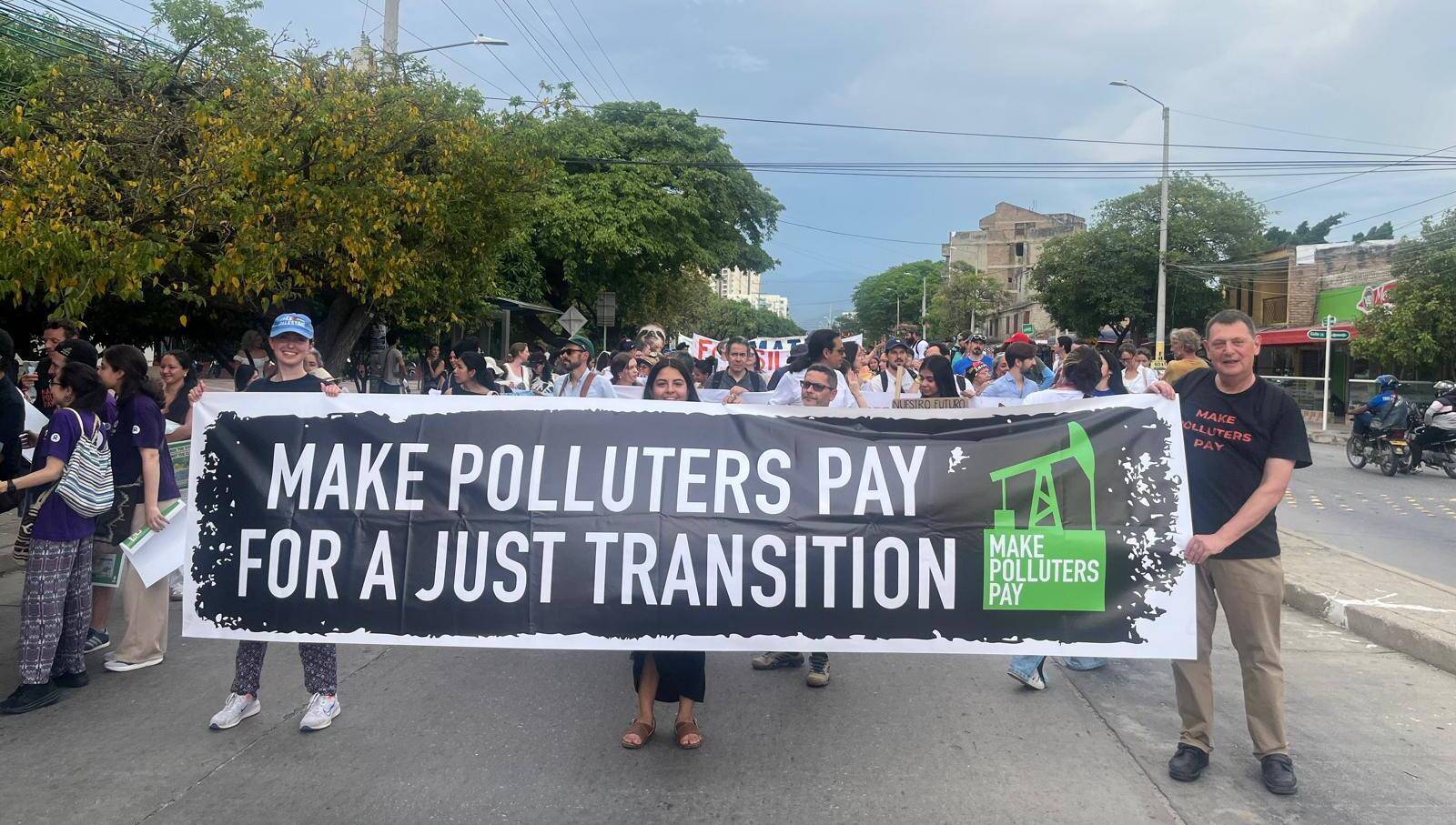
Sinead Loughran (left) at the march in Santa Marta, Colombia, for a fossil-free future earlier this month.
Last week, a pivotal process focused on mobilising a global fossil fuel phase-out began through the First International Conference on Transitioning Away from Fossil Fuels, in Santa Marta, Colombia. The announcement of the second conference to be co-hosted by Tuvalu and Ireland in early 2027, is of huge Irish relevance, but it is far from the only mandate which the Irish Government must take from Santa Marta.
In announcing the next conference, Ireland highlighted the importance of bringing this crucial conversation to the frontlines of climate change, as Tuvalu knows more than most the impacts of this crisis with its sea level rise threatening its very existence. This serves to increase the spotlight and scrutiny already on Ireland’s fossil fuel policies in the coming year.
As the Irish announcement also highlighted, success is not about the outcome of a single meeting, but the momentum that is sustained between the conferences in this process. To do its part in sustaining this momentum, Ireland must therefore act at home to lead credibly on the global stage.
There are ample opportunities that Ireland must pursue in the next year to increase its legitimacy as co-host, to show its true commitment to climate leadership, and ultimately to help drive the ambition pursued by Tuvalu and Pacific Island states in the interests of avoiding climate catastrophe.
With a growing consensus among those in Santa Marta that a global treaty to phase out fossil fuels is needed, this next conference in Tuvalu must play an important step in building the legally-binding international mechanism to get the world off fossil fuels.
However, while consensus is growing for a fossil fuel treaty, the Irish Government is actively pursuing and facilitating new fossil fuel infrastructure at home, including plans for Liquefied Natural Gas (LNG) facilities, which is at clear odds with our climate and human rights obligations.
Pursuing new fossil fuel infrastructure is nonsensical, and it neglects the needs and rights of current and future generations everywhere.
Furthermore, it stands at odds with Ireland’s commitments on the global stage to move away from fossil fuels, and would leave the leadership role required of Ireland in co-hosting the Tuvalu conference wanting, to say the least.

If Ireland is to truly support this process, the Irish Government must sincerely step up to our climate obligations, and that categorically means we cannot proceed with plans to expand fossil fuel infrastructure, including LNG, and we must immediately put in place an urgent fossil fuel phase-out plan for Ireland that reflects our fair share of climate action.
Fortunately, Ireland is not lacking in sources of motivation for stepping up to its obligations.
Having stood at the front of storms for decades, words the Tuvalu Minister does not use lightly, Tuvalu and their Pacific Island neighbours, who are amongst the most affected by climate impacts already are driving the ambition for this process to keep the world within the critical 1.5°C warming limit set by the Paris Agreement.
Moreover, motivation is also being driven by shifting public attitudes at home.
As evidenced in recent opinion polling, the majority of people in Ireland believe the Government is not doing enough fast enough to cut reliance on fossil fuels.
While ongoing fossil fuel infrastructure expansion plans are incomprehensible in the face of climate breakdown, the Irish Government’s position of not supporting the call for a global treaty to phase out fossil fuels is also becoming increasingly untenable.
Supporting a global treaty would align with Ireland’s commitment to solidarity and urgency, as the call is coming from both those in the Global South currently most impacted by climate change while having contributed least to causing this crisis, and from a growing voice at home.
In addition to needing additional spaces outside the annual COP processes to pursue action on fossil fuels at the scale and pace needed, we also need these additional spaces to address the largely unchallenged influence of corporations and their ability to dictate, delay and destabilise climate action globally.
Looking to next year, and building on the momentum and ambition of the founding conference of this process, Ireland can take the lead of this year’s hosts.
The Colombian government announced recently that it would end its involvement in Investor State Dispute Settlement (ISDS) mechanisms. These mechanisms pose not just a financial risk but also a regulatory chill risk to policy making, including on climate action.
We know that the vast majority of the world’s population wants greater climate action, and the scientific evidence demands that we urgently phase out fossil fuels, but these mechanisms enacted through treaties between states, are acting as barriers to the essential action we need.
And despite this very clear threat handed unnecessarily to corporations, to date, no other international forum aims to address this significant barrier to climate action.
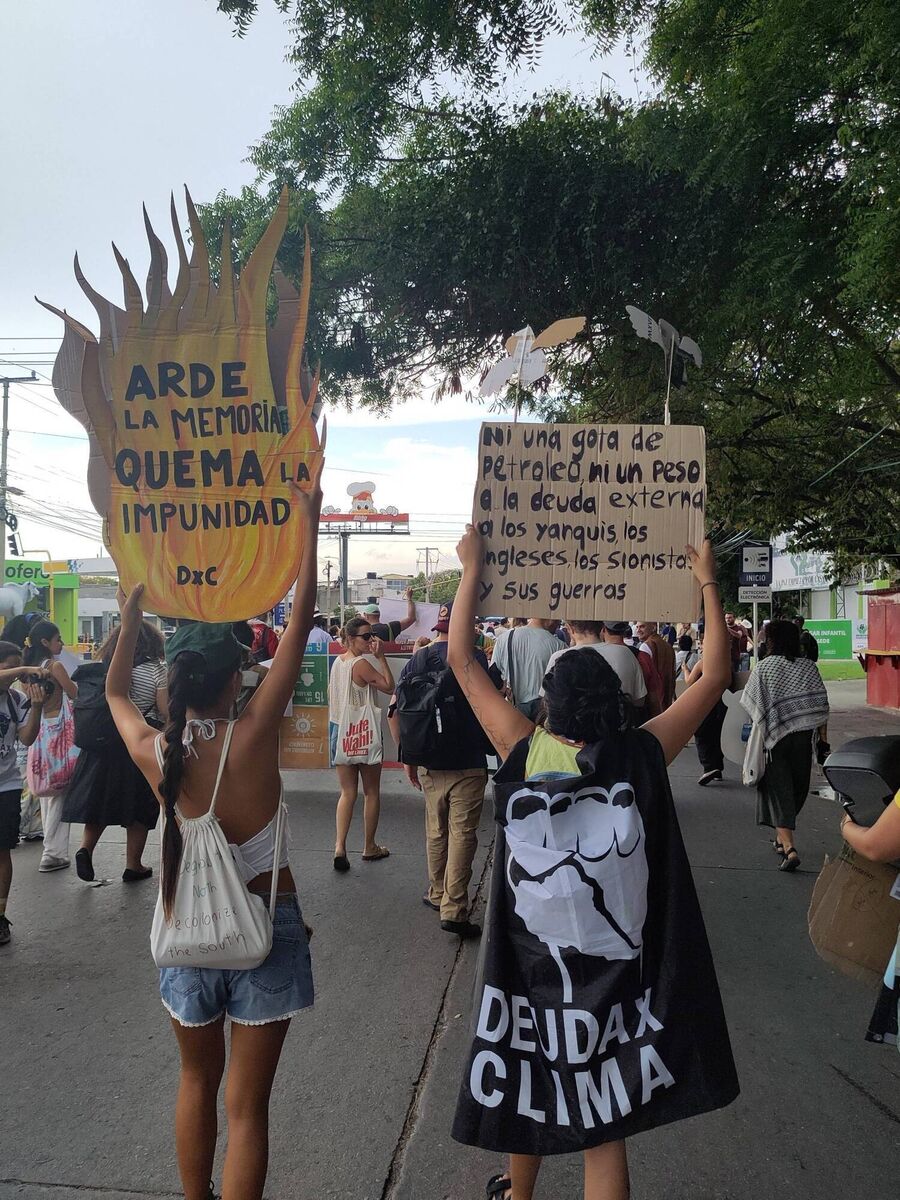
While the Irish Government has committed to leaving the Energy Charter Treaty, amendments to the Arbitration Act currently going through the Seanad, could see Ireland locked into many more ISDS mechanisms, and the associated financial, legal and policy-chill threats, for years to come.
Taking on the responsibility of co-hosting a process focussed on addressing the barriers, and seeking solutions to, a just phase-out of fossil fuels, necessitates addressing the corporate lobby’s undue influence on exacerbating the climate crisis.
Ireland must go far beyond simply supporting the next conference as co-hosts, our climate and human rights obligations have long demanded so much more. We don’t need to wait until next year to take action at home; indeed, domestic actions are not only readily available but are pre-requisites for Ireland truly co-host the Tuvalu conference.
Ireland must immediately halt plans for fossil fuel expansion at home including for both State-led and commercial LNG.
It must ensure no further lock-in to ISDS mechanisms through proposed legislative changes, and it must introduce new sources of climate finance to ensure Ireland meets its fair share of finance required for a global just transition.
Doing so is not only necessary to uphold our climate and human rights obligations, but would also increase Ireland’s authenticity in co-hosting the Tuvalu conference.
Many in Santa Marta and elsewhere have recognised that a fossil fuel phase out is essential and, crucially, is inevitable, but political will and urgency to act is still lacking.
Tackling its obligations to phase out at home, which has global reach, would also ensure that Ireland plays its part in driving the ambition required for the Tuvalu conference, but also required to address the climate emergency and ensure a just fossil fuel phase-out.
- Sinead Loughran, writing from Colombia, is Trócaire’s Climate Justice Policy and Advocacy advisor
CLIMATE & SUSTAINABILITY HUB
CONNECT WITH US TODAY



Be the first to know the latest news and updates