Climate action 'stalled by mixed messaging' as Europe endures unprecedented damage
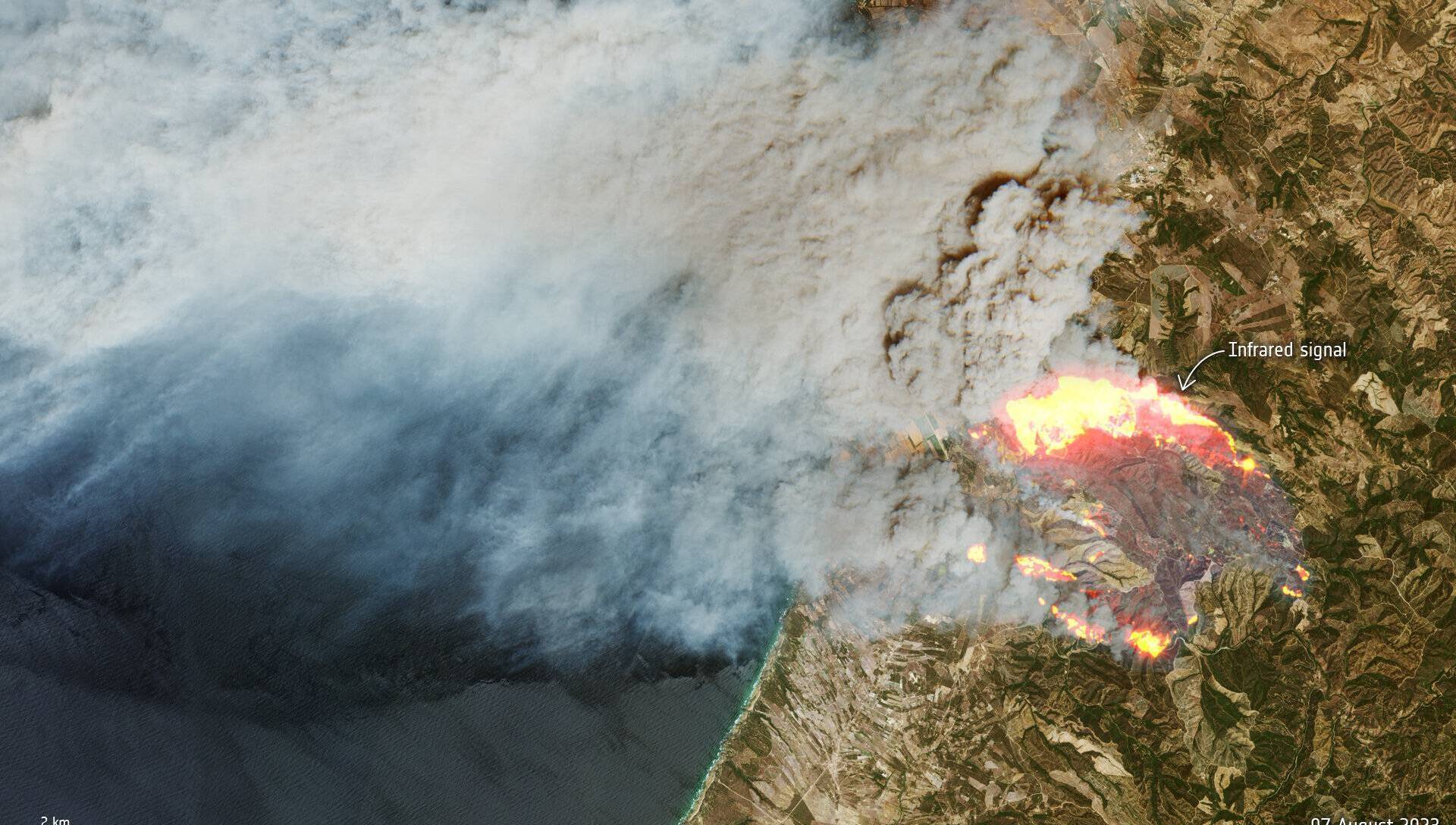
A snapshot captured in 2023 by the Copernicus Sentinel-2 satellite of smoke from wildfires in Alentejo, Portugal. The latest data released by climate scientists in April 2026 show that Europe has continued to heat up faster than any other continent. Picture: Copernicus.eu
Europe is heating up faster than any other continent in the world, but mixed messaging about climate change risks stalling the decisive action which needs to be taken, experts have warned.
In its landmark annual report on the European state of the climate, the European Centre for Medium-Range Weather Forecasts said the continent has faced record heatwaves on land and at sea, devastating wildfires, and continuing biodiversity loss that is harming societies and ecosystems across Europe.


Marica Cassarino, environmental psychologist at University College Cork, said: “The extreme weather events increasingly experienced in Ireland and across Europe are not only an environmental crisis, but a public health challenge.
“Politically, the response still often feels muted, fragmented, or displaced by the multiple crises that our world is facing.”
CLIMATE & SUSTAINABILITY HUB
Ireland has consistently shown itself not to be immune to these extreme weather events being warned about on both a continental and global level — such as Storm Chandra earlier this year and Storm Éowyn in 2025.
Read More
The Europe-wide report shows at least 95% of Europe experienced above-average annual temperatures last year, with a near three-week heatwave leaving temperatures near and within the Arctic Circle exceeding 30C.
The report stated the annual sea surface temperatures across Europe were the highest on record.
Meanwhile, wildfires burned over 1m hectares, which is the largest area on record.
In May 2025 alone, over half of Europe experienced drought conditions, with around 70% of rivers having below-average flows.
The report said that, as a whole, the EU needs to do more to restore ecosystems at scale and embed such action within climate legislation and multilateral commitments.

Eoin Galavan, a colleague of Ms Cassarino on a special group addressing climate at The Psychological Society of Ireland, said treating climate change as a “future” or “luxury” concern leaves society more vulnerable to divisive responses when impacts are experienced, through flooding, drought, fuel protests, or potential food insecurity. He said:
“What people need is honest, joined-up communication that acknowledges real dilemmas, anxiety about affordability, ambivalence about change, attachment to livelihoods, and concern for children’s futures.”
Also reacting to the report, psychologist Bríd Kennedy added: “Setting ambitious climate targets while simultaneously supporting fossil fuel infrastructure, aviation growth, or data centre expansion sends a confusing psychological message.”
Their colleague Amy Brogan said a genuinely collective response is needed similar to the covid-19 public health messaging, and that translating this science in an accessible way is essential for governments to do.
“Ultimately, the 2025 climate report does not simply add to a growing pile of data,” she said.
“Psychologically and socially, it challenges us to close the gap between what we know and what we do, by pairing urgency with honesty, and fear with collective agency.”
Read More
CLIMATE & SUSTAINABILITY HUB