Ireland's towns bear the brunt of the urban/rural divide

Independent urban towns are in a different level of social crisis to the rest of the country — unemployment at 5.9%, the highest of any area type, 17% at risk of poverty, and 20% of their households reliant on social welfare
Ireland's towns bear the brunt of the urban/rural divide

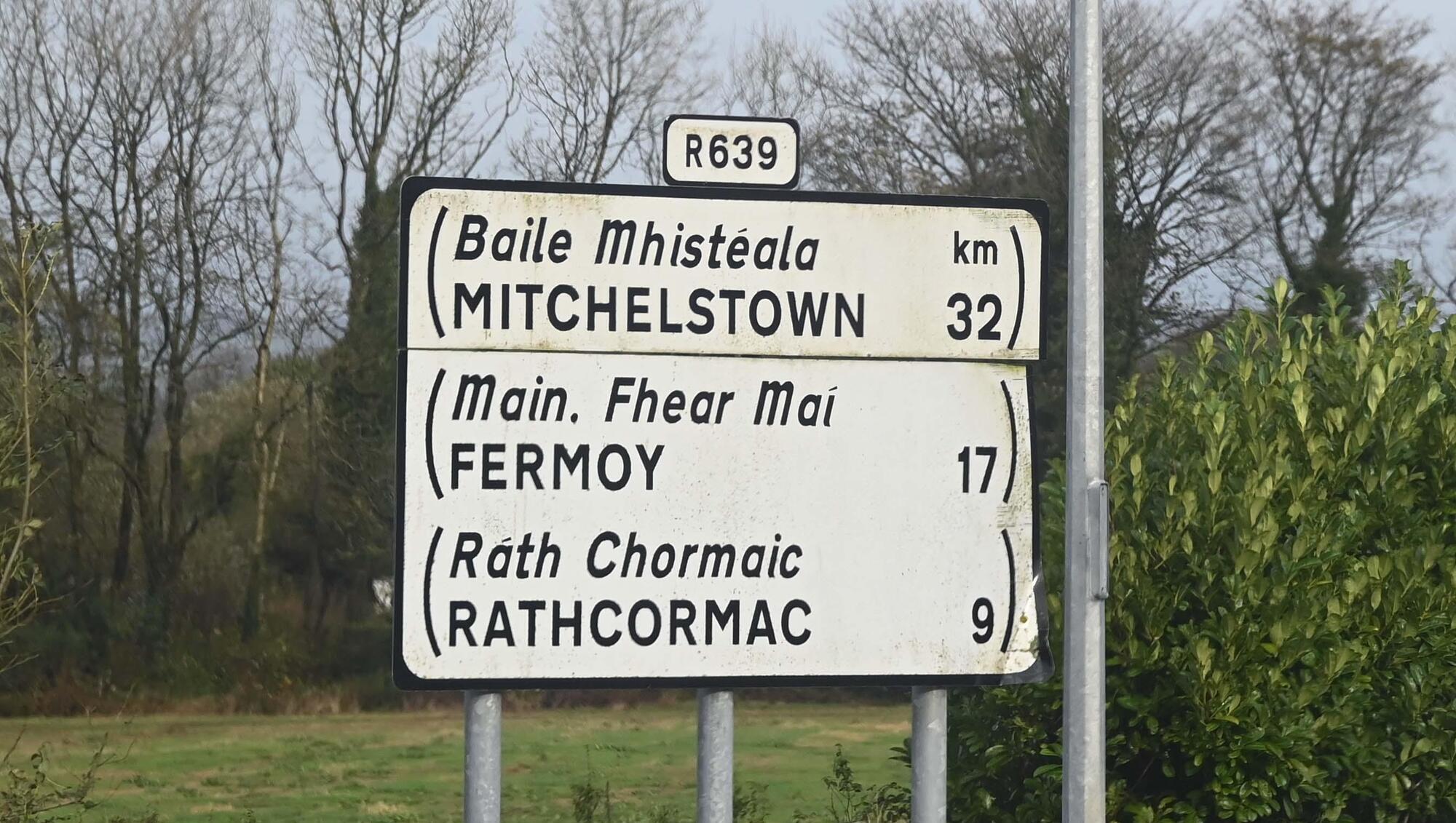
Towns like Mitchelstown are outside the orbit of the nearest city, and unable to compete with the lucky neighbours closer in, like Midleton. Picture: Denis Minihane

Leo Varadkar may be right about where the most tax is paid in Ireland, clustered as it is in the cities, but faced with a crisis like the one we are currently in, being right does not always mean you are being helpful. 

Implicit in the geography of tax collection and more so in the ruthless 'reality check' punch-down sentiment in which Mr Varadkar presented it, is something even more unsettling — the implication the whole promise of national planning for Ireland, with its commitment to sustainable and equitable growth, is a fragile mirage. 

It's become more apparent, that following years of regional and economic planning, we have ended up with a deeply unbalanced country and consequently, whole regions characterised by discontent.

Despite being promised otherwise, in the now very stressed social contract, the fuel crisis revealed rather than being built on the principles of compact growth and sustainability, the whole settlement pattern we now live with is actually held together with a very special kind of glue — diesel — burned in vast amounts on a daily basis by commuters, hauliers, and the thousands forced to drive the long roads to access schools, services and healthcare pulled out of their localities into central places around the country. 

To all intents and purposes, we built for ourselves a dysfunctional energy landscape, too easily held to ransom, riven with spatial inequalities, most especially for small-town Ireland.

The recently released data on the state of Irish towns found in the CSO's Urban and Rural Life in Ireland, 2025, offers new and robust evidence that Government policy to deliver sustainable and equitable growth in this new Ireland is failing. 

The report is based on a novel six-way classification which paints a detailed picture of how life differs across Ireland's area types: Cities; satellite urban towns; independent urban towns; rural areas with high urban influence; rural areas with moderate urban influence; and highly rural/remote areas.

This all looks a bit complicated, but these new classifications are a good thing. They demand we rewire some of the traditional concepts we might have about the strict rural and urban divide and encourage us to come to terms with some of the deep transformations that now govern the rhythms, connections and orientations of the country.

 A derelict property on Upper Cork Street, Mitchelstown. Picture: Larry Cummins
A derelict property on Upper Cork Street, Mitchelstown. Picture: Larry Cummins

One of the most critical statistics relates to 'Independent Urban Towns'. These are described as towns of 1,500+ population where less than 20% of employed residents commute to Dublin, Cork, Limerick, Waterford or Galway. 

These are towns like Mitchelstown, Kells, Tullow, Kilmallock — outside the orbit of the nearest city, and unable to compete with the lucky neighbours closer in, towns like Maynooth, Ashbourne and Midleton, which are clear winners, at least statistically, of the centralising strategies of the national plan. 

One estimate is there are 133 independent urban towns, with a combined population of 871,179. This is 17% of the population. These are spread all over Ireland, varied in their size and vitality, but especially clustered in the Midlands, the West of Ireland and the Border counties.

Perhaps for the first time, we see by almost every measure that independent urban towns are in a different level of social crisis to the rest of the country. Their unemployment rate stands at 5.9%, the highest of any area type and well above the State average of 4.3%. 

Their at-risk-of-poverty rate is 17%, compared to a national rate of 11.7%, which is over twice as much as the 6.8% in satellite urban towns. Nearly one in five households in independent urban towns relies primarily on social welfare, the highest proportion nationally.

The health picture is equally stark. Fewer than half of residents in independent urban towns, 48.5%, describe their health as very good, the lowest figure of any area type. They also have the highest rate of long-lasting health conditions, at 23.8%. 

Meanwhile, educational attainment lags behind cities and satellite towns. Perhaps most telling of all is the Susi grant data. Of the students from independent urban towns who go on to third-level education, 47.2% apply for State financial support, the highest rate of any area type. Taken all together, these figures do not offer a portrait of thriving communities. 

What makes this data particularly pointed is the population context, which sets Ireland apart from the scenario in Spain and Italy, the kind of places local mayors sell houses for a euro, where populations are shrinking rapidly. 

Between 2016 and 2022, independent urban towns actually grew by 11.5%, faster than the national average of 8.4%. People are moving to these towns, usually to pick up marginally cheaper accommodation. But they are arriving into an environment of elevated unemployment, higher levels of poverty, poor health outcomes, and more limited economic opportunity.

When it comes to smaller and more marginal towns on this list, readers of the Irish Examiner don't need me to enumerate what they know already: the oxygen sucked out of many of these places. 

Sarsfield Street in Kilmallock, Co Limerick. Picture: Dan Linehan

The closure of post offices, Garda stations and banks, shops unable to compete with online or out-of-town retail, and the steady consolidation of both agricultural enterprises and the centralisation of health and social services encouraged by the national plan, drain their vitality. 

In late 2025, the West of Ireland and the Border counties, the towns of Shannon, Ballybofey, Sligo Town and Letterkenny had an average vacancy rate of 30.1%. Almost one in every three shops in towns like these are boarded up.

I feel a bit like the Grim Reaper writing all this down, but the data demands honesty. Of course, it's not all grim. There are thriving towns in this list: Clonakilty, Gort, and Donegal Town. 

Under the the plan Our Rural Future, the Government has, with Town Centre First, belatedly set in train a plan for regeneration, but the rollout is slow and the funded under geared. 

But many of the initiatives set out in Our Rural Future are little more than triage. Small grants, widely dispersed, keeping things ticking over but don't change the dial. Nor does it always follow through. 

Thrive, the Town Centre First Heritage Revival Scheme, has gone to larger towns. Mallow is to get a new 200-seat theatre, and in Edenderry, the long derelict old Tesco site will become a new library. All welcome, but once again an example of funding gravitating towards the better-positioned places, and the smaller town left behind, picking up the scraps.

The deeper problem is structural and it is hiding in plain sight. We built a country around a settlement pattern held together by diesel that wholly neglect the communities at the end of those long roads. We designed a geography of winners and losers, dressed it in the language of national planning and sustainable growth, and called it strategy. 

The CSO data now strips away that language and shows us what was built instead: towns growing in population but shrinking in opportunity, communities absorbing people the housing market has pushed outward, without the jobs, services or infrastructure to absorb them with dignity. No wonder we are living through a springtime of discontent.

The half billion spend set aside last week to maintain this dysfunctional pattern is not just an environmental scandal, it is an economic one. That money does not circulate in local economies. It does not build community wealth.

What the independent urban towns of Ireland need is not triage but transformation. They need a genuine redistribution of public investment, anchored not in the gravitational pull of the cities but in the recognition that 17% of the national population living in conditions of elevated poverty, poorer health and higher unemployment is not a regional footnote, it is a national failure. 

The compact growth agenda, so fluently articulated in successive national plans, must be asked to account for what it has compacted and what it has left behind. 

Or, alternatively, we need to get off this growth model, which at the root of things is responsible to look for radical, indeed more indigenous solutions for how to build the good society in Ireland.

Leo Varadkar was right about where the most taxes are paid. But the more important question is where, and for whom, the country was built. 

The new CSO data suggests we already know the answer. The question now is whether, aside from burning diesel, green and otherwise, we have the political will to do anything about it.

x

More in this section

Revoiced

Newsletter

Had a busy week? Sign up for some of the best reads from the week gone by. Selected just for you.

Cookie Policy Privacy Policy Brand Safety FAQ Help Contact Us Terms and Conditions

© Examiner Echo Group Limited