Free travel will help people fleeing abusive homes
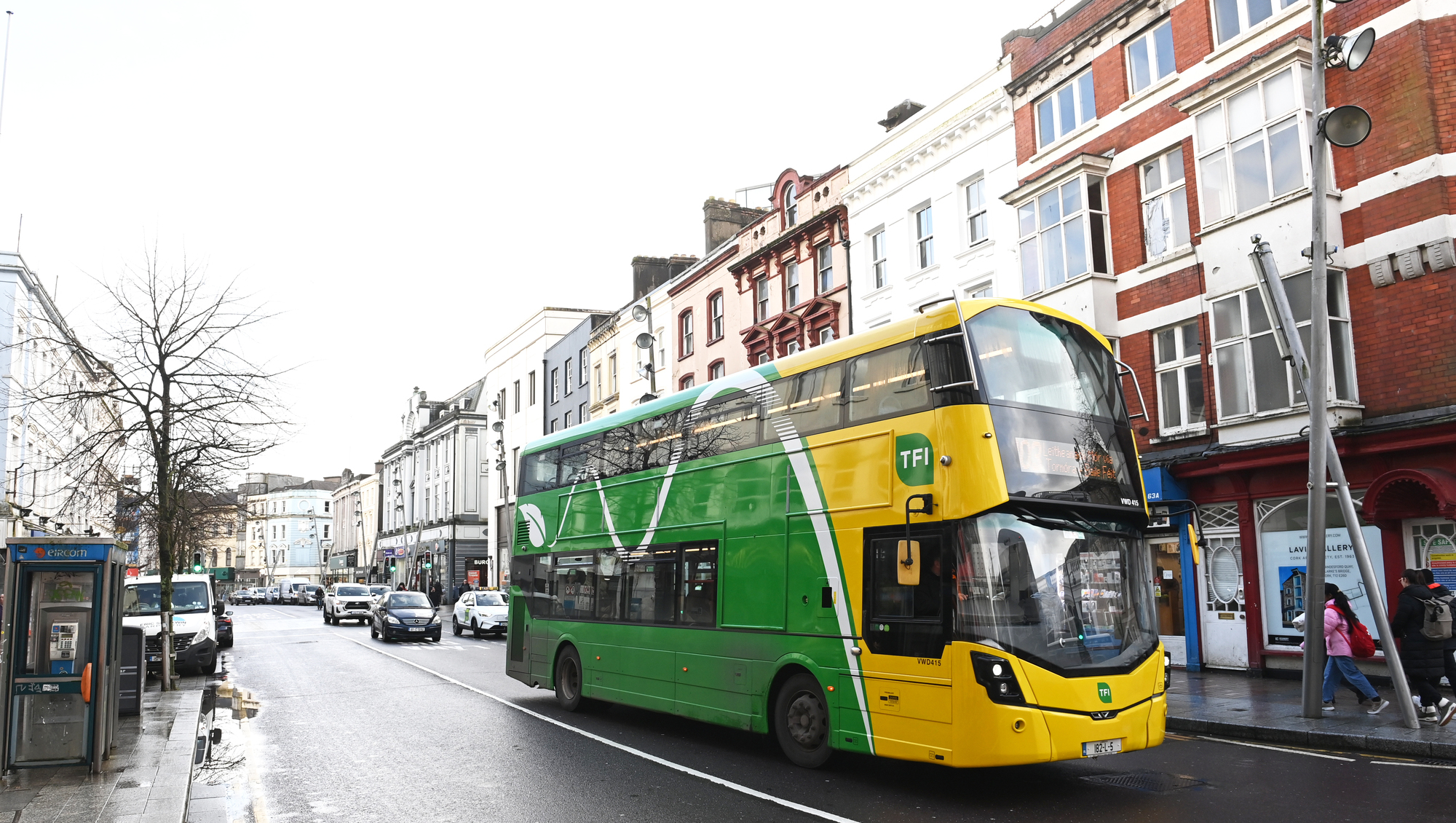
How can you start an independent life if you haven’t got the price of the bus fare? Picture: Larry Cummins
Sometimes it’s the little wins that can make a big difference. That is certainly the case with my first Bill in the Seanad — a proposal for free travel passes for those fleeing domestic abuse and gender-based violence — which is being introduced as a standalone scheme by social protection minister Dara Calleary.
When up and running, my initiative will see survivors and their children granted non-means-tested free public transport for three months. It’s a small but practical support measure designed to make leaving their abuser, and rebuilding their lives, that little bit easier.
Because for so many women escaping domestic violence, leaving their abuser isn’t just an act of freedom — it’s an act of survival.
When we think about domestic violence, we often talk about it in the abstract, as something that happened to someone else, somewhere else. Sadly, it’s a daily reality in homes across Ireland, in every county.
Behind doors on every street. Among people we know. People we love. People we pass on the school run or see in the supermarket. Domestic violence is not rare. It is far too ordinary in its frequency, invisible in its silence, and devastating in its impact.
According to Women’s Aid, one in four women in Ireland have experienced abuse from a current or former partner. Gardaí responded to 67,000 domestic abuse incidents last year — that’s nearly 183 every single day.
Behind those numbers are people making impossible choices: whether to stay or to leave; whether to risk safety for survival; whether to gamble everything on an uncertain future.
From the outside, it’s easy to wonder why those subjected to domestic violence just don’t leave their abuser. But anyone who has worked with survivors knows that leaving is not an event — it is a process. A painfully slow, frightening, and often dangerous process. Leaving takes time. It can take months, sometimes even years.
By the time a woman leaves, she has often endured years of control, humiliation, lack of financial autonomy and emotional degradation. She has lost self-esteem, contact with family and friends, and told repeatedly that she cannot survive on her own.
For many, leaving is the most dangerous time. The risk of serious assault or murder spikes when a woman tries to escape. And even when she does get out, she faces enormous financial, emotional, practical obstacles.
Imagine having no car or no savings while trying to reassure frightened children. Imagine knowing there is a refuge space in another county, but no money to get there. Imagine your abuser controls your bank account. That’s the grim reality for too many women across Ireland today.
Domestic violence creates poverty, not just financially, but in the deepest, most human sense of the word. Financial control, where every euro is monitored, every expense questioned, often results in women starting from zero.
There’s social poverty, when you’ve been isolated from friends and family so long that you don’t know who you can call. There’s emotional poverty, the kind that hollows out your confidence and your belief that you deserve to be safe.
Then there’s mobility poverty, where you can’t get to work, to court, to your GP, or to a safe house because there’s no available transport — or you can’t afford it. How can you start an independent life if you haven’t got the price of the bus fare?
That’s where my proposed scheme comes in. Free travel might sound like a small thing, but it can mean the world to someone starting again. It can mean getting to the refuge, to school, to work, to counselling, to a solicitor’s office. It can mean reconnecting with family. It can mean freedom.
This initiative is not about charity — it’s about dignity. It’s about recognising that mobility is safety, and that public services should not stop at the front door of the home, especially when that home has become a place of harm.
By guaranteeing survivors free access to public transport, the State is saying: “You are not alone. You have the right to move. You have the right to begin again.”
I am grateful for the cross-party support my proposal has received and appreciate the work of minister Calleary and his department in progressing the scheme. And while I acknowledge that Ireland is making progress towards adopting a zero tolerance strategy on domestic, sexual and gender-based violence, the pace of change is still far too slow.
Zero tolerance cannot just be a slogan. It must mean zero barriers to safety, to justice, to freedom. My proposal is about more than transport. It’s about autonomy, the right to move, to choose, to be free.
It’s one small step towards making those words mean something.
- Patricia Stephenson is a Social Democrats senator and the party’s spokesperson on foreign affairs

CONNECT WITH US TODAY



Be the first to know the latest news and updates