Alan Healy: If taxes stayed local, Hollyhill's streets would be paved with gold
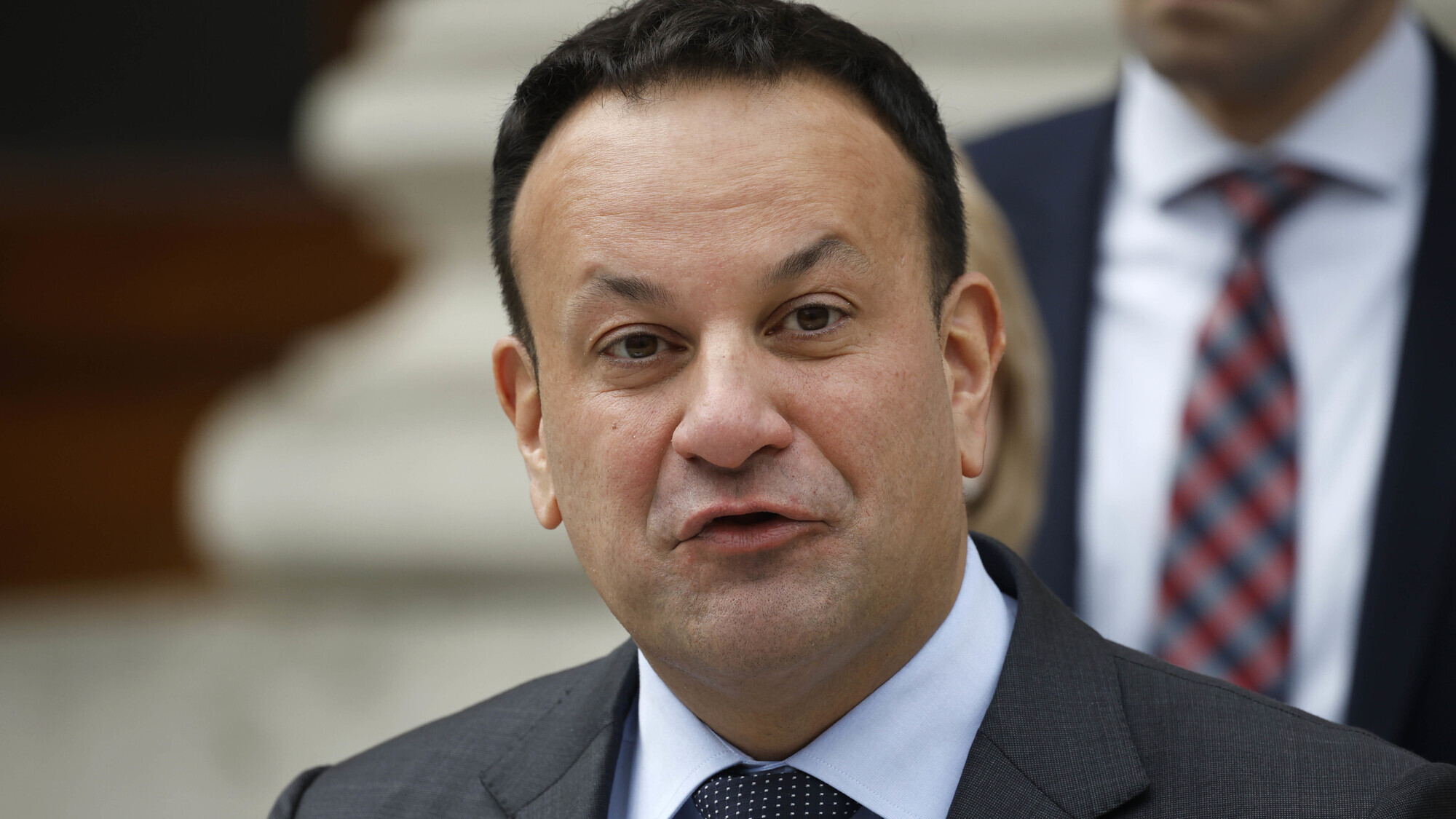
Former Taoiseach Leo Varadkar: “I’ve always rejected attempts to create an artificial divide between rural Ireland and urban Ireland."
The debate about who pays for what is one that every country has had at some point.
In Italy, it surfaces as the prosperous north believing they subsidise the southern regions. Across the United States, the 'coastal elites' fight it out with 'heartland conservatives' arguing about who built this country.
Across the Celtic Sea, you have La France profonde, where Parisians are accused of forgetting about Deep France and its rural interior. The North-South debate has divided British life since the Industrial Revolution.
This week, the debate arrived in Ireland thanks to former Taoiseach Leo Varadkar.
Read More
He said urban Ireland needed to be more blunt and push back against a rural Ireland, saying they are the real workers.
"We are the ones paying all the bills, and you are the ones who are in receipt of a lot of subsidies and tax benefits that other people don’t get'.” As expected, the Irish Farmers' Association rejected the remarks outright, and Varadkar has since rowed back on his views.
He himself had already given the best defence in remarks he made in 2021, resurfaced this week by the Irish Examiner's Louise Burne, “I’ve always rejected attempts to create an artificial divide between rural Ireland and urban Ireland — to play one off against the other — East v West, Dublin v the rest,” he said. “We are One Nation, and few Dubs are more than a generation or two away from rural Ireland."
There are a myriad of ways you can measure a region's contribution, but none of them can give any true measure of value. Dry statistics offer a glimpse, but even then offer a contradictory view of where economic value lies.
The Central Statistics Office measures regional economic output using Gross Value Added, or GVA, which takes the value of goods and services produced in a region, minus the cost of inputs.
No doubt the former Taoiseach was thinking of the €173,586 GVA per person that people in Dublin deliver to the economy, with the county's IT sector driving the lion's share.
But closely behind the South West region of Cork and Kerry, dominated by rural areas with a GVA per person of €155,188, more than double that of Kildare in third place at €77,944. But we know why Cork and Kerry's GVA is so high, with pharma plants and other multinationals like Apple. In Dublin, it's Google, Meta and Microsoft.
In 2024, the South-West and Dublin had the largest share of their GVA coming from foreign-controlled enterprises. IT varies significantly across the country. Foreign companies accounted for 80% of GVA produced in the South-West compared with 17% in Kilkenny or 22% in Monaghan.
The arrival of these behemoths and their contribution to the country's coffers is not down to the ingenuity or any one sector or region. They are here on the back of more than half a century of work to transform Ireland's economic model to make the country an attractive and low-tax location to do business in. Others have suggested that the regions which host these multinationals should see a great piece of the corporate tax pie and have been repeatedly rebuffed.
If corporate taxes were to stay where the companies are located, the streets of Hollyhill would be paved with gold. In reality, Ireland is far too small a country to be divided on urban and rural lines. They are so intertwined any assertion quickly falls apart.
The issue with the urban-rural framing is that it treats our vastly integrated economy as a zero-sum game. Urban productivity does not exist in isolation from rural Ireland. It depends on roads, water catchment, food supply chains and energy infrastructure that run through and are maintained by rural communities. The agricultural subsidies that Varadkar referred help to keep food prices lower for both the rural and urban dweller. They are not a transfer of wealth from one side to another but the mechanics of a single, interconnected economy.
Decades of support and subsidies have also turned Ireland into a food export powerhouse, selling €19bn of food and drink abroad at the last count.
Look again at those other countries which regularly trot out this debate. They have yet to resolve the issues and are unlikely to in the future. A ledger book approach, which tots up who contributes and who receives, is never settled. Nations are not balance sheets.
CONNECT WITH US TODAY



Be the first to know the latest news and updates