Our town centres cannot hold without reinforcements

The latest research from the CSO passed without much notice, but it showed our 'independent' small towns are in big trouble, writes Listowel native Conor Keane
Our town centres cannot hold without reinforcements

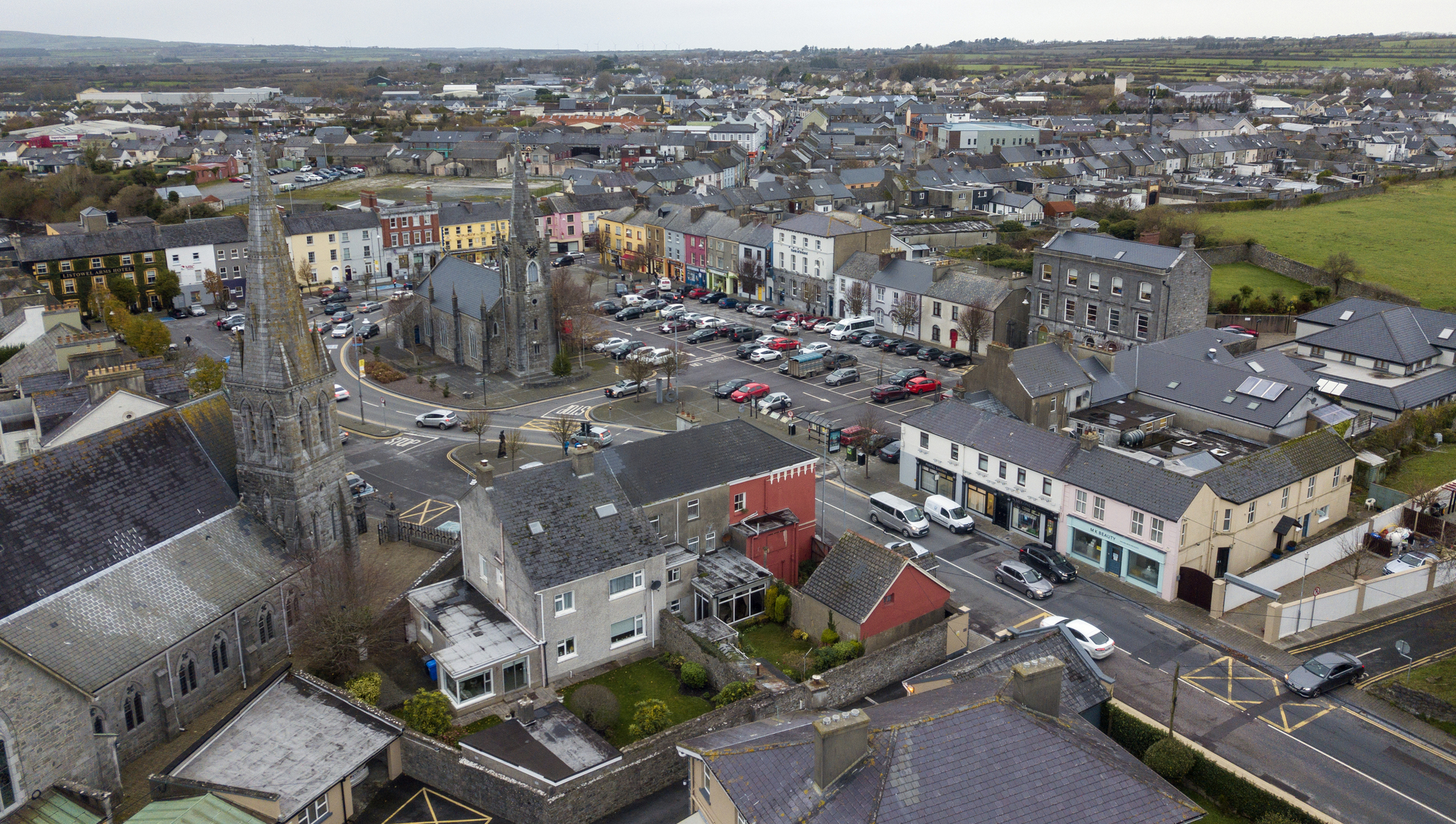
Listowel, a market town of long standing with a magnificent main square overlooked by a centuries-old Norman castle. File picture: Dan Linehan

MANY of Ireland’s small towns are not doing well, not well at all. Curiously, it is the most ‘independent’ of these — those not in the economic orbit of a bigger metropolis — that are faring worst of all.

In general terms, the economic facts are bleak, the latest CSO returns indicate.

Still, each ‘independent’ town has its own strengths and weaknesses — to survive, they must build on the foundations of the past, with eyes firmly focused on economic and cultural renaissance.

However, we must ask, are these independent towns — where less than 20% of workers commute to a city — worth holding on to? In a word, yes. But here are a few more.

I grew up in one, Listowel, County Kerry, a fairly typical ‘independent’ small town, yet not at all typical. Dingle is another, and not typical either; neither are others such as Bantry, Lifford, Clifden, Abbeyfeale, Ballinrobe, Kells, Clara, Cashel and Tramore.

Conor Keane: 'There are gaps in the market, and us punters must make sure there’s a market in those gaps.'

These small towns are vital arteries, providing much of the raw talent to be honed by our third-level institutions and others, forming the backbone of Ireland’s medical, cultural, civic, entertainment, educational, and entrepreneurial sectors.

The trouble is, these towns are in trouble. There have been far too many talking shops set up to arrest this decline, but the actual shops are closing by the hundred.

When I was a boy, there was just one shop where the owners did not live over the shop, on the hundred or so metres that make up Lower William Street. The boys and girls I grew up with went on to play football with Kerry, rugby with Munster and Ireland, lead schools, hospitals and hotels, and much more besides.

Today, there’s just one house on the street with a child; gone are the days when you could rouse a football team in a few minutes to play another team of equally unruly youths from just around the corner, who were simultaneously friends and foes.

In truth, the town centre cannot hold without reinforcements.

Listowel has lost a lot. There were two bakeries, 60 pubs, butchers galore, streets full of shops, but those days are gone — now, there are fewer than 10 pubs and a solitary butcher’s shop. 

There is an incredible incongruity in all this. When I was at school, the population of Listowel was 2,500; today, it is 5,000.

The town’s cultural and sporting life is thriving; amateur drama has never been stronger, our runners and ballers are flying, but our traditional shops and pubs are disappearing.

We have more barber shops than we ever had butchers. And don’t talk to me about vape shops. If there’s a return to the tonsorial trends of the 1970s and ’80s, when men’s main mane was long hair, there’ll be a shearing of barbers for sure.

As the man said, something has to be done. Living over the shop is a non-runner, unless there’s a thriving shop underneath. The supermarket chains have, for the most part, cornered the market, with keen prices, great service, and local employment.

There are gaps in the market, and us punters must make sure there’s a market in those gaps.

A town needs a commercial heart to be a real town, that means shops and customers, and plenty of them. Unaided, cafés are thriving in Listowel, providing a wonderful social outlet and jobs.

We need more retail outlets, but many of these will need help to get up and running; an artisan bakery and delightful delis spring to mind. 

Help must come from the State, but more importantly from customers, with 5,000 people, there’s a lot to sell them that they can’t get online. Historically, we are, after all, a market town of long standing with a magnificent main square overlooked by a centuries-old Norman castle.

Imagination is rife here — we have, as local poet Gabriel Fitzmaurice described, our own ‘left bank’ in the town’s small square with a bookshop, gallery and a café.

Take the example of McGillicuddy’s Toy Shop, probably Ireland’s finest independent toy shop and one of the oldest in the country, selling toys for 120 years or so.

Seán McGillicuddy, the fourth generation of his clan to run the store, has created The Hobby Space — a safe space — to buy, build, and play with trading cards, board games, models, and more. It’s very popular. It’s innovative thinking like this that will help keep our small town centres vibrant.

Seán McGillicuddy, the fourth generation of his clan to run the store, has created The Hobby Space in Listowel — a safe space — to buy, build, and play with trading cards, board games, models, and more. It’s very popular.

Sadly, Jodi Cahill will close the town’s only and delightful fish shop at the end of the month after 16 years trading. There have been, and there will be, tears. Yet another shop lost.

My late mother, Mary Keane, spent her life behind shop counters. She offered this sage advice to those who want to see small towns thrive: “If you don’t shop in your own town, then you won’t have a town to shop in.”

  • Conor Keane is a communications consultant and a former journalist.
x

More in this section

Revoiced

Newsletter

Had a busy week? Sign up for some of the best reads from the week gone by. Selected just for you.

Cookie Policy Privacy Policy Brand Safety FAQ Help Contact Us Terms and Conditions

© Examiner Echo Group Limited