The decline of the Irish fishmonger: 'If we don’t start looking after them, we’re going to lose them'
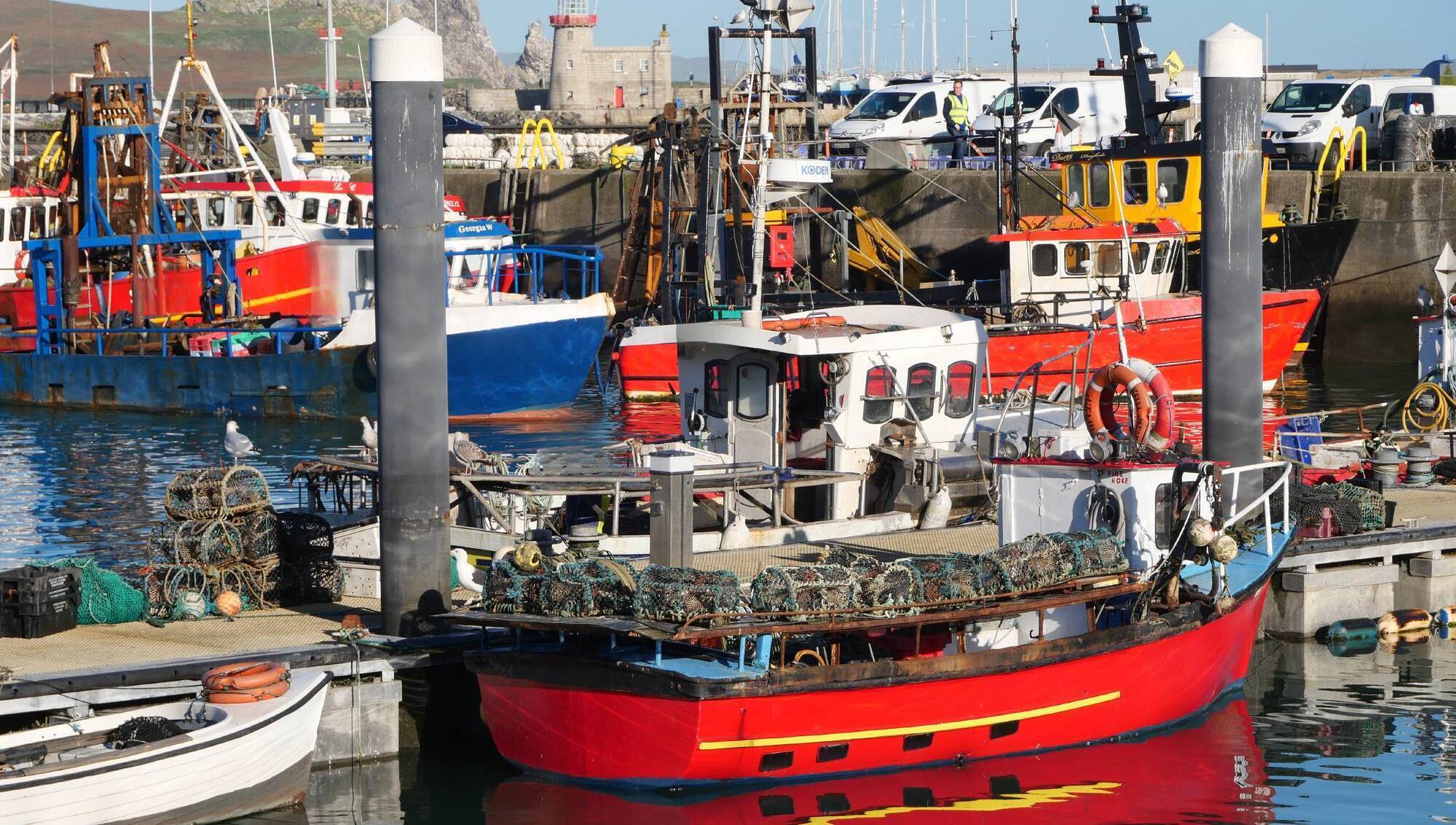
“The way it’s looking, it’s hard to imagine there’ll be many independent fishmongers in 10 or 20 years, and the only complaints we’d get is that the price is not what it used to be.”
The decline of the Irish fishmonger: 'If we don’t start looking after them, we’re going to lose them'

The Irish fishing fleet has halved in size in the last 20 years

For an island nation, we have a curiously detached relationship with our superb Irish fish and seafood. Our consumption is not only markedly lower than other European nations, but almost 20% of Irish people spurn entirely one of nature’s finest foodstuffs. BIM are addressing that pattern, with four independent Irish fishmongers recently securing the prestigious accolade of ‘master fishmonger’, at a ceremony in London’s storied Fishmongers’ Hall.

“The annual Irish domestic seafood market is €524m,” says Paul Ward, BIM manager of business intelligence, “about €175 in the food service sector, but retail is mainly in the multiples; the smallest portion is the independent fishmongers. Over the last decade, while the value of sales increased, the volume of retail sales has decreased and we’ve seen a drop in households purchasing seafood.

“We have limited scope with the multiples, so we thought we could support the independent mongers to be advocates for seafood.”

The master fishmonger candidates were nominated through BIM’s Seafood Academy and were required to demonstrate excellence in their craft — including advanced knife skills, product expertise, responsible sourcing, sustainability practices, and outstanding customer service. They are the first master fishmongers in Ireland.

“My dad started as a bicycle messenger in Flanagan’s, the biggest fish shop in Waterford, aged 13,” says Liam Burke, of Billy Burke Fish & Poultry, “and opened his own place when he was 24, nearly 50 years ago. I started when I was old enough to handle a knife.

Liam Burke of Billy Burke Fish and Poultry, Ballybricken, Waterford City holding a monkfish. Picture: Patrick Browne

“When I left school at 16, I went to work in a butcher’s shop and had better knife skills than the old men in there. I was cock of the walk, thought I was destined for better things.

I got an interview with an engineering firm and the man said, ‘I’d give you a job in the morning but, one, your father would kill me and, two, me mother would never again get a decent bit of fish’

“So I started working full-time with me Dad. I was already working for BIM to train people and doing stuff in [South East Technological University] but the accreditation was on my bucket list, for the prestige of getting as high as I can.”

Liam Burke of Billy Burke Fish and Poultry, Ballybricken, Waterford City. Picture: Patrick Browne

Stefan Griesbach owns Gannet Fishmongers in Galway, which carries the widest range of fish and seafood in the country.

Parisian-born Stefan studied aquaculture, arriving in Ireland in 1997 to work on a salmon farm before setting up Gannet Fishmongers in 2004.

Master fishmonger Stefan Griesbach (right)

“It was more an ego thing than anything else,” he said. “I’m going to sound pompous and being French about it, but in France everyone working in a fish shop would be a master fishmonger, constantly training. Traditionally, the French consumer would have been more open to fish.”

Much of our traditional antipathy to fish dates back to memories of over-cooked and less-than-fresh fish during Lent or on meat-free ‘fasting Fridays’. However, deeply entrenched prejudices seem finally to be withering — helped along by the evolution of Irish hospitality, including a growing coterie of seafood restaurants, such as Cork’s multi-award winning Goldie. In addition, the success of the Wild Atlantic Way has seen coastal restaurants supported by Fáilte Ireland in developing their own fish and seafood offerings.

Dubliner John Cleary began behind the fish/deli counter in Quinnsworth, aged 16, eventually managing multiple departments. A self-described “blow-in” who “moved to Cork for a woman”, he has worked for Keohane’s for 14 years and runs their Cork City outlet. He is also chairperson of the Independent Fishmongers group.

John Cleary of Keohane Seafoods, Cork. John Cleary, one of the first Master Fish Mongers in Ireland displaying a 7-8 kilo Kingfisher at the Keoghan’s Seafood Shop near the Kinsale Rd roundabout in Cork. Picture by Noel Sweeney

“When I was growing up, it was almost a punishment, but now it’s a pleasure and sustainable, especially wild fish, healthy and very tasty,” he says. “And there’s always something new to surprise you — we’re trying out more exotic fish, mahi mahi, kingfish.”

The cultural melting pot

“It used to be Ash Wednesday and Good Friday were the big days,” says Billy, “but it is a completely different ball game now. I get a boost out of Valentine’s, the Chinese New Year, Ramadan — it’s so multicultural and I love all that.”

Daniel Hayes, of Wrights of Howth, was born in Howth.

“It’s a big fishing town,” says Daniel, “pretty much everyone ends up here, down on the pier or on the boats. After I left school, a friend who worked in Wright’s got me a job for Christmas that was supposed to be for two weeks — 10 years on and the rest is history.

“I’m the main filleter, I’d come in at 7am, and, if there’s no filleting in the factory, I’ll set up the fish counter or work in the smoke room because we ship a lot of smoked salmon across the world. The best thing about my work is the customers, most have my phone number, everyone knows each other in Howth.”

Alan Mitchell of Al’s Fish Shop, in Portalington, Co Laois, achieved advanced fishmonger accreditation, a grade below but impressive for a relative newcomer from a county with zero coastline.

“Fish never came across my radar when I was younger,” says Alan. “I’m from a family of butchers. I ended up in hospital for two months and was watching daytime cookery shows, it was all fish. I was thinking I could incorporate fish into the butcher’s. I rang a fish company and asked if they’d sell to me. They said yes and then I said, ‘would you be interested in teaching me’, because I had no idea about fish or species.”

Alan also worked with other fishmongers, including Cusack’s, in Limerick’s Milk Market: “Paul Cusack was like the Willie Wonka of fish and a great mentor. I’m from the Midlands, I’d have seen a supermarket fish counter in a small town, cod, salmon, whiting, and that was it. He had an amazing selection.”

The New Irish, those from around the world who have chosen to make Ireland their new home have had a big impact on the local retail market.

“We sell to local restaurants but 70-75% is the shop,” says Billy, “and once we can get the proper wild product, there is such an eclectic range of customers: Indians, Asians, Chinese, Eastern Europeans. But half our customers would be Irish, families going back generations — they’ll ring me on a Thursday to get something on a Saturday or Sunday.”

“We have a nice Thai community who like whole fish,” says Alan, “Indians, Poles, Ukrainians, Filipinos, they all love fish. Portarlington is a nice, big melting pot, a helluva lot better than it was 10 years ago.”

Fishmonger Alan Mitchell (right)receiving his BIM Master Fishmonger award

“Our typical customers are ‘everyone’,” says John, “because we share the unit with a butcher’s, a fruit and veg market, and a very popular deli that took off on TikTok about a year ago, and we’re getting some of that new young crowd who are learning how easy it is to cook fish.”

“Some Irish customers are knowledgeable and more open but most are more traditional,” says Stefan, “more interested in fish, a small bit of seafood; salmon, cod, hake, fish mix, maybe a few scallops or peeled prawns as a treat. But all consumers are dumbing down. In France, Spain, farmed salmon is everywhere because people don’t know how to cook fish anymore but if you overcook salmon, it will taste OK because it is a fatty fish.”

Ironically, even as these independent fishmongers enhance their qualifications to increase sales, it is becoming harder to source the most prized product of all: Wild Irish fish.

“Our most popular fish is farmed salmon from Norway or Ireland,” says Daniel, “and [imported] tiger prawns, Turkish farmed seabass, Atlantic farmed plaice. The most popular wild Irish fish would be cod or monkfish, haddock and hake but it’s getting more expensive.”

Master Fishmonger Daniel Hayes of Wright's of Howth (right)

“I hate saying it but our biggest seller is farmed salmon,” says Alan.

“I love selling wild cod and hake, but it’s hard to get good Irish product — I just have hake and monkfish today. Everything else is either from Norway, Spain.”

“60% of what we sell is salmon but I refuse to sell farmed plaice,” says Billy.

“It looks beautiful vac-packed in the box, take off the plastic and after an hour the colour changes. I’d be ashamed to charge for it. Wild fish is best: Turbot, John Dory, black sole, brill, squid, cuttlefish, octopus, red mullet, gurnard, scallops, ray.”

We’re 49 years selling fish, but last year was the first year since we started that I didn’t get a local mackerel off a local boat.

The Irish fishing market

In addition, consumer conservatism means we are neglecting many premium wild Irish alternatives.

“A lot of different species are caught in Ireland,” says Stefan, “and they can’t find a market so are discarded or exported: cuttlefish, Irish octopus. People give out about price but won’t look at whiting, ling, ray, fish they’d have eaten in their youth. My customers like niche fish: Brill, wrasse, ray, rock salmon, pollock, mullet, red mullet, bluemouth, blue ling. They love black scabbard, landed once or twice a year in Donegal. Irish bluefin tuna, we sold a lot last week.”

In Ireland, canned fish is student-poverty food; in southern Europe, entire restaurants are devoted solely to premium canned fish. Stefan has not only pioneered online fish sales in Ireland but sells canned fish and seafood.

“The decline in business motivated me to sell online. It’s now 50% online and 50% retail,” Stefan says.

“Tinned sales are going up. Initially there was resistance but I explain the huge difference between supermarket tins and the premium Gannet range. All natural ingredients, no additives or preservatives. I couldn’t sell caviar, two, three years ago; it is now one of my top 20 products. What I do is very different from Irish fishmongers but in France I would be just like every other fishmongers.”

However, the elephant in the room is the ongoing decimation of the Irish fleet — over 50% lost in the last 20 years — and slashed Irish fishing quotas.

“You can see the decline is quite obvious,” says Daniel, “it’s not nice to think about. The way it’s looking, it’s hard to imagine there’ll be many independent fishmongers in 10 or 20 years, and the only complaints we’d get is that the price is not what it used to be.”

“If I could see a future for any of my kids,” says Stefan, “I’d welcome them with open arms but the business is fucked, from one bad week every couple of months to one good week, two bad, one average. For me, selling salmon, cod, hake is not selling fish — that’s a supermarket.”

“I love it, I have a passion for it,” says Alan, “and I seem to be getting busier every week. You can worry about the future all you want but you can’t change it, so I try to keep a positive attitude.”

“It’s going to be really, really tough,” says John, “If we don’t start looking after the independent fishmongers, we’re going to lose them. We need to support them and get wild Irish fish back on the counter where possible — or even farmed. We have a lot of good trout farms and we try to promote organic Irish salmon.”

John Cleary of Keohane Seafoods, Cork. John Cleary, one of the first Master Fish Mongers in Ireland at the Keoghan’s Seafood Shop near the Kinsale roundabout in Cork. Picture by Noel Sweeney

“I don’t see any future,” says Billy, “I wouldn’t put my son into it.”

“The Irish seafood sector is a complex story,” says Paul Ward, “and there are 1,001 challenges and many different factors. And we have to be realistic. Yes, the minister will go to Brussels to advocate for Irish fishing but we’re not going to increase the quota. For BIM, it’s about how we can capture as much value as possible from the quota we have and we are working with the fishmongers on how they can best promote their own offerings and skills.

More in this section

Lifestyle

Newsletter

The best food, health, entertainment and lifestyle content from the Irish Examiner, direct to your inbox.

Cookie Policy Privacy Policy Brand Safety FAQ Help Contact Us Terms and Conditions

© Examiner Echo Group Limited