Mick Clifford: Sallins Inquiry gig a sold-out show of solidarity 
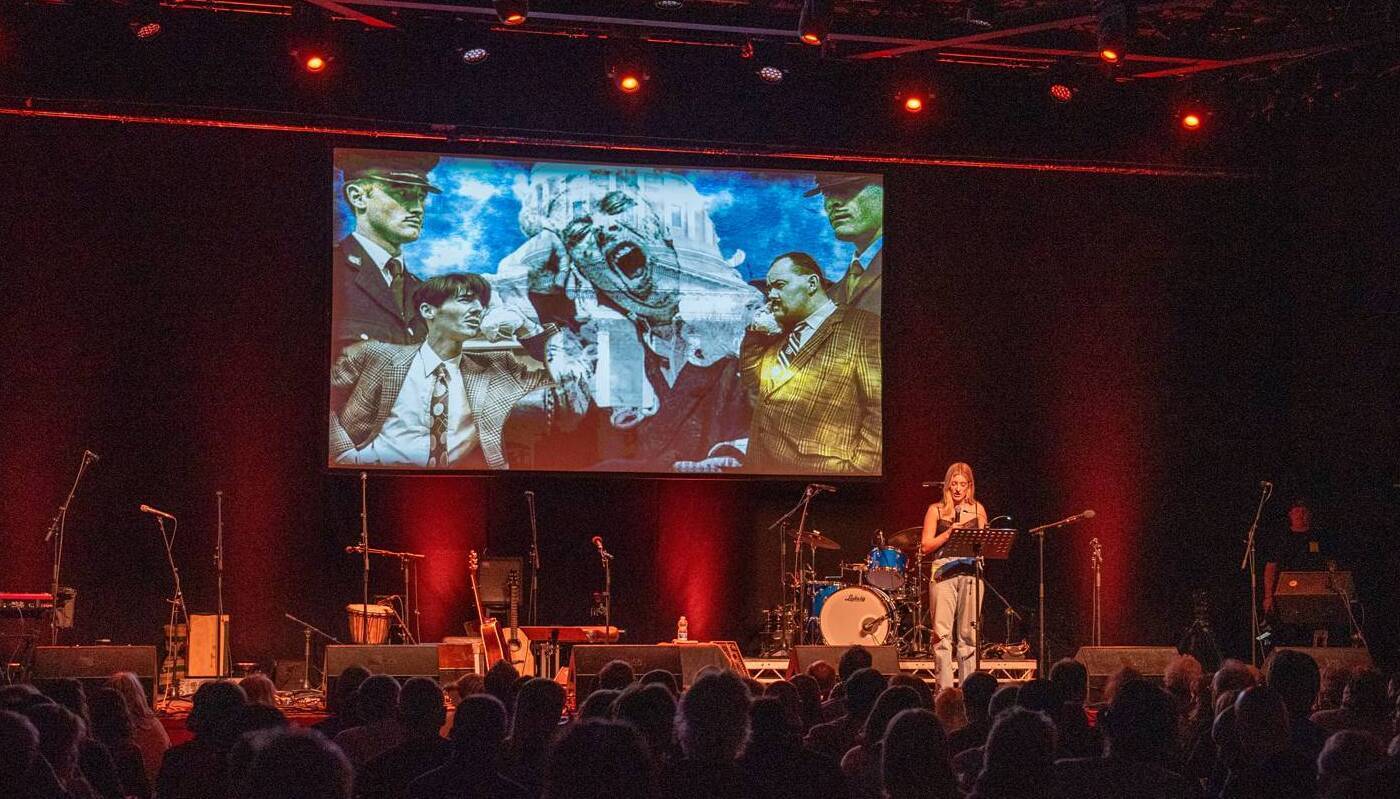
Nearly 50 years on, the Sallins Inquiry Now gig marks a renewed call for justice
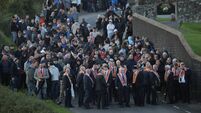
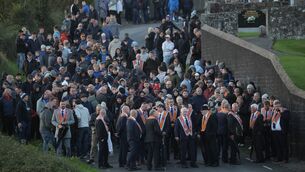
'A packed house was in attendance on a night heavy with yearning for accountability. A grievous wrong had been done to young men way back then, but an injury was also inflicted on a State purporting to uphold democracy.' File picture

'A packed house was in attendance on a night heavy with yearning for accountability. A grievous wrong had been done to young men way back then, but an injury was also inflicted on a State purporting to uphold democracy.' File picture

A Paddywagon was parked up across the road from Vicar Street.

Some of those attending the gig at the music venue observed it wryly, as if time had travelled back to the old days. Others couldn’t rid themselves of an itch of suspicion that the special branch has been resurrected.

It’s difficult to believe that the presence of a garda van outside a gig remembering garda brutality was anything more than a complete coincidence. After all, the brutality in question was from nearly 50 years ago. The notion that danger to peace or State security lurked among the pensioner-heavy attendance would be ludicrous.

Still, sometimes you don’t know what to believe.

Tickets for the Sallins Inquiry Now gig on Sunday evening were long sold out. With a line up that included Christy Moore, Damien Dempsey, John Spillane, and Kila, it couldn’t have been otherwise. Michael D Higgins sent his best wishes.

A packed house was in attendance on a night heavy with yearning for accountability. A grievous wrong had been done to young men way back then, but an injury was also inflicted on a State purporting to uphold democracy. Half a century on there remains a sense of unfinished business, wounds yet to heal.

Sallins arrests 

Quick recap for anybody under 50. In the early hours of March 31, 1976 the Dublin-Cork mail train was robbed at Sallins, Co Kildare.

Paramilitaries were suspected of the heist that yielded an estimated £200,000.

Gardaí believed the job was carried out by what was perceived to be the armed wing of the Irish Republican Socialist Party (IRSP).

Dozens of IRSP members were rounded up. A number of them, including Nicky Kelly, Osgur Breatnach, and Brian McNally, received severe beatings in custody after which they signed confessions to a robbery they didn’t commit.

All three were convicted, but Kelly went on the run before the verdict, having lost faith in the justice system. Breatnach and McNally spent seventeen months locked up in Portlaoise prison until released on appeal.

Kelly came home from the USA but was unsuccessful with his appeal. He endured a hunger strike and four years in prison before being released on compassionate grounds.

The whole case represented one of the worst miscarriages of justice ever witnessed in the State, implicating police, the judiciary, and ultimately government. It has never been fully investigated.

Breatnach has long conducted a campaign for an inquiry which has received wide support. His brother Cormac Juan, a musician of some repute, put together the gig to remember and to campaign further.

Christy Moore was alive to the injustice when the whole thing was going on. He wrote a song about Kelly, The Wicklow Boy, while Kelly was still incarcerated.

“The first time I sang it was at the gates of Portlaoise Prison with Donal Lunney,” Moore said. “Many years later Nicky Kelly told me that he heard it (inside).”

On Sunday Christy sang it again, demonstrating that his passion has weathered well down all the decades. His performance received the acclaim of the night.

Christy Moore wrote a song about Nicky Kelly, 'The Wicklow Boy', while Kelly was still incarcerated. File picture

Poet Paula Meehan read accompanied by Com MacCon Iomaire on violin. Her poem From Source To Sea deals with the physical scars inflicted by torture. She told the audience that “the scars of Sallins are within”.

Journalist Patsy McGarry, who wrote a book on the case, recounted that during the original trial at the Special Criminal Court, one of the judges repeatedly fell asleep.

When this was raised it was rejected by the court which found judge John O’Connor was not asleep. The High Court and Supreme Court confirmed the ruling.

In fact, the man was dying and he had been falling asleep, yet nine judges concluded that he was wide awake at all times, as if those attending the court were not to believe what was before their eyes.

Gene Kerrigan remembered his co-author Derek Dunne on the definitive book about Sallins, Round Up The Usual Suspects, a classic of the genre. John Spillane came on stage, head down like a man snooping around looking for a place to start.

His performance was, as it always is, engaging. Conscious that he was a Cork man in the heart of Dublin he introduced a song he penned about the city, Full Moon in Finglas, which went down a treat.

Conscious that he was a Cork man in the heart of Dublin John Spillane introduced a song he penned about the city, 'Full Moon in Finglas', which went down a treat. File picture 

Noreen Byrne was among the audience, and the demographic, enjoying autumnal years. She told the Irish Examiner she was in the original campaign to free Nicky Kelly. “There was a very wide breadth to the campaign, all sorts of people,” she said.

At one point the campaign got support from former US secretary of state Ramsey Clark, who flew into the country to give a dig out.

“We put him up in a hotel in Gardiner St, which isn’t what he might have been used to,” Noreen said. “But he was perfect with it all. Then I drove him down to Limerick in my Renault 4 to meet the then minister for justice Michael Noonan.

“He wasn’t used to that kind of transport either.”

Des McGuinness, who is at the gig with Noreen, chaired that original campaign. He talked about how it went way beyond politics. “We were asked by the Knights of Columbanus to address them about it,” he said. “I went in and it was like something out of the 1940s.”

At the other end of the scale, the couple remembered fondly another committee member, Seamus Ruddy. A member of the IRSP, he was abducted and shot dead in Paris in 1985 by the Irish National Liberation Army. He was disappeared and his body only discovered in 2017.

On stage, Theo Dorgan recalled the official silence abut the Rising on its 75th anniversary. His poem, Kilmainham Gaol Dublin 1991 deals with commemoration and what happens when we fail to remember.

Damien Dempsey performing at the Sallins Inquiry Now benefit gig last Sunday. File picture

His contribution was with a theme for the evening. This was not a political event, certainly not in the sense that it was back in the 70s and 80s. The platform was not used to further any political agenda today.

Instead, its focus was the basic tenet of a democracy, the right of citizens, the potential for a state to abuse power and the failure to address wrongs that have been left to fester.

Damien Dempsey came on and sang with all the power he brings to a performance, before joining Pauline Scanlon with whom he sang a haunting lament.

Then it was time for Osgur Breatnach to give a brief address. He was taken into the Bridewell 50 years ago this week, and what happened over the following days was to define the rest of his life.

He thanked “the families who have stood with us” those who campaigned, the legal profession, journalists who had written about it over the years.

“I am convinced that an independent judicial inquiry will take place,” he said. That remains to be seen but will require an enlightened approach from the current government to replace the habitual instinct of allowing awkward bygones to gather dust.”

Kila played out the evening to bookend an occasion that was sensitively conceived and timely. The past, as the American writer William Faulkner once noted, “isn’t dead, it isn’t even past”.

Osgur Breatnach’s campaign to mend the past will not go away, and is unlikely to die anytime soon.

x

More in this section

Revoiced

Newsletter

Had a busy week? Sign up for some of the best reads from the week gone by. Selected just for you.

Cookie Policy Privacy Policy Brand Safety FAQ Help Contact Us Terms and Conditions

© Examiner Echo Group Limited