Jim Clarken: World's super rich are shaping society
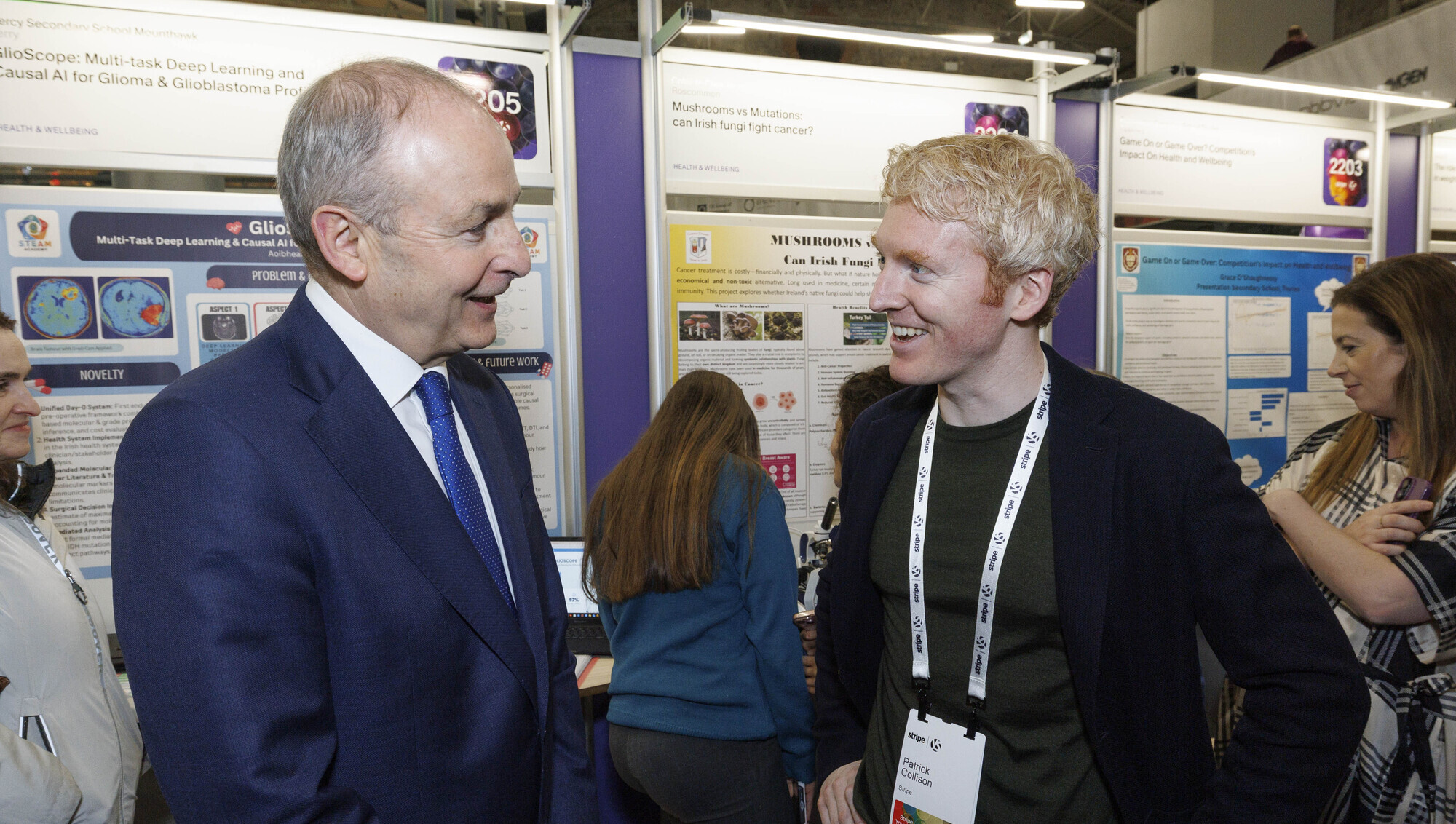
Taoiseach Micheál Martin with Patrick Collison, co-founder and CEO of Stripe at the Stripe Young Scientist and Technology Exhibition 2026 in the RDS. Brothers Patrick and John Collison are two of Ireland's 11 billionaires. Picture: Conor McCabe Photography
As the world’s elite gather to discuss the future of the global economy, a shadow hangs over our shared democratic values.
This week, Oxfam launched its report on global wealth statistics and trends; which shows that extreme wealth is no longer a private fortune, but a tool used to shape our economies and societies to the ends of the super-rich.
In Ireland, our research revealed that Ireland’s 11 billionaires are wealthier than 3.5m Irish people combined or — 85% of the adult population of the country.
We also launched a new Oxfam-Ireland commissioned report, .
This report, by Dr Tom McDonnell, Ciarán Nugent, and Sorley McCaughey proposed the design of a wealth tax for Ireland which would tax the top 1% of wealth holders above a threshold of €3m net wealth.
Net wealth is total assets minus liabilities, so mortgages or loans are taken into account.
Under this proposal, the authors found that a 1% tax on the top 1% above the threshold could yield around €1.1bn for the Irish exchequer.
A 2% tax could gather €1.7bn and a 3% tax in the region of €2.5bn.
The total tax take could well be higher as the process of the collection itself would allow Revenue sight of hidden assets.
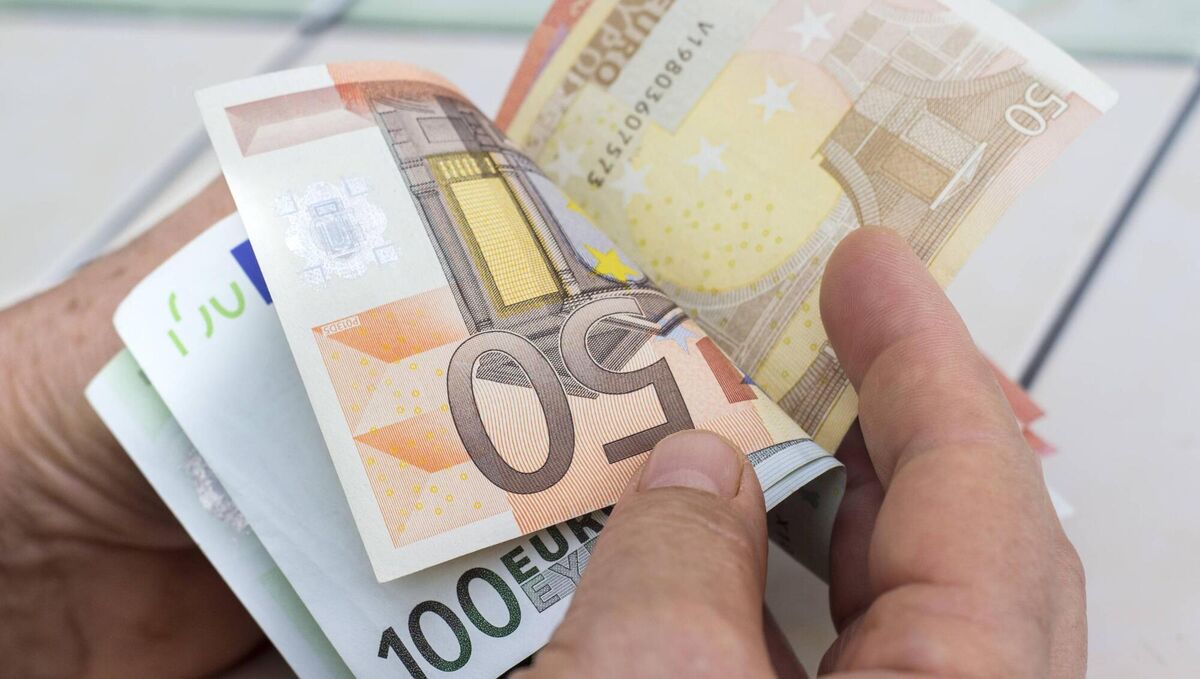
An extra €1-€2.5bn for the public purse is not an insignificant sum.
It is particularly important as we know we face a fiscal crunch with an ageing population who will need ever more pension provision and healthcare.
We also know that our own tax receipts are heavily reliant on volatile corporation tax.
This leaves us vulnerable to external shocks, such as a trade war.
The Government’s Commission on Taxation and Welfare found in 2022 that, “in essence, the balance of taxation must shift away from taxes on labour and towards taxes on capital, wealth, and consumption”.
And a wealth tax is undoubtedly a matter of social justice, allowing the Government to further fund public services and invest in a secure future for everyone.
Critics often argue that wealth taxes are a relic of the past, but we must look at our neighbours who successfully utilise this tool.
Countries like Spain, Norway, and Switzerland maintain recurrent wealth taxes today.
While many nations rolled them back in previous decades, this was often due to poor design — riddled with exemptions and high administrative costs — rather than a failure of the concept itself.
Recent negotiations at the G20, the EU, and the United Nations have brought the taxation of high-net-worth individuals back to the forefront of global policy.
Ireland has an opportunity to lead this charge, rather than resist it.
We must directly address the fears often stoked by the beneficiaries of the status quo.
First is the fear of "capital flight."
While assets are mobile, research shows that migration responses to wealth taxes are small relative to the potential revenue.
To safeguard our tax base, we propose setting the tax at a low effective rate and introducing a robust Exit Tax to prevent high-net-worth individuals from simply relocating to avoid their duties.
Second is the claim of "double taxation."
Critics argue that wealth is built from income already taxed.
However, all consumption taxes (like Vat) are paid out of already taxed income.
A wealth tax is better understood as a surtax reflecting the "additional taxable capacity" and unique utility — security, power, and influence — that comes with owning vast assets.
Third is the "administrative burden."
Modern technology and increased international cooperation have made valuing assets easier than ever.
By utilising self-assessment with random audits and setting a high threshold of €3m, we restrict the tax to a tiny, wealthy elite (approximately 43,000 individuals), thereby minimising compliance costs for the state and the general public.
Ireland can act, like Spain, Norway, and Switzerland to implement this measure for social solidarity, to guard against extremism and for fairness.
Ireland can also act now to protect the public finances as we face an uncertain future.

CONNECT WITH US TODAY



Be the first to know the latest news and updates