Tasers are a bad idea for quelling riots. Here's why
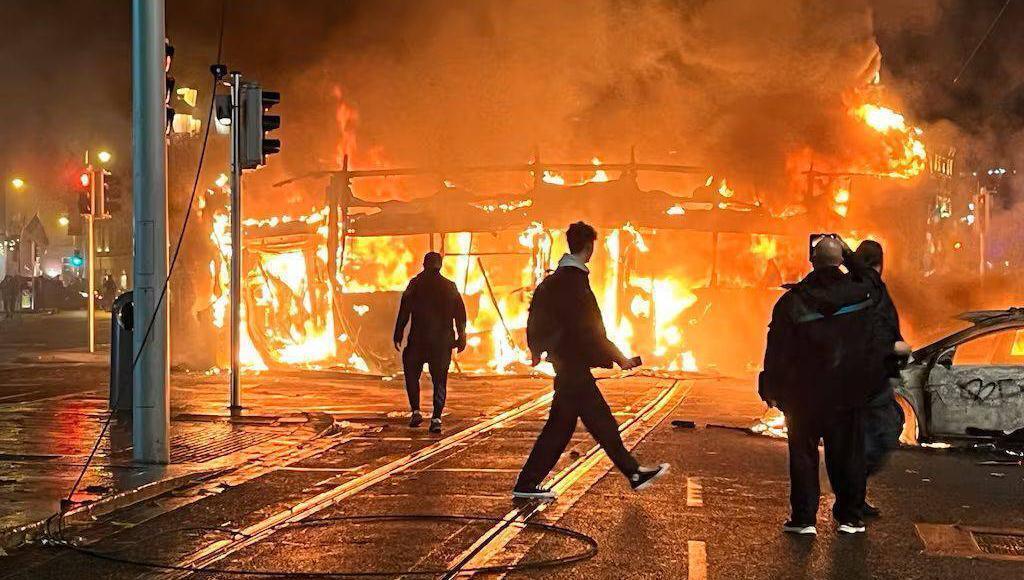
In a riot, gardaí will often seek to clear participants out of a particular space and to break up crowds. To do this, they use dispersal techniques like baton charges, horse charges, pepper spray, tear gas or water cannon. File photo
There is a dangerous idea circulating that the Gardaí need tasers to deal with rioting crowds.
The idea is simply that if gardaí had more weapons, they would be better able to defend themselves, and either prevent riots from occurring or stopping them after they had taken hold. The problem is that tasers are a singularly awful tool for public order policing.
Tasers are designed to incapacitate a single suspect so that they can be detained.
They fire what looks like a 1cm straightened fishhook into the flesh of their victim and then run 1500 volts through their body. When fired, the taser remains connected to the body of the victim by two metal wires.
While tasers are not a single use weapon, they are quite difficult to reload and require care and attention to prevent accidental electrocution. This presents very serious problems for police officers trying to use them during a riot.
Put yourself into the boots of any of those gardaí who became isolated during the 2023 Dublin riot.
A baton and shield are their most effective defences. These weapons can be deployed against any and all who would approach. They allow the officer to threaten force, while safely withdrawing to a more defensible position.
The problem with a taser is that it can only be fired once in that sort of situation, and when it has been fired the officer is then physically connected to their victim. This means that while the guard has incapacitated one potential assailant, they are now vulnerable from any other rioters in the vicinity.
There is a misperception that a taser might scare off rioters, so if the guard is electrocuting one of them, others will fall back.
The problem with this is that social psychologists have repeatedly shown that when police use force against a member of a crowd, others within the crowd feel that force as a wrong against them all. This feeling of being wronged is particularly strong when the force used by the police is spectacular.

If a guard were to use a taser against one rioter, then others in the vicinity will feel more wronged by that action. The fact that the guard has used this intense force against one of their own, will increase their willingness to use extreme force.
So instead of scaring them off, it is likely that tasering one person will make that guard more of a target. The crowd will want revenge. In other words, the use of a taser will escalate the situation even further.
People often don’t understand that different weapons are used for different purposes.
In a riot, gardaí will often seek to clear participants out of a particular space and to break up crowds. To do this, they use dispersal techniques like baton charges, horse charges, pepper spray, tear gas or water cannon.
The primary purpose of a taser is to effect an arrest. But during a riot, arrests are often deeply counter-productive because they inflame the situation. They build an atmosphere of tension, and intensify the feeling of ‘us’ versus ‘them’.
The aim of a policing operation is to return to an atmosphere of ‘normality’. Arrests for riot-related activity tend to happen days and weeks after a riot, when the police have had the opportunity to sift through evidence and build a case.
The idea that tasers would be used during a riot fundamentally misunderstands both the dynamics of civil unrest and the function of tasers.
- Illan Wall is a lecturer at the School of Law, University of Galway.
CONNECT WITH US TODAY



Be the first to know the latest news and updates