Springtime for Putin as Trump embraces Kremlin’s distorted reality
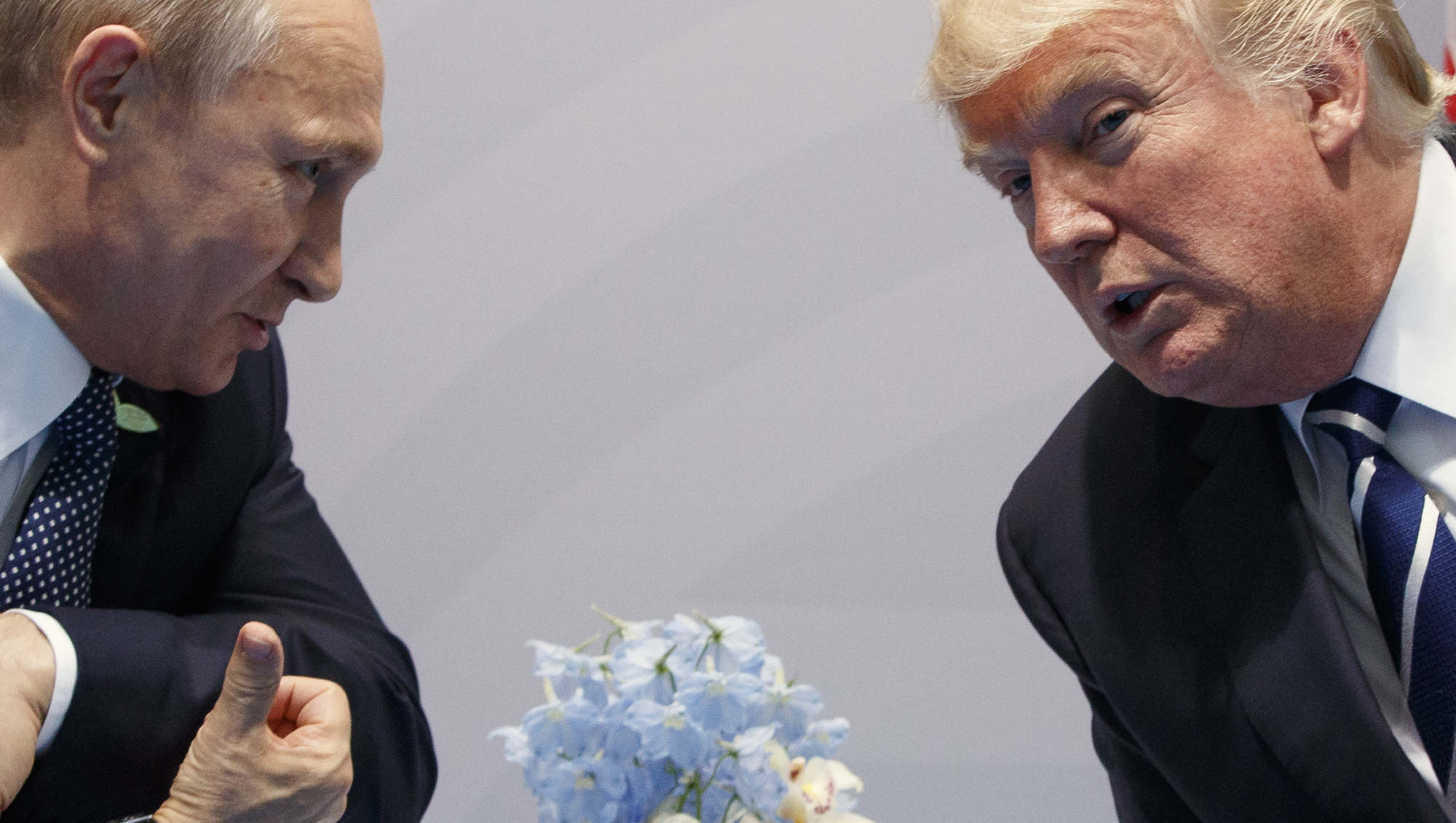
The division, discord, and disorder dreamed up by Vladimir Putin, left, has come to fruition following the re-election of Donald Trump. File Picture: Evan Vucci/AP
The premise of Mel Brook’s acclaimed 1967 film, centres on a plot involving two figures hatching a plan to scam investors by producing a Broadway musical in adoration of Adolf Hitler that would be so bad it was guaranteed to flop. However, the musical fails to fail and they’re left to carry on and act like everything is going according to plan.
Two of the seismic political events of the past decade, the Brexit vote and the campaign of Donald Trump for president of the US in 2016, were expected by many — including some of their architects — to be flops.
One was aimed at appeasing Eurosceptic voices among the Tories, while the other was a reality TV star running as a publicity stun who would surely never unseat establishment candidates.
Both campaigns were viewed as an aberration, brief flirtations with nativism and populism for the respective countries. Both political upsets were aided by serial falsehoods, voter microtargeting, and manipulation led by Cambridge Analytica and — in the case of the US at least — documented influence operations conducted by Russia.
What has resulted since is a fractured political landscape bordering on an existential crisis, which now extends across Europe following the re-election of Trump and his administration’s overtures to Vladimir Putin, at the expense of Ukraine.
The ultimate beneficiary of this is the Russian president and the Kremlin, whose own efforts helped turn the fissures afflicting the West into tectonic cracks.
Disinformation, used to advance the cause of resurgent nativist populism, has utterly succeeded.
The past two decades have seen western nations riven with discontent over economic inequalities, immigration, and disenfranchisement.
Russia’s information warfare did not create Europe’s discord, nor did it manufacture the polarisation that besets the US, but it has seeded and nurtured division online — amplifying narratives of disillusionment in the democratic project while actively supporting illiberal, ethnonationalist forces in Europe.
Back in 2014, we witnessed an early example of this when Russia’s disinformation apparatus was deployed following the 2014 Maidan revolution in Ukraine. The invasion of eastern Ukraine and annexation of the Crimea by Russia were accompanied by praise from state-controlled media and supportive troll farms.
Closer to home, a 2020 report from Britain’s Intelligence and Security Committee found substantial evidence of Russian interference in the 2014 Scottish independence referendum. Attempts were made using online platforms, blogs, and accounts to promote independence and separate Britain.
Moscow did not need to hack voting machines or rig ballots to win this election. It needed only to pollute the information environment and did so through covert disinformation operations, cyberattacks, and coercing people towards action using social media.
Russian operatives coordinated opposing groups to protest against each other in real life, all through the use of fake accounts and event pages online.
In November 2016, over 5,000 people — including documentary filmmaker Michael Moore — attended a rally in New York City organised by BlackMattersUS, a Facebook page run by the Kremlin-linked Internet Research Agency. What Russia understood better than any Western government was how the online world was another active front in geopolitical struggles.
Trump’s first term was chaotic, and its ending especially so, as he cried foul over unfounded allegations of voter fraud. With his re-election, there has been rapid convergence around a man who tried to prevent the transfer of power.
Some groups seek to use his presidency to shift the political paradigm that has shaped the West for decades. Others want to use his presidency for their own economic pursuits.
Over the past 10 years, there has been an accelerating radicalisation of the Maga right which now governs the US. It grew out of the alt-right movement, was shaped by Russian influence operations, and gave rise to a homegrown disinformation industry in the US.
Elon Musk turbocharged the movement, using his enormous reach and influence to elevate Maga influencers and spread propaganda that reinforces Trump’s agenda.
To live in this world is to believe Ukraine started the war, not Russia’s invasion, and to believe that president Volodymyr Zelenskyy is a “dictator without elections" — as Trump has claimed.
The past week marked the first anniversary of the death of Alexei Navalny, an opposition activist who was barred from running against Putin in the 2018 presidential election, designated as an extremist and imprisoned where he eventually died.
There’s little point in even fact-checking Trump. What is more notable is the speed at which his administration has sought to cast itself away from Europe, to undermine a democratic state fighting off an invasion, and give legitimacy to its autocratic neighbour.
Team Trump has embraced Russia’s adversarial position towards Europe and has readily devoured its distorted sense of reality.
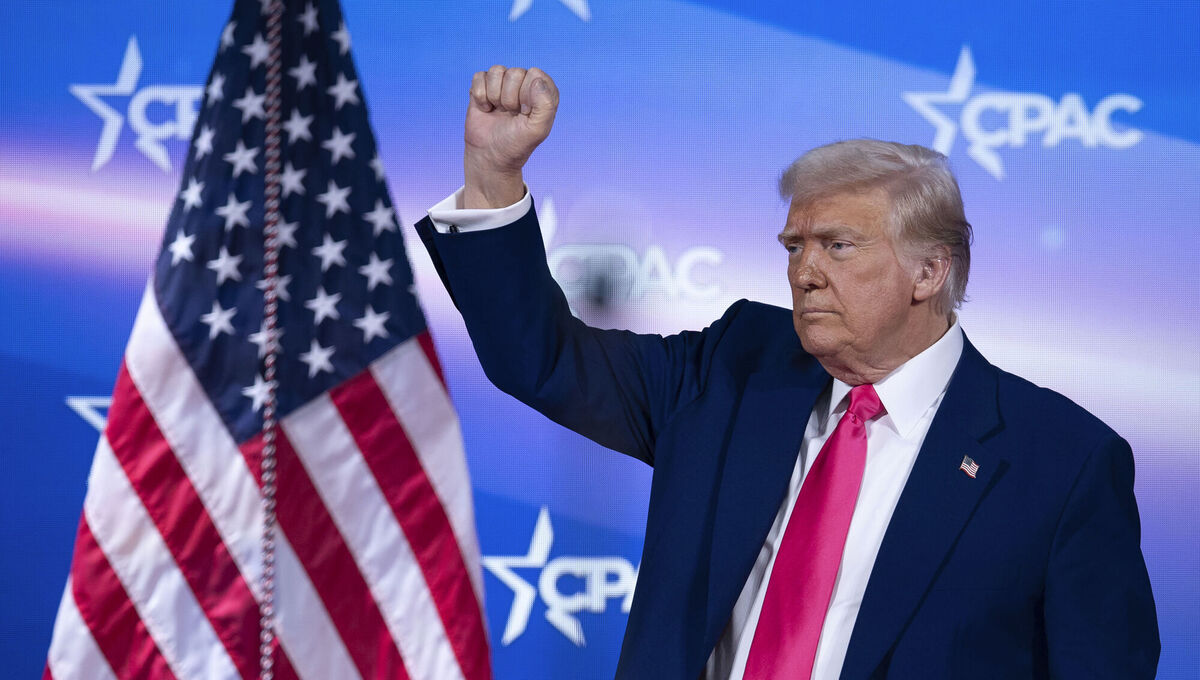
And why? Trump and his Maga acolytes admire Putin and how he conducts business. Not only for his authoritarian control of the nation but as an ideological ally aligned with them in their own existential struggle against liberal democracy in support of nativist populism, against multilateral cooperation in support of strongman nationalism. They see a roadmap for their own vision of the US.
Speaking in Brussels two weeks ago, US defence secretary Pete Hegseth laid it out in stark terms: Europe’s security is now within its own hands.
Speaking at the Munich Security Conference a week later, US vice president JD Vance said the biggest threat to Europe was not Russia but “the threat from within". He accused the European Commission of being more interested in stifling free speech than providing security for its citizens.
Many now view the US and Europe as adversaries. The post-war alliance has collapsed, a new Russia/US axis is forming, and the fate of Ukraine may be decided by envoys from both nations — hosted by Saudi Arabia — without any input from Kyiv.
The division, discord, and disorder dreamed up by Vladimir Putin — and delivered in part through influence operations and disinformation campaigns — has come to fruition.
We all now wait to see what comes next in the shock and awe pronouncements of Trump 2.0, and what path forward Europe will try to chart or where Russia’s hubris might take us.
Let us hope it doesn’t echo the opening number from the musical that failed to fail in “Germany was having trouble, what a sad, sad story … Winter for Poland and France … Springtime … means that soon we’ll be going to war.”
- Ciarán O’Connor is a researcher and journalist who focuses on extremism and technology


CONNECT WITH US TODAY



Be the first to know the latest news and updates