Genocide ruling against Myanmar welcome but it highlights good and bad of international law
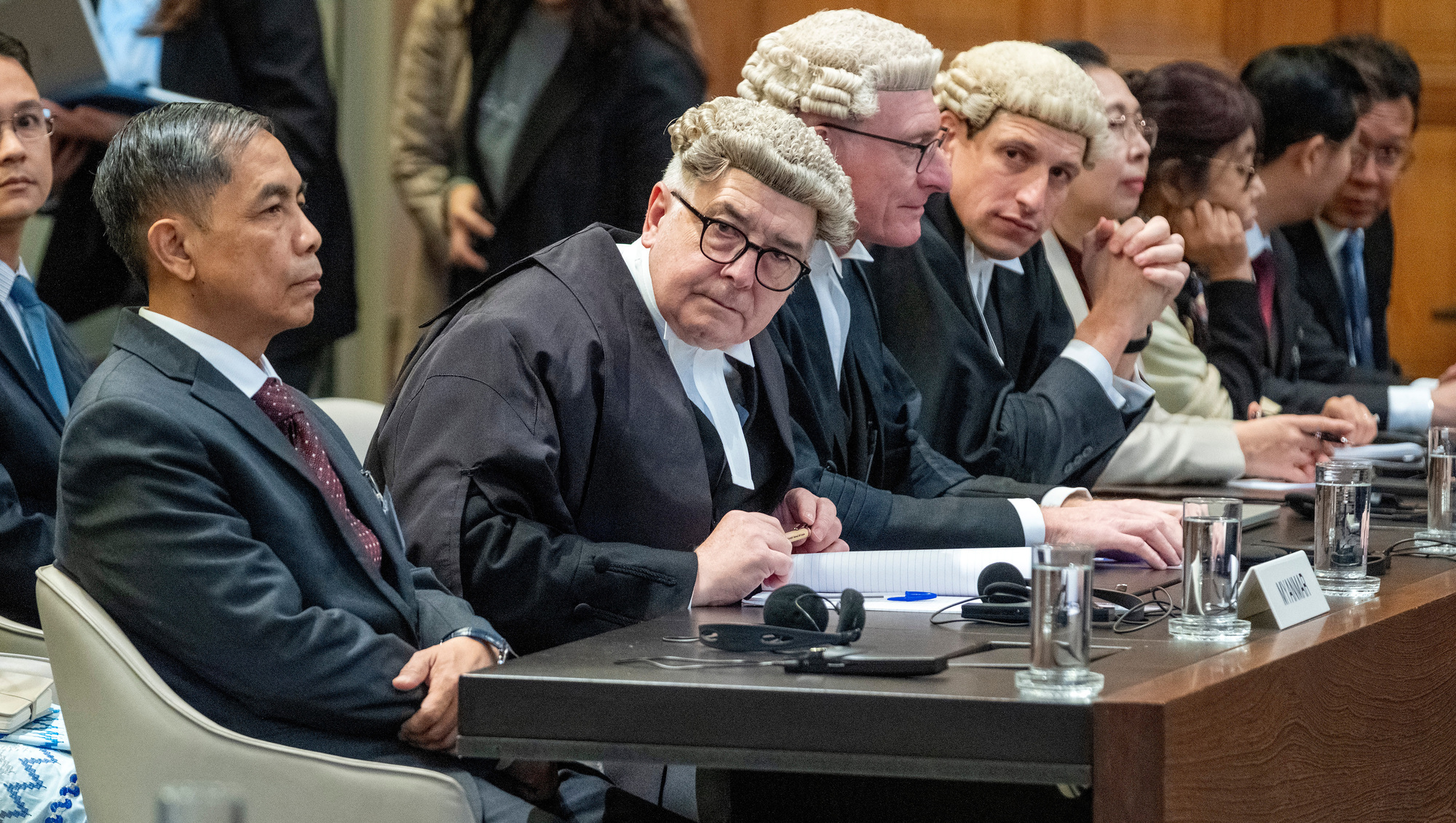
Myanmar's union minister for the Ministry of the President's Office Ko Ko Hlaing, left, at the International Court of Justice in The Hague on Thursday before it ruled that Myanmar had committed genocide against the Rohingya. Photo: AP/Patrick Post
Vladimir Putin, Benjamin Netanyahu, Joseph Kony. All three men stand accused of slaughtering innocent civilians, abducting and corrupting innocent children, and committing widespread atrocities.
All three have been hit with arrest warrants by the International Criminal Court (ICC).
All three know that the likelihood of the arrest warrants being enforced is next to zero.
Some are in a fugitive state (Kony), others limit their travel to countries outside of the ICC’s remit (Putin).
In April 2025, Hungary left the ICC to accommodate Netanyahu in a state visit. Months before the visit, Netanyahu had been greeted with standing ovations in the US Capitol.
In a world where international order appears to be tearing at the seams, many look at The Hague, the ICC, and the International Court of Justice (ICJ) as lame ducks, facades of the city of peace and justice that have become derelict.
Read More
“One of the most common phrases you'll hear about the courts throughout its life has been it’s at a crossroads,” says Paul Bradfield.
“Crossroads seem to be coming along quite frequently, but certainly this crossroad is the biggest and the most difficult.”
For more than a decade, Bradfield has carved out an international law career in The Hague. As a graduate, he interned on a defence team at the International Criminal Tribunal for the Former Yugoslavia (ICTY).
The tribunal that was initially confined to prosecuting the relative minnows of the Yugoslav wars soon became an archetypal case of international justice.
Over its lifetime, the tribunal tried former Yugoslav president Slobodan Milošević and convicted former Republika Srpska leaders Radovan Karadžić and Ratko Mladić for genocide and war crimes.
Bradfield currently represents the victims of Ugandan warlord Joseph Kony at the ICC. Kony’s allegations include leading widespread rape, gender-based crimes and conscripting child soldiers.
“(The ICC) really offers that last hope for many victims,” Bradfield says. “In a setting like Uganda, the state hasn't provided any accountability. It's unable to…for victims, it's obviously crucial.”
Yet Bradfield acknowledges the two oft conflated courts have been plagued by issues since their establishment.
The ICJ, established 80 years ago under the UN Charter, is designed to manage inter-state disputes.
According to Bradfield, the court has often stood “aloof”.
Typical disputes before the ICJ included maritime and boundary disputes.
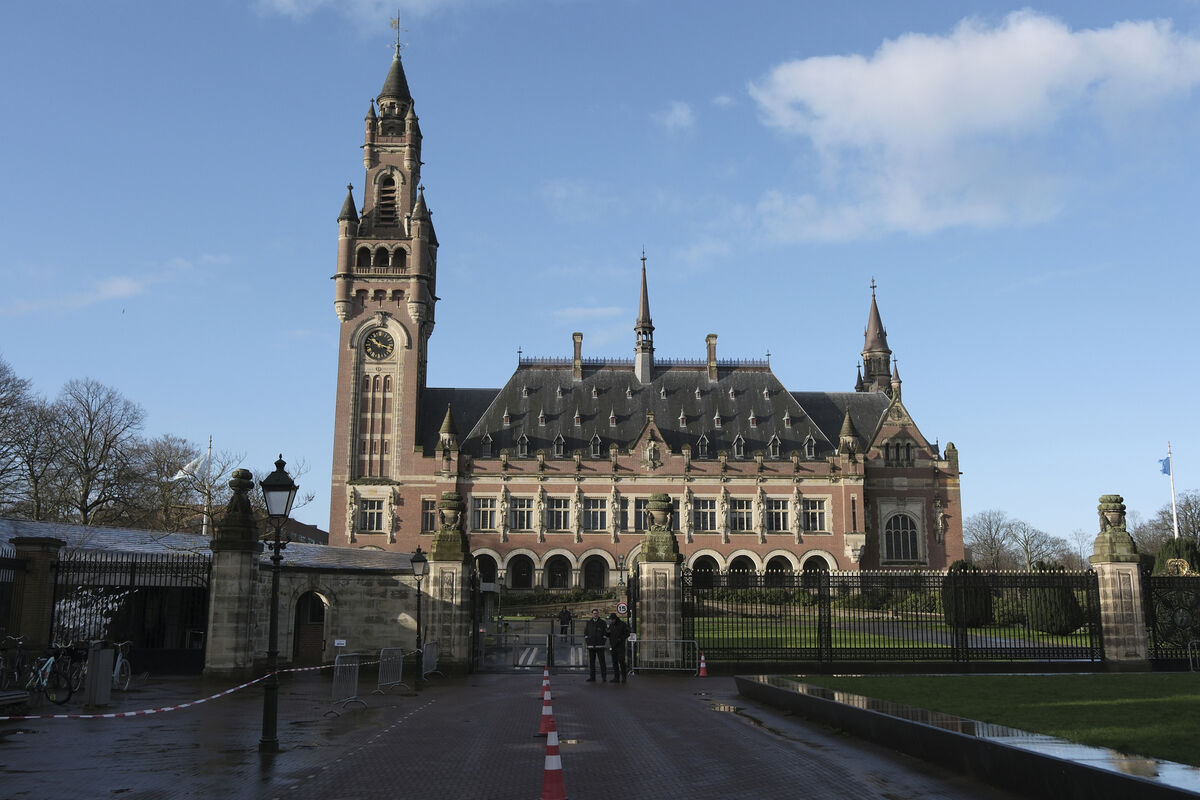
More recently, it has become a forum for effecting change, with multiple nations taking genocide cases against Israel, Russia and Myanmar.
“Cases are brought to the ICJ now, sometimes not in the hope of winning at the end of the day, just to change behaviour and try and avoid further human rights violations,” Bradfield explains.
“It's kind of become a human rights court primarily at the moment, whereas heretofore it was more about boring things.”
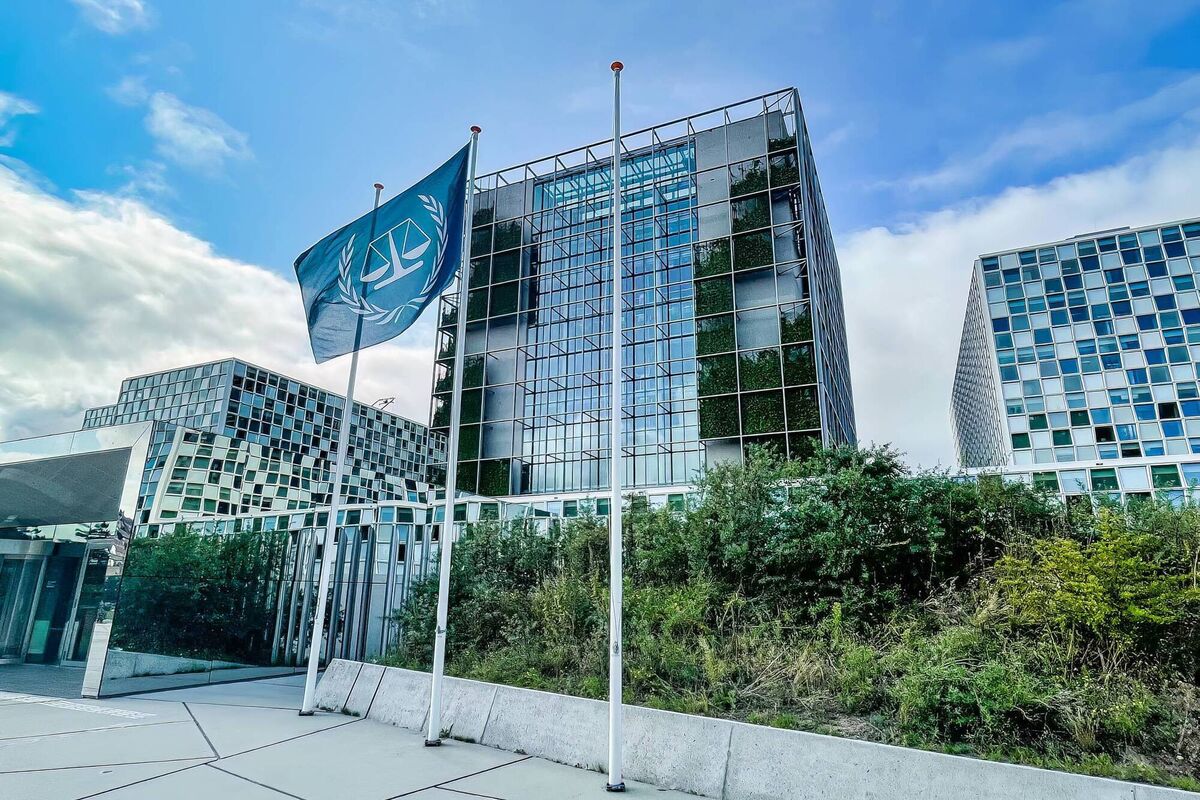
The ICC is not part of the UN and is designed to prosecute individuals, rather than mediate disputes between states.
The court was officially established in 2002 and is governed by the Rome Statute — an agreement major superpowers like the US, Russia, China and Israel are not parties to.
A lack of backing from the mightiest powers ultimately means the court’s ability to go after the worst in the world is limited, and why figures like Netanyahu can easily evade a trial at The Hague.
It also means that the court has honed in on less geopolitically powerful nations.
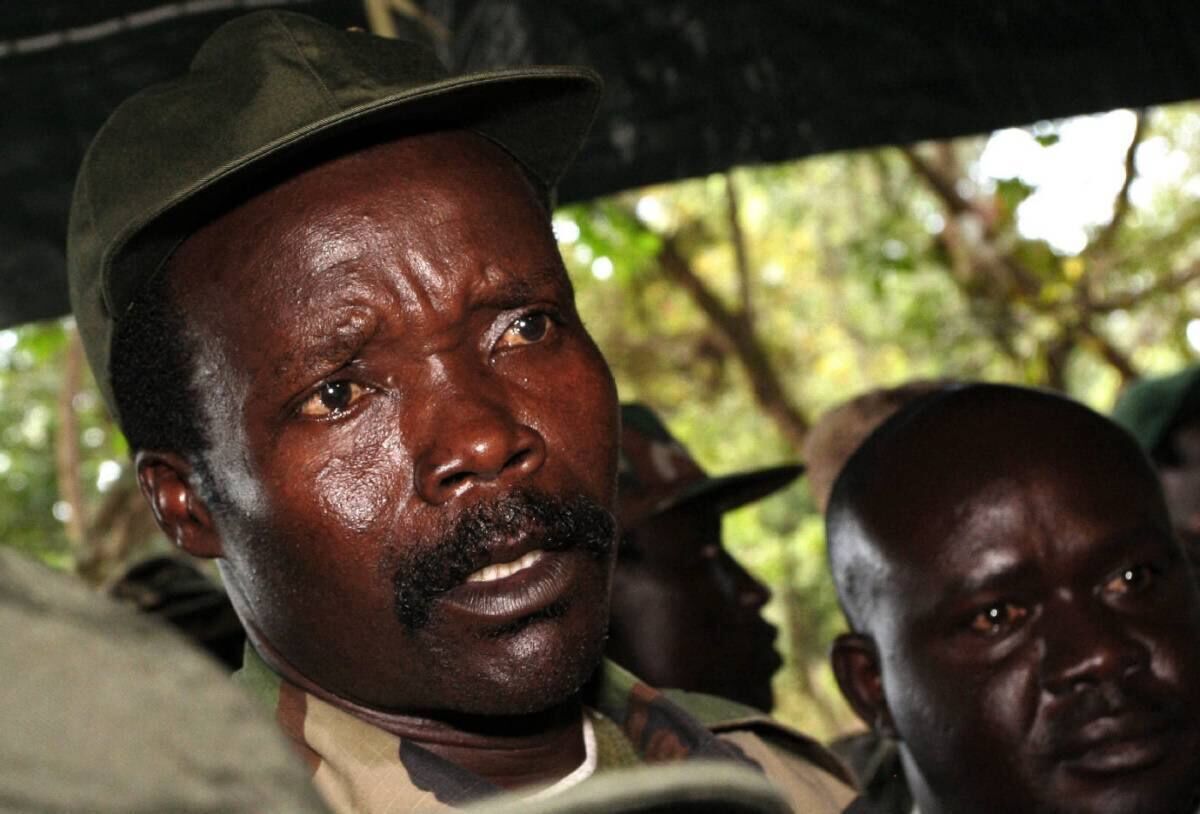
The court has only ever convicted 15 individuals, all of whom have been African.
That concentration has prompted criticism that the courts aren’t an international bedrock for justice, but rather a stark reminder that major powers can skirt consequences.
“The ICC will only work as well as it's allowed work by the people who are members of the organisation,” explains Aonghus Kelly, an Irish international lawyer who has covered war crime cases across the world.
“If you’re the local GAA club and half the members are picketing the fields…then they're not going to play any sport in the GAA club. And that's a bit like what's happening right now.”
The US has hit members of the court with sanctions for raising an arrest warrant against Netanyahu. Kimberly Prost is one of the ICC judges affected.
She describes a situation where she is unable to use Google Maps because of the sanctions. Her US-linked bank accounts have been frozen.
Perhaps most damning is a growing trend of over-compliance, where non-US jurisdictions still take part in the sanctions in order to maintain relations with the US.
Prost describes one instance where she sent money for a young couple’s wedding in the UK. Occasionally, transactions bounce back to her bank account. This time her assets were frozen by the UK.
“I get an email which says ‘your money has been blocked on the basis of the order of the President of the United States, and if you want your money back, you must apply to the Office of Foreign Asset Controller in the United States for a license.’
“It's being done to try and get us not to do our jobs, not to issue decisions, or to do so in the way the United States administration will approve of. It’s a fundamental attack on the rules,” she says.
A lack of concrete Irish response to US sanctions has also irked believers in the court.
“The Irish government, which claims to support the international rule of law, has done diddly squat,” Kelly says.
“Ireland's doing the usual thing of ‘don't put your head above the parapet, lads.’”
The US now appears full-blown in its disdain for The Hague’s institutions.
A recent decision for the ICJ to close an investigation into alleged crimes by US forces in Afghanistan has been viewed as the court buckling to US pressure.
The courts, as Kelly sees it, are at an existential point.
So why keep going?
“We need rules to conduct commerce with each other. We need rules to travel to each other's countries. We need rules to trade services with each other, as well as goods, and we need rules to govern when we can go to war and when we can't.
"We cannot live in some kind of lawless world, a lawless world where, as Hobbes told us, life is nasty, brutish, and short.”
That’s the thesis of Fergal Gaynor, one of Ireland’s most decorated international lawyers. In 2021, he narrowly missed out on election for the ICC’s chief prosecutor.
Like Bradfield, he’s dealt with extreme cases of human savagery — from Kosovo, Lebanon and the former Yugoslavia. He’s seen the power of justice and how it can differ depending on cultures.
A criticism of the courts has often been a perceived blanket system for trying defendants and installing a universal meaning of justice.
Gaynor points to Rwanda — a genocide that was so bloody and unique in its intimacy — and the measures that took place there.
While key leaders were tried in the International Criminal Tribunal for Rwanda, the violence was too widespread to prosecute every actor.
At the same time as the tribunal, a ceremony known as Gacaca courts was taking place across Rwanda’s rolling hills.
The courts saw local communities elect judges, often village elders, with the primary aim of restorative justice and facilitating the offender’s reintegration into society. The Gacaca courts handled almost two million cases before closing in 2012.
According to Gaynor, those systems can be just as effective in bringing peace to communities scorched by trauma.
“People know when something is an inherently wrong thing to do in the context of war,” Gaynor says. “They know it, and they know when they see a genuine justice process in place and when they see a sham justice process in place.
“I'm not talking about legally trained people. I'm talking about, in some cases, people who have very low levels of education. I remember one elderly lady in Africa in particular, and she just struck me with her profound understanding of justice.
“She had a very basic level of education, but she knew what justice was and she knew what justice was not very clearly.
“It seems to me very clear that no matter what culture people are from, there is a thirst for justice as strong as a thirst for water.”
The ICJ’s most recent ruling seems to reflect all that’s good and bad in international law.
For the first time in the court’s 80-year history, the court found a state guilty of genocide.
The case was brought by The Gambia against Myanmar on behalf of the Rohingya minority. It was the first time ever a nation not involved in a conflict had put forward a case to the ICJ.
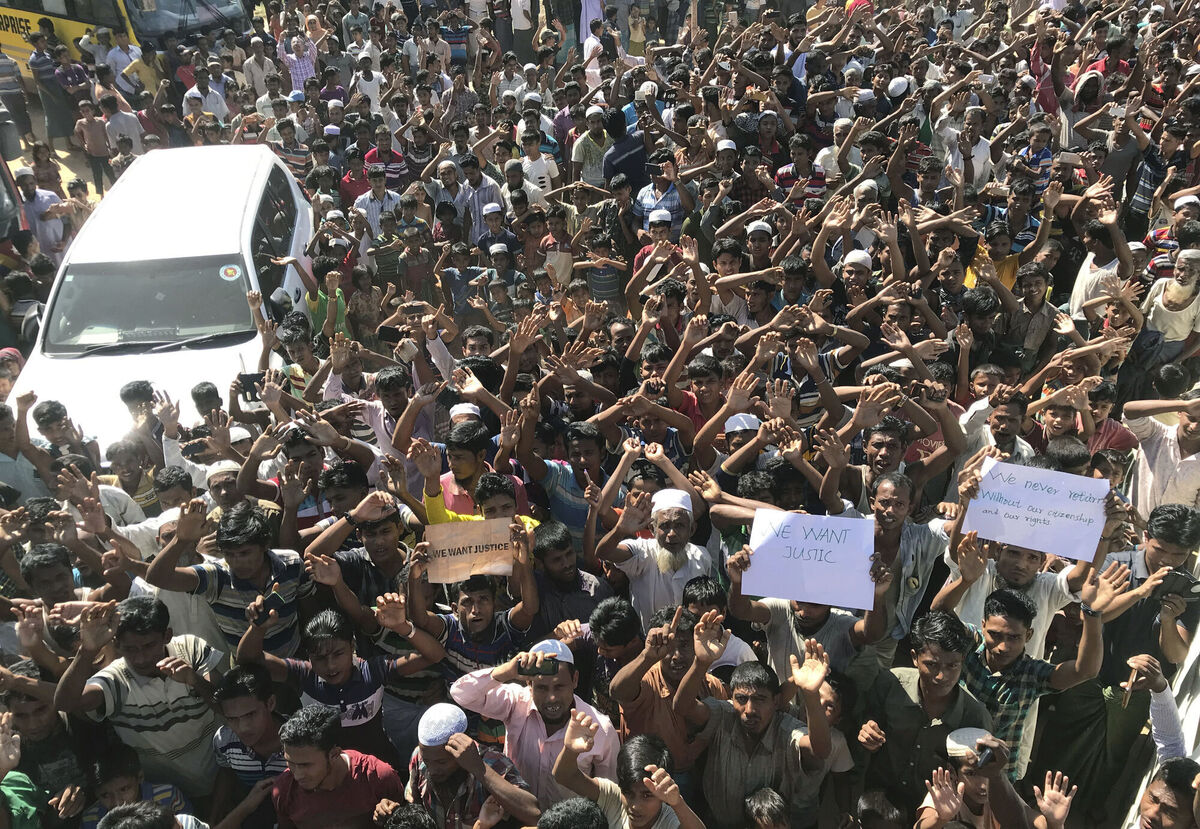
Over the course of the genocide, more than a million Rohingya were forcibly displaced, thousands were subject to sexual violence, and their land was burned to ashes.
Ultimately, any reparations and prosecution of the genocidal leaders will be of Myanmar’s own volition, which currently seems unlikely.
Familiarly, the US has also waded in on the case. UN ambassador Mike Waltz described The Gambia’s case as weakening the threshold for genocide. The threat of sanctions on ICJ judges looms.
But ultimately, there was reprieve for the Rohingya, a minority whose plight largely existed beyond Western eyes, a minority that now inhabits the world's largest refugee camp in Cox’s Bazar in Bangladesh.
The decision was a vindication of the horrors they endured, even if Myanmar’s leaders may never fully bear the consequences.
Some Rohingya managed to travel to the ICJ for the historic verdict. Others packed tightly together to watch the TV screens in their refugee camps. Tears were universal. It seemed their thirst had been quenched.
CONNECT WITH US TODAY



Be the first to know the latest news and updates