Couple still fighting for safer births six years after losing much-loved baby
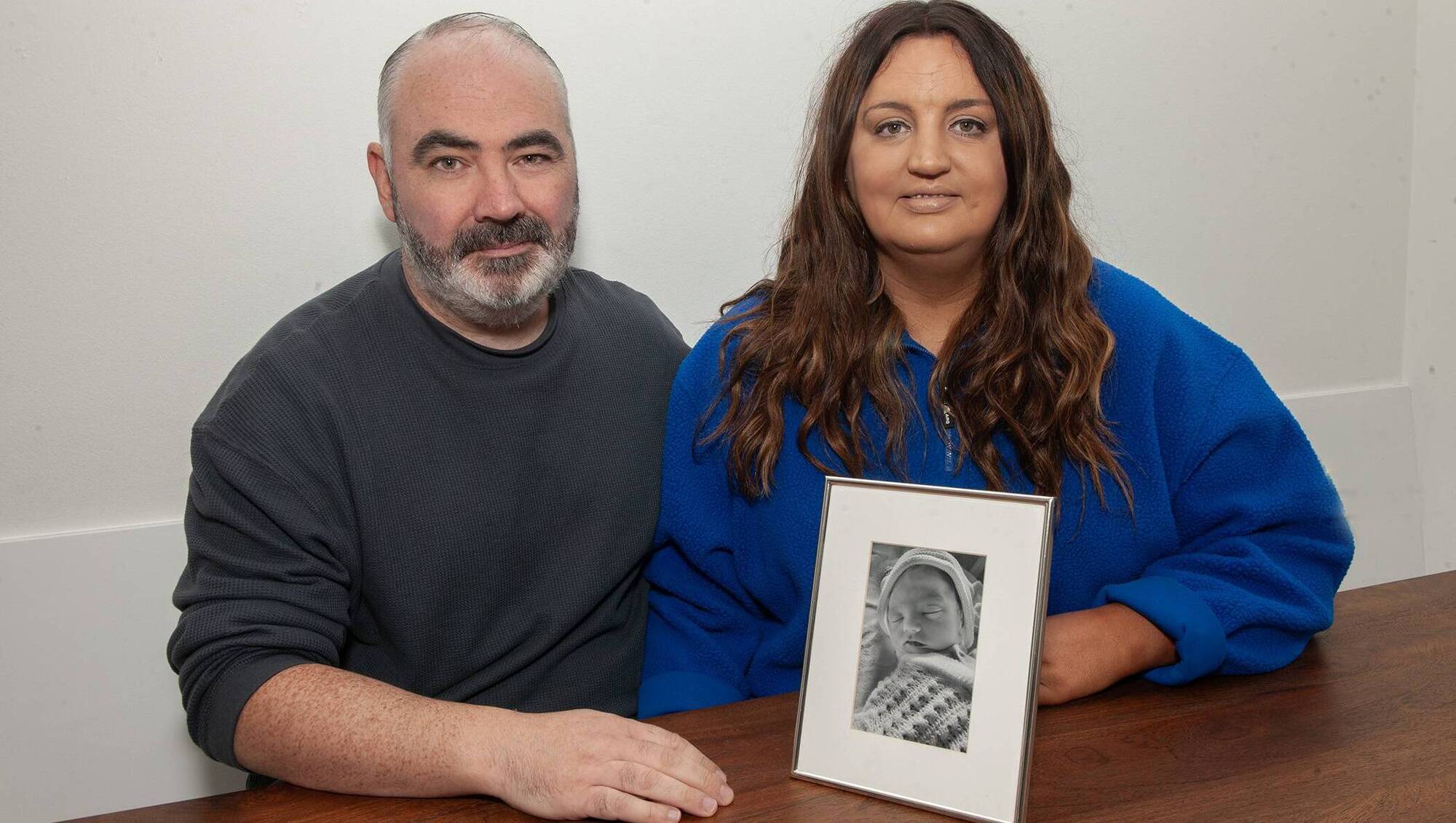
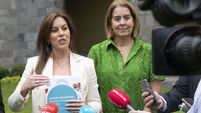
Shane Rodgers (left) and Claire O'Shea (right) with a photo of baby Noah. At the inquest of Baby Noah O’Shea-Rodgers in January 2024, Professor Fergal Malone, former master of the Rotunda Hospital, gave evidence that Noah would have been born alive and in perfectly healthy condition if he had been delivered earlier, after his mother had shown warning signs of severe pre-eclampsia. Photo: Jim Campbell
When Claire O’Shea and Shane Rodgers discovered they were expecting their first child in October 2019, shortly after becoming engaged, they could scarcely have been happier.
The couple, from Summerhill in Co Wexford, had everything to look forward to. They were excited about becoming parents and, as Claire’s pregnancy progressed, did everything they could to ensure their baby arrived safely.
They were particularly conscious of the risk of pre-eclampsia, a potentially life-threatening pregnancy complication, because of a family history of the condition. They made hospital staff aware of this, and Claire attended her appointments, monitored her blood pressure, and repeatedly raised concerns.
But on April 24, 2020, their lives changed forever when their son, Noah O’Shea-Rodgers, was stillborn at Wexford General Hospital. An inquest would later hear that Noah could have been born healthy had he been delivered earlier.
A jury at the inquest returned a verdict of medical misadventure. Following the inquest, Shane said: “We are extremely hurt and angry that a pre-eclampsia diagnosis was not made until late in the pregnancy.
“We feel that if a diagnosis was made earlier and a plan put in place to manage the condition, Noah’s life may well have been saved. Noah was a much-wanted and loved baby.”
Read More
Now, more than six years after losing their first child, Claire and Shane are still fighting for him. Claire had to bring an important maternity policy, developed in Wexford, to the attention of the National Women and Infants Health Programme.
The policy includes guidance on managing pre-eclampsia and the use of preventative aspirin for women considered at risk. Claire believes the lessons from Noah’s death should have been shared across all 19 maternity units.
“We shouldn’t be relying on bereaved parents to do this," she said.
For Claire, 38, and Shane, 40, the issue is no longer confined to what happened in one hospital. It is about whether Ireland’s maternity services are genuinely learning from tragedies and ensuring potentially life-saving guidance reaches the people who need it.
The couple had repeatedly monitored Claire’s blood pressure at home to ensure their baby arrived safely.
The inquest heard that Claire was not seen by a doctor despite two blood pressure readings indicating that a review was required.
There were also concerns about missed opportunities to diagnose and manage her condition.
At the inquest in January 2024, Professor Fergal Malone, former master of the Rotunda Hospital, gave evidence that Noah would have been born alive and in perfectly healthy condition if he had been delivered earlier, after his mother had shown warning signs of severe pre-eclampsia.
The inquest heard evidence about the deterioration in Noah’s heart rate and the delay before delivery was undertaken. An emergency Caesarean section was eventually performed, but Noah had died.
Aspirin could have also played a role in the child’s safe birth. If Claire had been on the medication throughout the pregnancy — based on her own symptoms and family history — then Noah would almost certainly have arrived perfectly healthy.
“She was subsequently on aspirin for pregnancies of our other two children, and all went well,” said Shane.
A post-mortem examination also linked Noah's death to oxygen deprivation following placental separation associated with pre-eclampsia.
The death of Noah during the covid pandemic meant that even the ordinary rituals of bereavement were restricted. Only close family could attend the funeral.
The inquest itself did not take place until January 2024, almost four years after Noah’s death. The long wait meant that the questions surrounding his care remained with them for years.
Since then, Claire and Shane have welcomed two healthy children. They are enormously grateful for them, but say the arrival of their younger children does not erase the loss of their firstborn.
Claire was recently sent a policy document by management at Wexford General Hospital. She believes it contains important guidance on the management of pre-eclampsia, including preventative measures that could help protect women considered at risk.
One issue of particular concern is the use of low-dose aspirin during pregnancy. Aspirin can be recommended for pregnant women at increased risk of pre-eclampsia to reduce the likelihood of developing the condition.
Claire believes her risk factors should have prompted consideration of preventative treatment. She says that although she was considered high-risk, she was not started on aspirin during her pregnancy.
She is particularly troubled by the fact that the protocol she has since obtained is a local Wexford policy and, she says, was not properly communicated across other maternity units.
Claire says she sent the document to the National Women and Infants Health Programme and was subsequently told that nobody from the HSE had sent it before she did. The HSE has said that learning from adverse events takes place locally, but Claire believes that is not enough.
There are 19 maternity units in Ireland. A policy or protocol developed in one hospital is of little value to women elsewhere if it is not properly communicated, Claire said.
Shane and Claire are now members of Safer Births Ireland, which brings together bereaved parents, experts, and solicitors concerned with maternity safety and accountability.
They do not want another mother to find herself in the same position, nor do they want another bereaved family to discover that they must become campaigners to ensure that lessons are acted upon.
Their message to the HSE and the minister for health is straightforward: learning from mistakes cannot stop at the doors of the hospital where they happened.
Claire and Shane are determined that Noah's death will not be another tragedy from which lessons are identified, documents are written, and then left sitting on a shelf.
Their barrister, Doireann O'Mahony, has covered several cases involving medical misadventure around births.
She said: "What stays with me most from the work I do is not just the devastating loss these families have suffered, but the fact that, even after a baby’s death has been investigated and failings have been identified, the lessons learned do not always translate into real improvements in care.
"Having endured all of that, they should not then find themselves having to push for changes that could help protect other mothers and babies.
"We have 19 maternity units in Ireland, and there needs to be an effective national approach to ensuring that important lessons are shared and acted upon across the maternity services.
"No bereaved parent should have to carry the additional burden of trying to prevent another family from suffering the same heartbreak.
"Ultimately, the greatest tribute we can pay to the children whose lives have been lost is to ensure that their deaths lead to lasting improvements in maternity care, so that other families might be spared the same heartbreak.”

BLACK FRIDAY
Already a subscriber? Sign in

CONNECT WITH US TODAY



Be the first to know the latest news and updates