How much more must we see before something is done in Gaza?
This won’t end until those in power understand that you can’t have peace and stability while denying Palestinians their rights, writes Nesrine Malik
How much more must we see before something is done in Gaza?

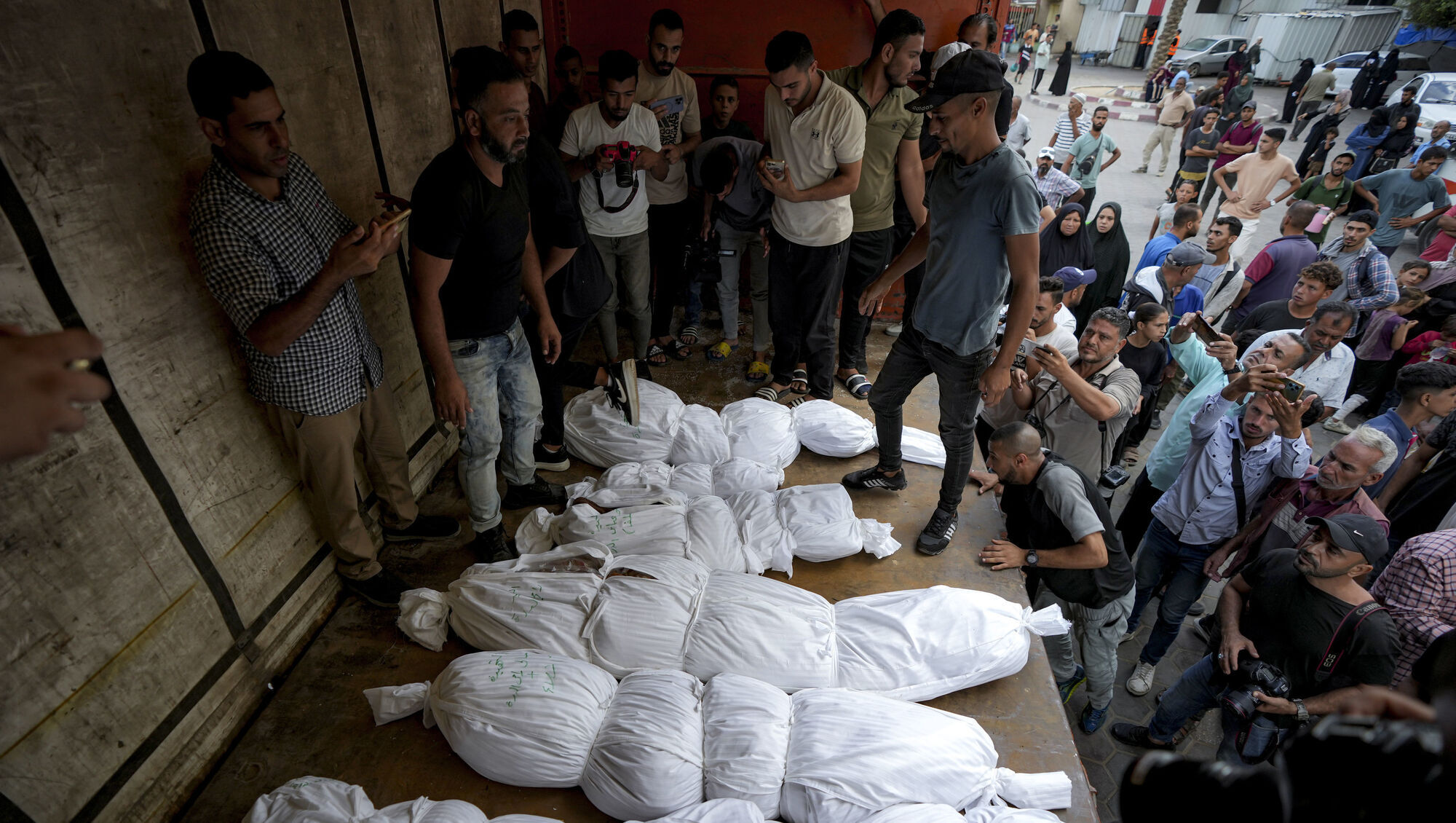
Palestinians mourn relatives killed in the Israeli bombardment of the Gaza Strip, at a hospital in Deir al-Balah. Picture: AP

I began to write this column last week in Ramallah in the occupied West Bank. I started it several times, both on the page and in my head, as I travelled between occupied territories. In every location, I started the column again but failed to capture what is unfolding and has been for years. So maybe I will just start at what seems like the beginning, with the killing of Israeli civilians on October 7, 2023.
I say “seems” because that is not really the beginning, but just another beginning as far as Palestinians are concerned. Another date after which conditions worsened and occupation and illegal settlements became more brutal. As the world’s attention has rightly been on Gaza, then Lebanon, then the escalating conflict between Iran and Israel last week, Israeli authorities and settlers have — under cover of war — intensified their assault on Palestinians with renewed licence and relish.

Again, that summation seems inadequate and a poor attempt at describing a reality that is nothing short of a living nightmare. The violation of Palestinians is so colossal in scale that I began to speak to the readers of this column in my head. I kept saying: I wish you could see.

I wish you could see parts of the old city of Hebron, its historic streets and markets emptied, its buildings crumbling, its paths blocked to Palestinians since before October 7.

Palestinians are not allowed to walk on those roads, but settlers can with machine guns casually hoisted over their shoulders. Israeli soldiers protect them on the ground, at checkpoints, and from turrets. 

They man a giant and expanding settlement that bears down on the populace below, over a community that has been ejected from shops and family homes without explanation or notice

Even more traders have been expelled in the past year, and the new stalls they set up are empty. Shoppers have been scared off by the guns and soldiers. Fear and expulsion leads people to vacate areas into which the occupying forces then expand.

I wish you could see the Palestinian man in Silwan, East Jerusalem, living next to the rubble of the home in which he was born. In February, his house was demolished by Israeli authorities for not having a building “licence” — even though the house was built before East Jerusalem was even under Israeli authorities. The bulldozer came with a canine unit and armed enforcers, who man-handled and shoved his elderly wife into the walls as they dragged them out of the property. He pleaded with them to retrieve one picture, the only one he had, of him and his mother.

Instead, it was taken and shattered on the ground before him. Some 37 houses in the area have been demolished since October 7. When the homeowners leave, settlers — of which there are now a growing number in Silwan — move in.

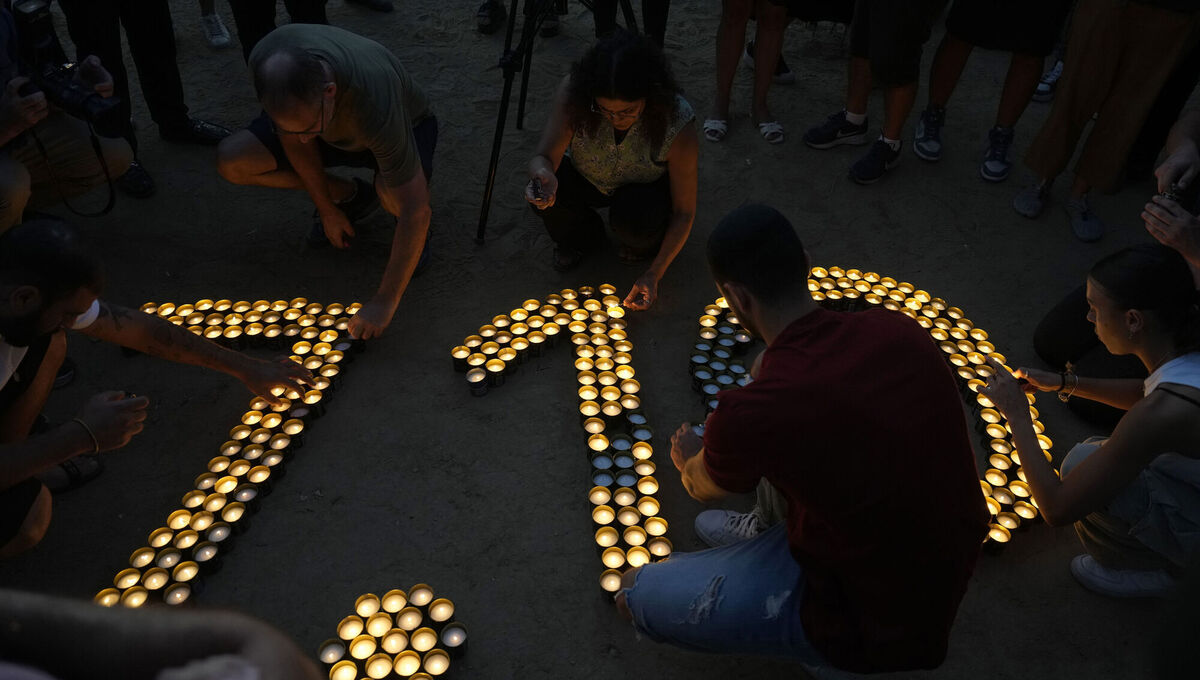
People light candles at the site of the Nova music festival, where hundreds of revelers were killed and abducted by Hamas and taken into Gaza, on the one-year anniversary of the attack, near Kibbutz Reim, southern Israel, on Monday. Picture: Ariel Schalit/AP

Those settlers were celebrating the holidays last week, the butts of the fathers’ rifles at the eye-level of toddlers who skipped through the streets that had been closed to Palestinian traffic for the day.

I wish you could see the rocky desert hamlets of Masafer Yatta, which in the past year have suffered increasing violence as residents have been attacked, their homes raided, and their livestock stolen by frontier settlers who can only be described as rabid.

Just the sight of settlers walking down a hill path sets off panic, and warnings are sent to others to stay put or seek a different route.

Some of the villages are about 5,000 years old. Those that have not been emptied over the past decade are damaged and cut off, forced to go without water, electricity or paved roads.

When one small community erected solar panels, they were torn down by the settlers — from whom there is no legal protection. Often, one village elder told me, the police who are called in are settlers themselves. They are the “judge and the soldier and the police officer”.

I wish you could see the giant white boulders and painstakingly restored historic homes, canals, and graves of mystics in the hilltops of Ein Qiniya

They are overlooked by large settlements beaming bright white lights through the night. Attached to these lights are machine guns. The settlers regularly make the hike up to the historic site with their children in a sort of pilgrimage of hate. A witness told me they goad their children to break and smash what they can, initiating them into the tradition of the holy work of removing Palestinians from a location that is the site of precious structures and trees that predate monotheism.

Along with such violent efforts at ethnic cleansing, I wish you could see the conditions in which those communities live. In the West Bank, the prison population has swelled over the past year and doubled to almost 10,000 people — about 250 of whom are children. A third of these prisoners are under “administrative detention” — a sentence that can be renewed indefinitely without charge, legal representation, or family visitation.

I wish you could see how even time belongs to the Israeli government, as it shuts checkpoints and roads without notice or explanation.

These barriers block or kettle people on a whim and leave them with no choice but to change plans, find new routes to their destination, or remain stuck.

Among all of this, millions of Palestinians still live a life that is insistently fuller than can be humanly expected under such conditions — a life both banal and miraculous in its normality. However, it is squeezed at the edges by a constant and building pressure.

All of that is only the blunt edges of occupation. I wish you could see it all, but what more do we need to see beyond what is happening at the sharpest end in Gaza? The problem isn’t that we don’t know, but that so little changes despite our knowledge.

All the tools at the disposal of those who want the world to act – journalism, protests, outcry, and outrage – cannot end this catastrophe, nor even capture its gravity. It did not start with the tragedy of October 7. It will not end — not only for Palestinians, but also for those Israelis who have been corrupted by entitlement and impunity. Until those who have the power to determine who deserves to live in safety and dignity understand that you cannot deny those rights to Palestinians and expect them to underwrite peace and stability by submitting to their fate as subhuman, this will not end.

  • Nesrine Malik is a Guardian columnist.

More in this section

Revoiced

Newsletter

Sign up to the best reads of the week from irishexaminer.com selected just for you.

Cookie Policy Privacy Policy Brand Safety FAQ Help Contact Us Terms and Conditions

© Examiner Echo Group Limited