'This is the worst day in my life': Gazan woman denied visa to study Masters in UCC
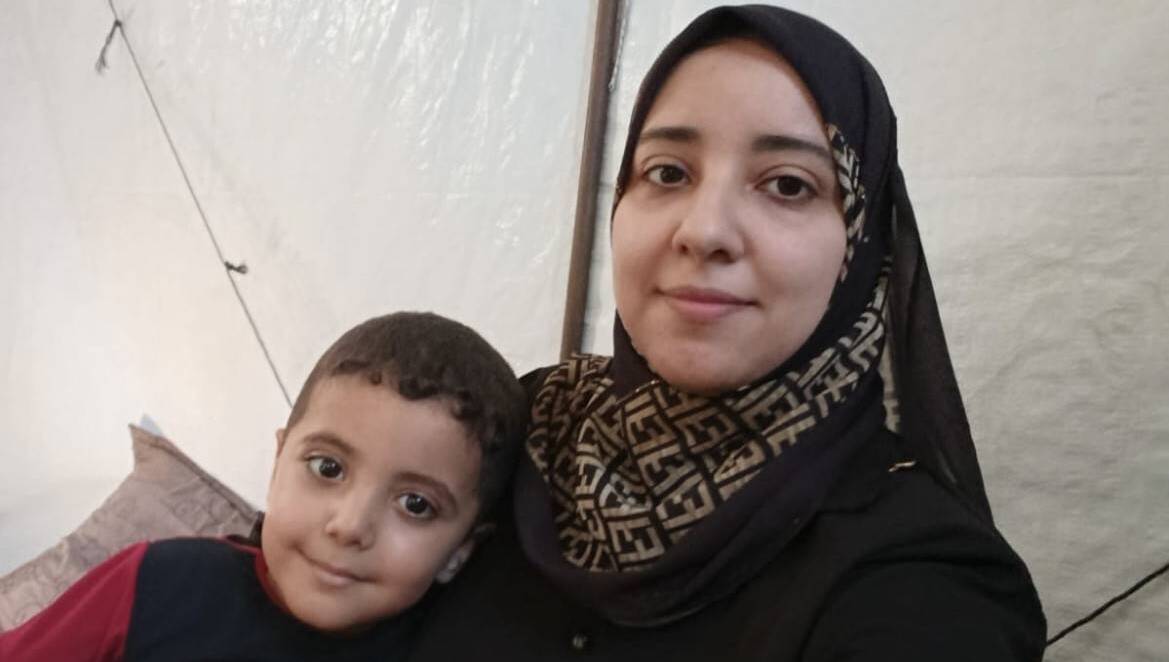
Zainab Eid with her four-year-old son Karim (left). She has not slept since she received the letter and she has been crying for most of that time.
A Gazan woman who was granted an Irish Government-backed scholarship in University College Cork has been denied a visa to travel here.
Zainab Eid, aged 30, a physiotherapist who previously worked for Medecins Sans Frontieres, is currently living in a tent in Gaza with her husband Mohammed and their four-year-old son Karim.
She had been accepted to study for a Master’s degree in Public Health at UCC under the Ireland-Palestine Scholarship Programme (IPSP) and is due to begin her course on September 7.
However, a letter from the Irish embassy in Israel on Tuesday informed Ms Eid that her visa application had been refused. She told the she had not slept since she received the letter and she had been crying for most of that time.
“I was waiting for this opportunity to come to Cork, and I fought for it for more than two years, so I was not expecting to be refused without clear causes,” Ms Eid said.
“Ireland is the best place in the world for education, especially UCC. This is the worst day in my life; my eyes are swollen from crying all night.”
Read More
Among the reasons listed by the embassy for refusing Ms Eid’s application was a finding that documentation of her employment and educational history was insufficient, and original documents had not been provided.
Douglas solicitor Susan Doyle, who is acting as Ms Eid’s lawyer, said it was “unreasonable and irrational” to expect people living in the rubble of Gaza to provide documents relating to work and education history.
“They can only piece together evidence of their past from old emails and documents that they have with them that they were able to take with them when fleeing war,” she said, adding that the embassy had previously said original documentation was not necessary.
The embassy also said there had been “insufficient evidence submitted of strong evidence to return to your home country”, and it cited “the possible risk of [Ms Eid] overstaying in the State”.
Ms Doyle said her client had been due to complete a Master’s degree, after which she would in fact have been eligible to apply for a 1G visa to work in Ireland for up to two years.

However, she said, Ms Eid's husband and young son are compelling reasons for her to return home.
Thomas Gould, Sinn Féin TD for Cork North Central, said he had made representations on Ms Eid’s behalf, and he was “shocked” by the decision.
“Asking people to produce paperwork when Gaza has been annihilated and there’s hardly a building standing after a genocide that has gone on for a couple of years is disgraceful,” he said.
“The question I would ask is, is this being done intentionally, or is this complete incompetence, and I would say it’s intentional.
“The Irish Government has a lot of talk about recognising the Palestinian state and raising it in Europe, but the proof is plain to see.
“This is a cruel decision, not the first one, and it probably won’t be the last one, I’m sorry to say.”
Ms Eid’s case comes at a time when more than 20 other Gazan students, all of whom have been accepted onto fully funded scholarships for third-level courses, have had their visa applications turned down by Irish authorities.
The Department of Justice, Home Affairs and Migration said it does not comment on individual cases.
However, a spokesperson said that in 2026, up to July 31, “at least 27 study visas have been granted in respect of Palestinian nationals”.
“There has been no recent change to visa processing procedures, approval criteria or documentation requirements in any of the department's visa offices,” they said.
“The guidelines for information required to support a visa application are outlined on our website. Each application, regardless of nationality, is decided on its own merit.”