What would war between Israel and Hezbollah mean for the Middle East?

An Israeli flag flutters next to a fire burning in an area near the border with Lebanon last week. Scores of rockets were fired from Lebanon toward northern Israel on Wednesday morning, hours after Israeli airstrikes killed four officials from the militant Hezbollah group, including a senior military commander. Picture: AP/Leo Correa
The situation on the border between Israel and Lebanon has been precarious for months, with tit-for-tat exchanges of cross-border fire becoming a regular occurrence between Israel and Hezbollah (the “Party of God”).
While many feared an outright conflict between the Israel Defense Forces (IDF) and Hezbollah after the October 7 attacks, both sides have thus far remained within the parameters of low-intensity conflict. The consequences of any escalation are severe, with the potential for mass casualties on all sides.
Though conflict has remained at a low level, more than 400 people have been killed in Lebanon and 30 have been killed in Israel. An estimated 150,000 have been displaced on both sides of the border.
Though the events of October 7 and their aftermath have affected the situation, Hezbollah and Israel have been embroiled in low-level conflict since Hezbollah was formed in 1982.
The 2006 war was the most significant moment in this history. This began after Hezbollah kidnapped two Israeli soldiers from close to the border in an attempted prisoner swap. In response, Israel embarked on a destructive war designed to eliminate Hezbollah.
At the time, the war was sold by Israel both domestically and internationally with a similar objective to that found in the current war against Hamas.
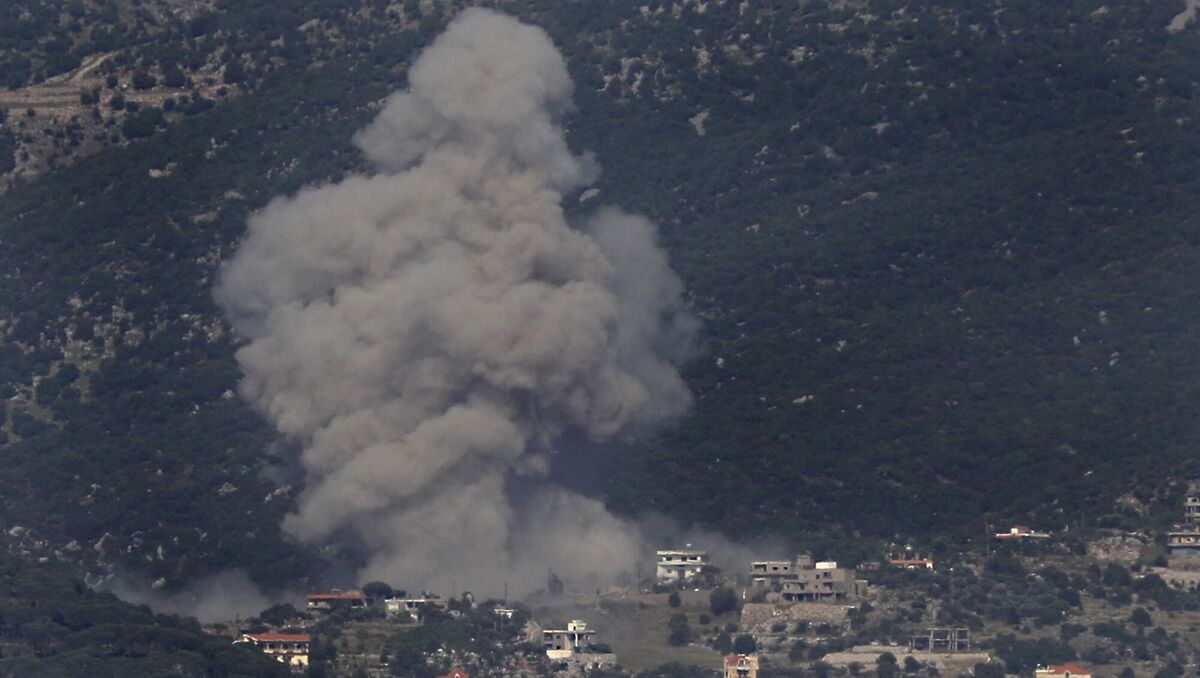
The memories of the war almost two decades ago linger. The war in 2006 had a devastating impact on Lebanon. Reconstruction cost over $10bn and was funded largely by Saudi Arabia, Iran and others.
Since then, the geopolitical landscape has shifted. It would be far harder to finance any rebuilding projects. Meanwhile, the loss of life is likely to be catastrophic — particularly in Lebanon’s crowded urban areas.
Residents of Haifa in the north of Israel fear Hezbollah attacks, while people living in south Lebanon fear IDF attacks. Though attacks have largely been restricted to military targets, the repercussions have affected civilians across south Lebanon, destroying farmland and forcing many people to leave their homes. This has made an already precarious socioeconomic situation in Lebanon a great deal worse.
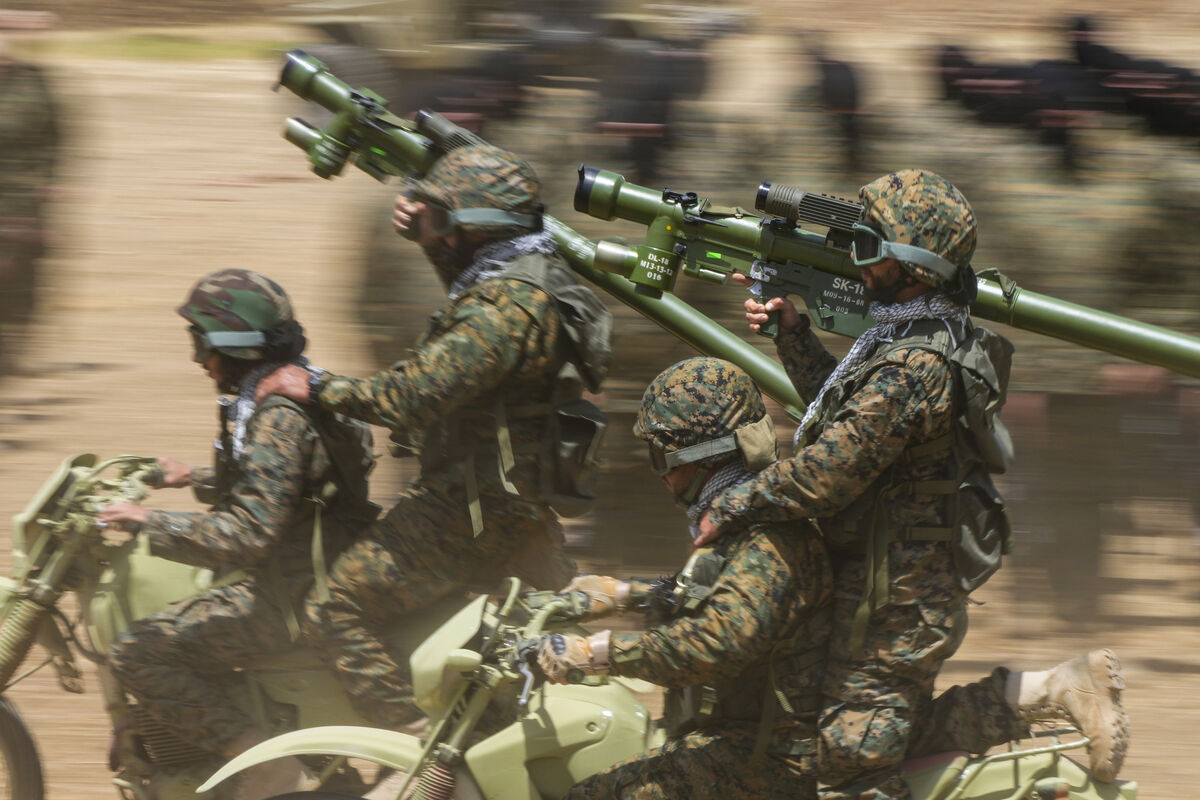
Recent reports have suggested Hezbollah has a sophisticated armoury, much of it supplied by Iran and Russia, which includes more than a million rockets of various types, along with anti-tank weaponry, suicide drones and a range of missiles.
While Israel’s arsenal of missiles is far larger, along with the infrastructure that supports it, the IDF remains beset by political, strategic, theological and economic challenges and Israel’s public and politicians are far from united about how to deal with the threat.
The recent resignation of Benny Gantz from the war cabinet — which has since been disbanded — shows how precarious the situation is for Israeli prime minister, Benjamin Netanyahu, who is under pressure to resign and call an election.
There are serious doubts as to whether Israel can engage in significant conflicts on two fronts. Rising violence in the West Bank poses an additional challenge for Israel’s security apparatus. Its security infrastructure has come under fire for “missing” Hamas’ brutal attack, while its military is also facing increased pressure due to its actions in Gaza, where close to 40,000 have been killed, millions displaced, and where life has been decimated.
The occupied West Bank is home to about three million Palestinians, and while the Palestinian Authority exerts a degree of control, Israel is the final arbiter of all matters pertaining to security.
The situation is made more challenging by the presence of close to 700,000 Israeli settlers, whose presence is deemed illegal under international law. These settlers routinely engage in acts of violence against the Palestinian population and largely depend on the IDF to keep them safe and maintain the security architecture that separates the two communities and regulates access to Israel.
Any shift in the security landscape would pose serious challenges to the IDF, to the Palestinian Authority — which is under growing pressure from Palestinians and Arab states more broadly — and exacerbate schisms in Israel’s domestic politics.
Benjamin Netanyahu has long framed Iran as an existential threat to Israel and has been supported in this by successive US administrations. Yet despite steadfast initial support from the Biden White House, this support has begun to wane as a result of growing popular dismay in the US and globally at the way Israel is conducting operations in Gaza.
Israeli officials have repeatedly said they can — and will — operate alone if the situation calls for it. But with international bodies becoming increasingly critical of the catastrophic war in Gaza and the devastating death toll, allies are beginning to waver in their support. Votes in the UN have suggested growing anger at Israel’s conduct, while international bodies have explored legal avenues to end the suffering of Palestinians.
Much like Hamas, Hezbollah is a deeply unpopular organisation. Its relationship with Iran worries policymakers in Washington, London and elsewhere and it has been proscribed as a terrorist organisation by a number of western states.
Yet it occupies a central role in Lebanon’s politics and economy. So any conflict with Israel would potentially worsen Lebanon’s delicate power-sharing agreement, putting more strain on the economic situation, and destroying urban and rural landscapes.
The situation is bleak and this is undeniably a precarious moment. Yet there is little appetite for another conflict in the Middle East, particularly one that has both the potential for further catastrophic loss of life and wider escalation.
- Simon Mabon is professor of International Relations at Lancaster University. This article appeared on The Conversation, a news and analysis website written by academics
CONNECT WITH US TODAY



Be the first to know the latest news and updates