José Mourinho documentary as entertaining as the man himself
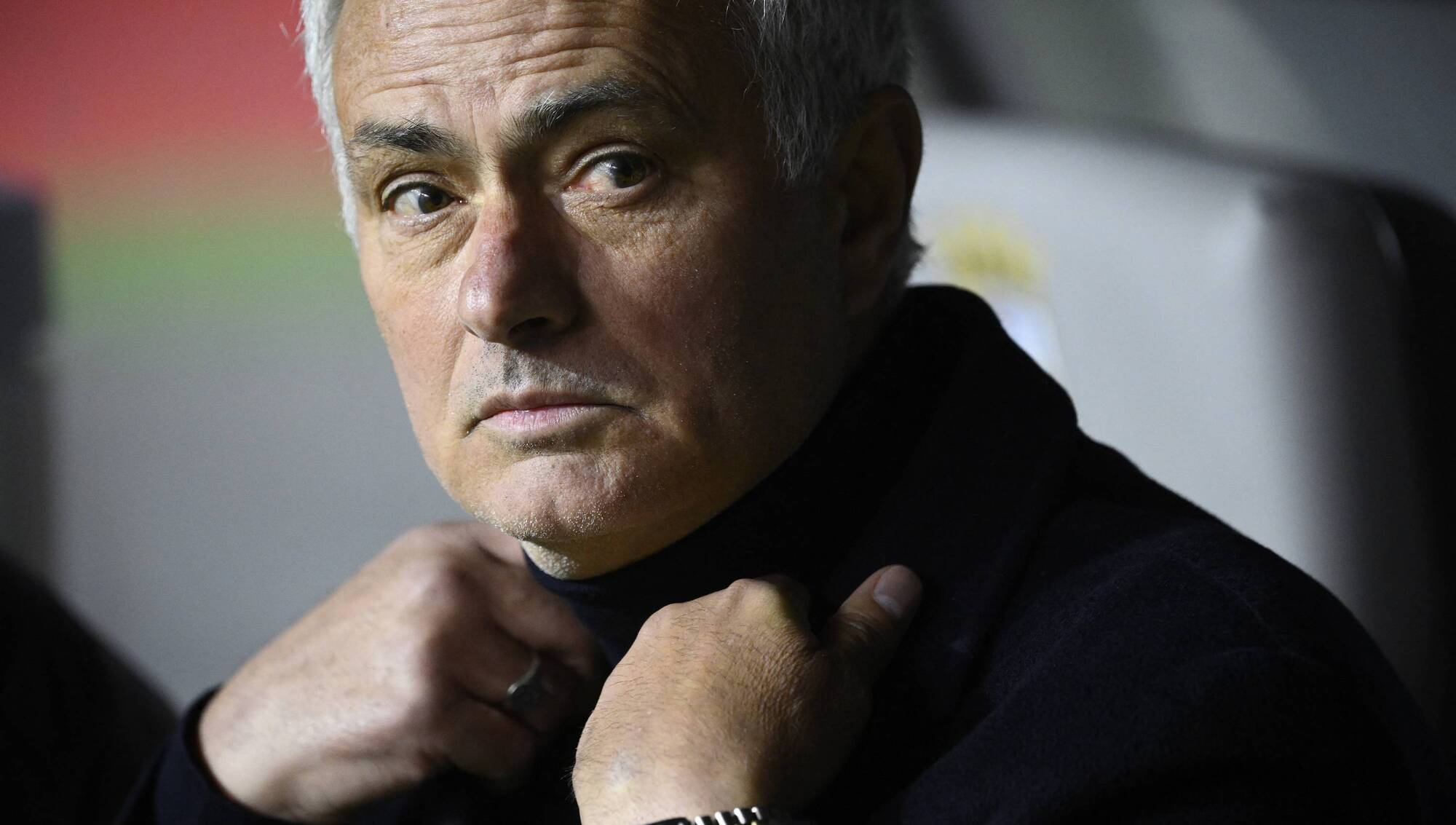
In the new Netflix series, it seems the 'special one' is at war mainly with himself 
Jose Mourinho has won cups and league championships in four countries, is one of only seven managers to have won the European Cup with two clubs, the only coach ever to have won all three UEFA club competitions. Photo: Miguel Riopa/AFP via Getty Images
Jose Mourinho has won cups and league championships in four countries, is one of only seven managers to have won the European Cup with two clubs, the only coach ever to have won all three UEFA club competitions. Photo: Miguel Riopa/AFP via Getty Images
“That new Portuguese bloke at Chelsea — he’s got a lot to say.” This was the great Nottingham Forest coach, Brian Clough, speaking in 2004, and surely no one has so pithily summed up the management style and persona of José Mário Mourinho Félix.

Clough, who died that same year, never got to see the giddy heights José would reach at Chelsea, Inter, Madrid and beyond, but clearly spotted his potential, and liked what he saw. 

Up to that point, most Premier League managers were men of a certain age with sheepskin coats and high blood pressure who fulminated on the touchlines and spoke in platitudes. ‘A game of two halves’, ‘I’m proud of the boys,’ ‘football - it’s a simple game’. And so on.

Not José. At his first Chelsea press conference in June, 2004, he bigged up his new team’s potential. “We have top players and, sorry if I’m arrogant, we have a top manager.” 

Then he said this: “I am not one who comes straight out of a bottle — I am a special one.” 

He certainly was, but that ‘special one’ comment irked the English press, who hoped this swaggering foreigner would fail. They had another thing coming.

A new three-part Netflix documentary, streamed this week, tells the manager’s story in entertaining fashion, with insights from former players like Frank Lampard, John Terry, Didier Drogba and Samuel Eto’o, as well as Alex Ferguson and, of course, the man himself.

He is box office, always has been, and is typically plainspoken as he looks back on a stellar career. He’s won numerous cups and league championships in four countries, is one of only seven managers to have won the European Cup with two clubs, the only coach ever to have won all three UEFA club competitions.

And as he shows the crew around a packed trophy room at his home in Setúbal, Portugal, he says simply “you don’t do a documentary with a guy that wins nothing”.

“I was born in football,” he tells us. “I live in football every day of my life. When I walk from the dressing room to the pitch is the last moment where I think about the people that I love. After that, I am in another world.” 

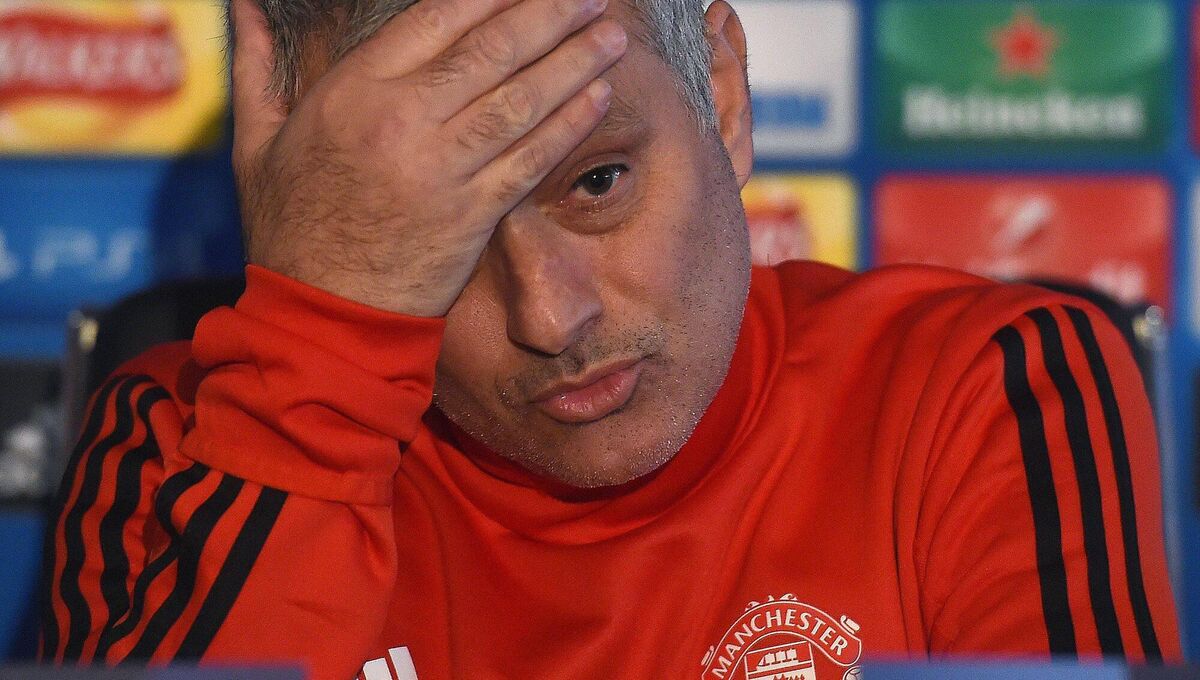
Jose Mourinho at a press conference while he was Manchester United manager in 2017. His desire to win at all costs has led some to criticise his negative tactics. Photo: Paul Ellis/AFP/Getty Images

The bluster is part of a persona, however: behind the scenes, a dedicated family man, married to his teenage sweetheart Matilde for 37 years.

José is intense though, so much so that his combustible management style can only be tolerated by clubs and players for so long. He has a history of winning big early in his tenures, then falling out with everyone. But even that is entertaining. 

“Just put a mike on him,” says Chelsea great Didier Drogba, “and roll the camera.” And love him or loathe him, you have to admire the man’s nerve.

His first big job was at Porto, a Portuguese club that hadn’t won anything in decades. And during his first press conference, he told reporters “I’m sure that next year we’re going to be national champions.” 

At that point, he was a managerial novice, but he did as he promised. “Was I naive,” he wonders, “arrogant? I don’t think so. I told them this was going to happen, and it happened. Normal day in the office.”

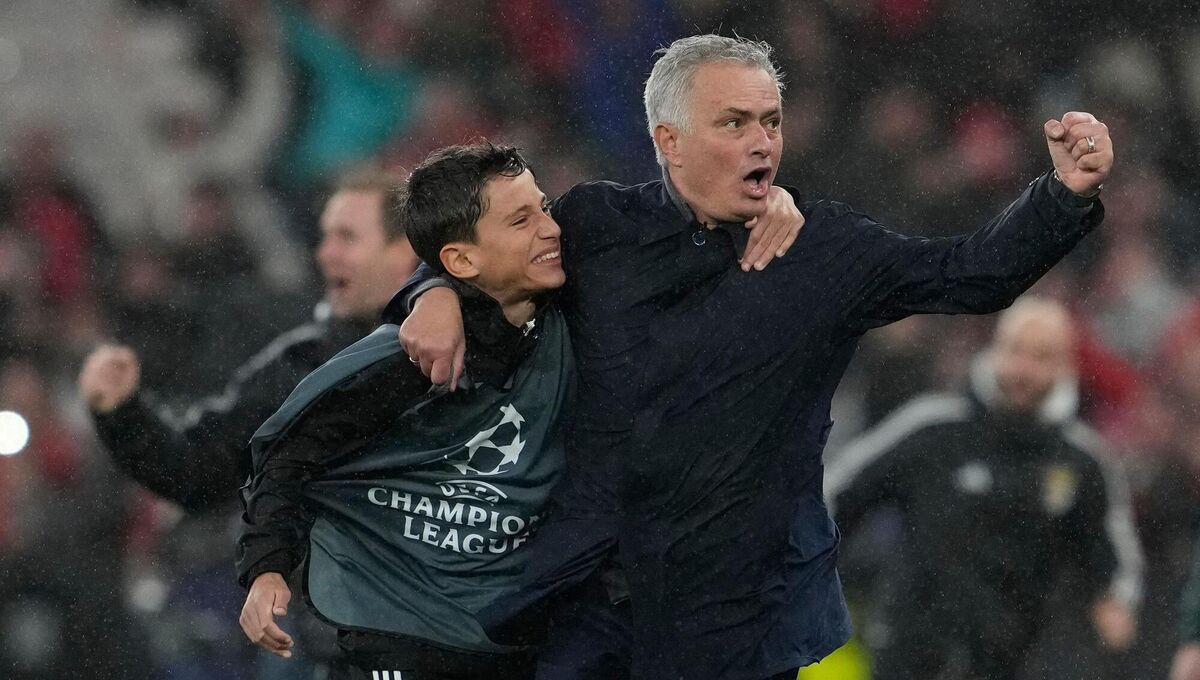
Jose Mourinho celebrates with a ball boy at the end of a Champions League match between Benfica and Real Madrid in January 2026. When his teams won big he would charge onto the pitch and run around soaking up the fans’ adoration, something he had never got to do as a player. Photo: AP/Armando Franca

Then, in perhaps his greatest single achievement, he won the Champions League with Porto. Along the way, they upset the odds to beat Manchester United in the round of 16, and English fans would remember Porto’s cocky coach charging along the touchline in his overcoat, celebrating a goal. 

“That was the moment,” Mourinho says, “when I introduced myself to the world.”

After that game, Alex Ferguson came to the away dressing room to congratulate his young rival. “I had to go in and wish him all the best,” he says in the documentary, “because you’re judged on your results, and that was a major moment for José.” 

“It was a lesson of class,” José says, but sadly not one he learned too well.

Months later he was installed as Chelsea’s new manager. In his first stint at the London club, he baffled journalists at a pre-match conference. “In the supermarket,” he told them, “you have eggs, class one, class two, class three, and some are more expensive than others, and some give you better omelette.” 

I think he was talking about players there, but honestly, I don’t care, because it’s marvellous. He won back-to-back Premier League titles with Chelsea, before falling out with the club’s oligarch owner Roman Abramovich.

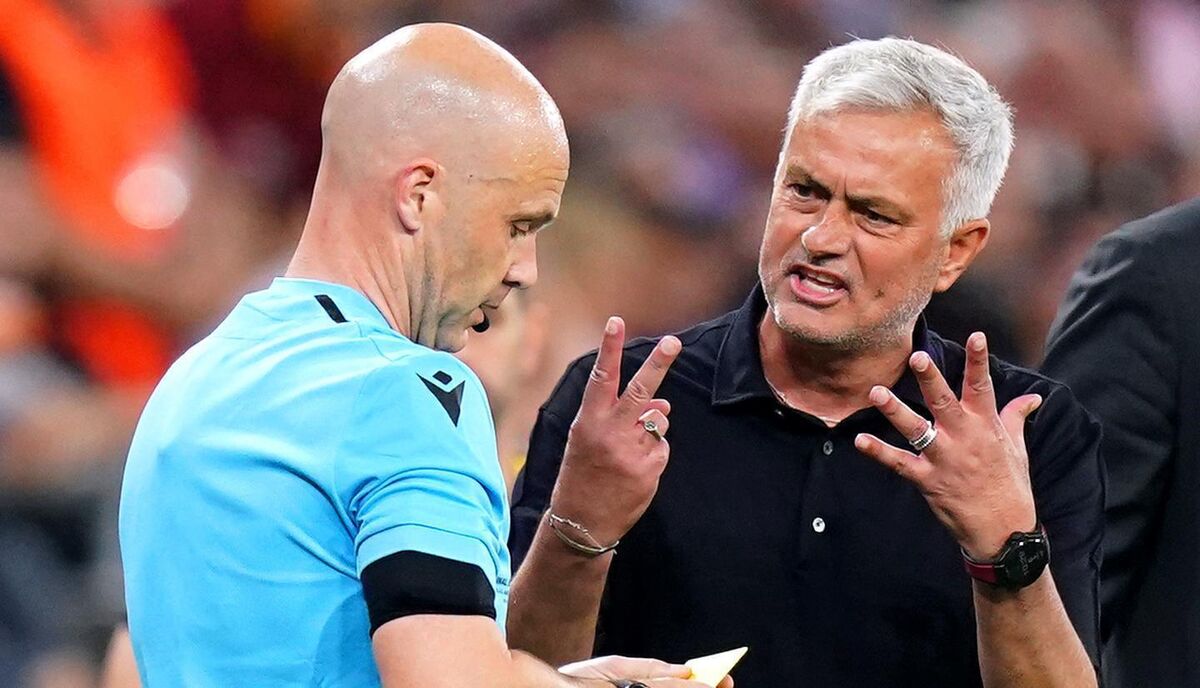
Roma manager Jose Mourinho exchanges words with referee Anthony Taylor at the UEFA Europa League final in 2023. Photo: Adam Davy/PA

José was never dull, arguing with refs, his own players, other managers, engineering spats where none existed in order to galvanise his team. He had fantastic fun with Arsene Wenger, Arsenal’s brilliant but rather humourless coach, who started refusing to shake his hand after matches. 

“What you have to understand about Mourinho,” one of his biographers, Joel Neto, explained once, “is that he’s brilliant at playing with people’s psyches. He plays with the newspapers, with referees, with opponents… He leaves nothing to chance.” When his teams won big, José would charge onto the pitch and run around soaking up the fans’ adoration. It was something he had never got to do as a player.

He was born in Setúbal in 1963, the son of a professional goalkeeper, and club manager. He grew up around teams, was a ball boy, and listened in changing rooms, watching everything. “I look, you look” he says, with typical modesty. “I see more than you.” 

He could look, but he could not really play: “I was not a good player,” he says, “but I was taking my football very very serious”. Pep Guardiola and many of his future managerial rivals had played to a high level, and this gap made José feel like an outsider. It also left him desperate to prove himself, to succeed at all costs.

He honed his gifts for preparation, tactics and analysis at Barcelona, where he worked as a scout and translator for Bobby Robson — he does not like being called ‘El traductor’, by the way, do not call him that. 

His desire to win at all costs has led some to criticise his negative tactics — “whoever has the ball is more likely to make a mistake”, and so on. And his feuds with officialdom, and other managers, can get out of hand, as they did spectacularly during his first stint at Real Madrid.

He left Real under a cloud, but José is never down for long. Since then he’s gone back to Chelsea, winning them another Premier League, coached at Manchester United, Spurs, Roma and Benfica. 

And this summer, he returns to Real to begin a new term at the most demanding football club in the world. At 62, his love for the game does not seem at all diminished, and one wonders if a stint as Portuguese manager might be on the cards.

Watching the Netflix series, you get the sense that the person José has really been at war with all along is himself. 

There’s a touching moment where he talks about his dad. “My father was a phenomenal human being,” he says, looking close to tears, “I am not even close to him. I think he was the opposite of me, in terms of… everybody loved him, because of the person he was.” 

José, it seems, wants to be loved — but not as much as he wants to win.

x

More in this section

Revoiced

Newsletter

Had a busy week? Sign up for some of the best reads from the week gone by. Selected just for you.

Cookie Policy Privacy Policy Brand Safety FAQ Help Contact Us Terms and Conditions

© Examiner Echo Group Limited