John Gibbons: Cop28 raises questions over Ireland's progress on climate action  
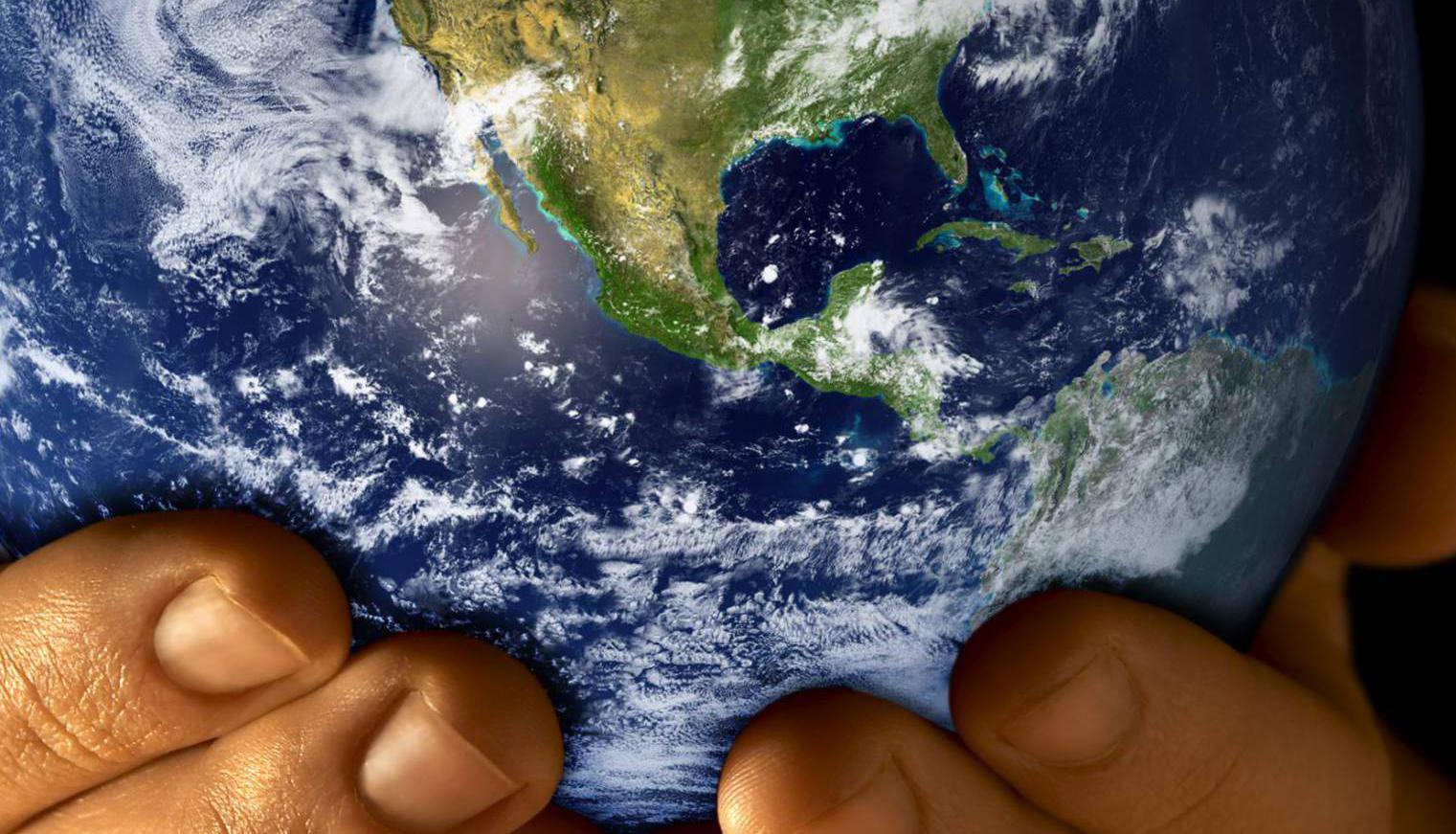
Despite a claim that Ireland is a world leader in sustainable food production, we are among the poorer performers at reining in greenhouse gas emissions
John Gibbons: Cop28 raises questions over Ireland's progress on climate action  

While Micheál Martin and Eamon Ryan are committed to climate action, Ireland has a lot of catching up to do — our rankings have tumbled six places to 43rd in the Climate Change Performance Index.

It is quite incredible to consider that, in all 27 of the UN's Cop climate change conferences held since 1995, never once did they conclude with a recommendation that fossil fuels be phased out, or even a proposed future timeline for this to happen.

It would be akin to hosting an annual international conference on the dangers of smoking that somehow never mentioned cigarettes or the tobacco industry, and had no plans to tax, phase out, or even mildly rein in their use.

Given that fossil fuel burning is far and away the main driver of the climate emergency, this underlines the iron grip this powerful sector has retained over politics. Former Irish president and chair of the Elders, Mary Robinson arrived in Dubai on Friday and wasted no time in demanding that Cop28 adopt “clear, unambiguous language to urgently phase out all fossil fuels”.

Robinson’s pre-conference spat with Cop28 president, Sultan Al Jaber, made headlines around the world, and put the hosts, the United Arab Emirates (UAE) on the back foot, having been publicly embarrassed over Al Jaber’s antediluvian comments that were dismissive both of the science of climate change and Robinson herself.

In plain terms, unless there is international agreement on an urgent roadmap to phase out the use of fossil fuels, including an immediate ban on new exploration, it will be impossible to avoid climate catastrophe.

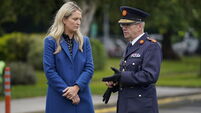
According to a Government statement, 'Ireland is a world leader in sustainable foods systems' and Agriculture Minister Charlie McConalogue was using his presence at Cop28 to 'showcase our story as a model for other food producing countries'. Picture: Alf Harvey

It really is as simple as that. Yet, despite the overwhelming evidence of rapid destabilisation of the global climate system happening right now, political system inertia and vested interests keep us locked on a collective course for disaster.

The presence of around 2,500 fossil fuel lobbyists at Cop28, quadruple the number who attended last year’s conference, underlines that the industry, with over $5 trillion (€4.6tn) in revenues last year, is gearing up to fight to the bitter end.

Last month was the hottest November ever recorded globally, one of six months this year that broke all-time records. For two days in November, global average temperatures actually breached 2C above pre-industrial, a scenario many scientists thought impossible for at least another decade.

Overall, 2023 is already confirmed to be the hottest year on the global instrumental record, and likely the hottest in millennia. The feet of the world’s climate negotiators are, in a very real sense, to the fire in Dubai. Nothing less than radical action to shift direction will suffice. As climate activist Greta Thunberg memorably put it: “We are out of excuses, and we are out of time”.

While it can seem reassuring for many Irish people to point the finger at the fossil fuel giants as the chief climate villains, the reality is that we too are international laggards. This point was driven home forcefully with the release at Cop28 on Friday of a new report which independently monitors the climate performance of around 90 countries.

Ireland’s rankings tumbled six places to 43rd in the Climate Change Performance Index. Ireland received a ‘medium’ rating for renewable energy and energy use, but was ranked ‘low’ on both climate policy and greenhouse gas (GHG) emissions.

Professor Alan Matthews noted in 2019 that Irish emissions per kilogramme of protein in milk are 50% higher than the average for producers in western Europe. Picture: Finbarr O'Rourke

It noted that, despite the Government introducing legally-binding carbon budgets in 2022, it lacked a long-term strategy for phasing out fossil fuel infrastructure.

The report also singled out economic growth in emissions-intensive sectors — specifically agriculture and land use — as causing Ireland’s absolute GHG emissions to remain high.

Agriculture Minister Charlie McConalogue arrived in Dubai on Friday to take part in a series of events. According to a Government statement, “Ireland is a world leader in sustainable foods systems from farm to fork and the minister is using the opportunity to showcase our story as a model for other food producing countries”.

According to a 2017 study published by the European Commission, Ireland produces the largest amount of GHGs per euro of agricultural output of any country in the EU27, while a 2019 study from Wageningen University in the Netherlands found that Irish GHG emissions per kilogramme of milk are the fourth highest in the EU.

As Alan Matthews of Trinity College Dublin noted in 2019, analysis carried out by the UN Food and Agriculture Organization (FAO) found that Irish emissions per kilogramme of protein in milk are 50% higher than the average for producers in western Europe as a whole.

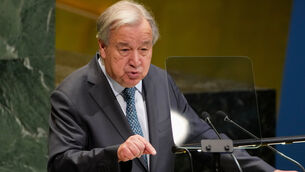
Ireland is fortunate in having Mary Robinson as one of the leading players — her pre-Cop28 spat with Sultan Al Jaber, above, put the UAE on the back foot. Picture: Peter Dejong/AP

Quite what lessons Ireland can share at Cop28 as a self-described “world leader in sustainable food systems” remains to be seen, but the Intergovernmental Panel on Climate Change (IPCC) is crystal clear on the future of genuinely sustainable food production.

What is needed, according to the IPCC’s 2022 report on climate mitigation, is “a transition towards more plant-based consumption and reduced consumption of animal-based foods, particularly from ruminant animals, which could reduce pressure on forests and land used for feed, and support the preservation of biodiversity and planetary health”.

Major meat producers are heavily represented at Cop28, led by the Global Meat Alliance, an international group that includes an Irish representative.

Efforts are being developed to claim that livestock production can be ‘carbon neutral’ if small reductions in methane, a potent greenhouse gas produced by livestock, are achieved. However, these claims have been rebutted in a recent paper in the journal, Environmental Research Letters, that shows that any claimed ‘cooling’ effect is only temporary and in no way offsets the warming impacts of livestock agriculture.

These industry claims “distract us from the urgent challenge of reducing emissions of all greenhouse gases from all sectors, including agriculture”, according to the paper’s authors.

Meanwhile, Tánaiste and Foreign Affairs Minister Micheál Martin announced €50m in support  for climate-related projects for highly vulnerable countries. The amount Ireland is spending on climate finance has doubled since 2015 and is on target to reach €225m by 2025, according to Martin. The Tánaiste also pointed to Ireland’s domestic progress on climate, including our legally-binding 51% emissions reductions target by 2030.

However, the Environmental Protection Agency has already confirmed that this target is dead in the water, with the very best outcome for 2030 now a 29% emissions cut. Martin also stressed Ireland’s commitment to being ‘climate-neutral’ by 2050. However, our failure to meet binding near-term targets puts a major question mark over the likelihood of such objectives being met.

On a positive note, few would doubt the sincerity or commitment of Climate Minister Eamon Ryan to see Ireland square up to the existential challenge of the climate emergency. And, while Taoiseach Leo Varadkar’s contributions seem forced and scripted, the climate penny does seem to have dropped for Micheál Martin.

On the international climate stage, Ireland is fortunate in having the tigerish Mary Robinson as one of the leading players, while President Michael D Higgins has also been a consistent advocate for climate action.

What is less clear is who would pick up the baton for a future government at Cop29 or 30, one presumably led by Sinn Féin? So far, the party has been at best lukewarm, wary perhaps of a rural backlash, real or imaginary, against strong climate action and showing limited engagement with the science.

As we enter the final days of Cop28, the indications are that it is shaping up to be one of the more consequential in recent times, perhaps not yet on the level of Cop21 in Paris but nonetheless an important milestone on an increasingly rocky road to averting climate breakdown.

  • John Gibbons is an environmental journalist and commentator

CLIMATE & SUSTAINABILITY HUB

More in this section

Revoiced

Newsletter

Sign up to the best reads of the week from irishexaminer.com selected just for you.

Cookie Policy Privacy Policy Brand Safety FAQ Help Contact Us Terms and Conditions

© Examiner Echo Group Limited