Cianan Brennan: Arrogance and unchecked daft decisions laid RTÉ low
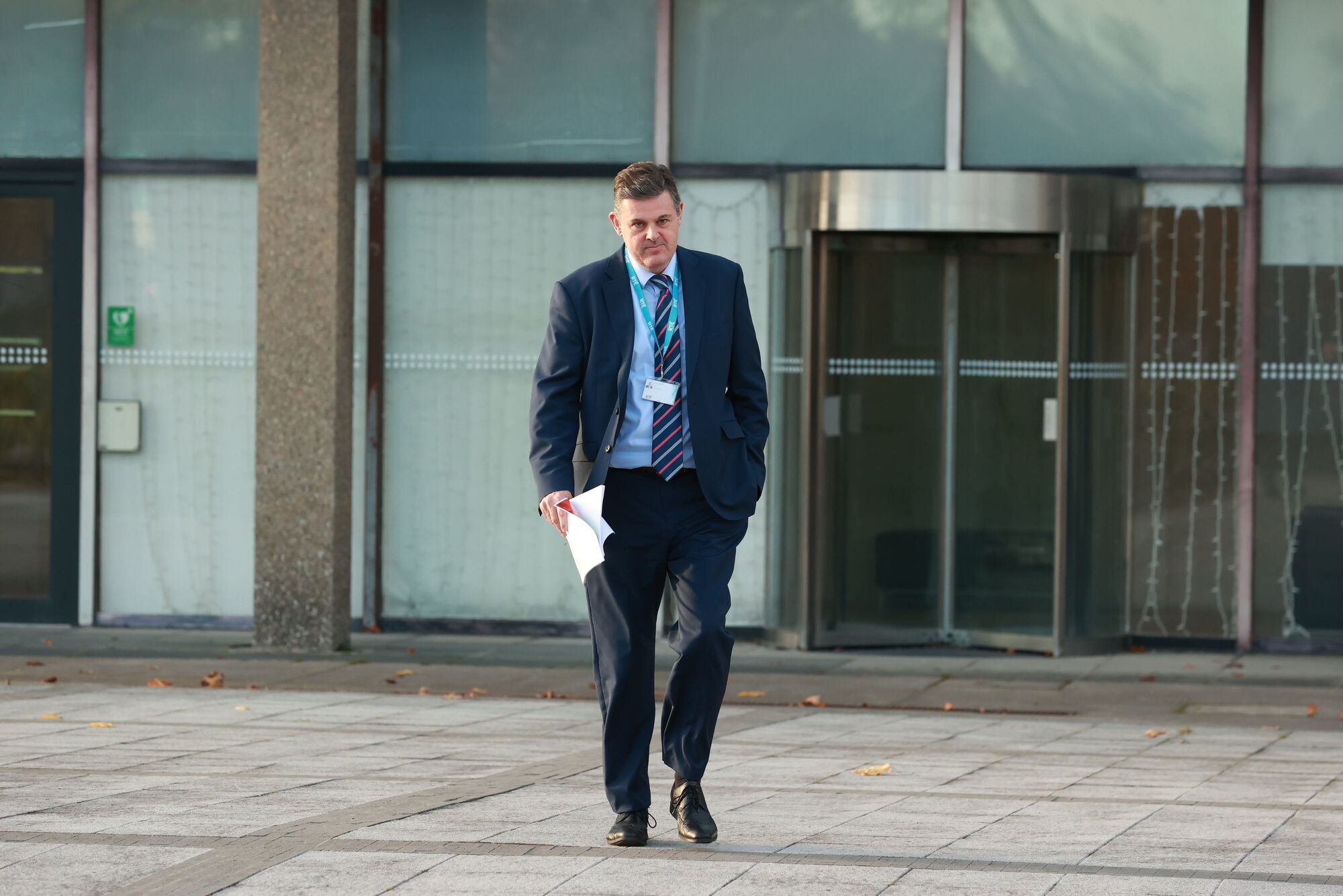
RTE Director General Kevin Bakhurst leaves his office at RTE Headquarters at Donnybrook in Dublin to a town hall meeting with staff at the RTE campus about plans to make cost-saving measures at the organisation, including redundancies. Picture: Liam McBurney/PA Wire
The leaking of RTÉ’s ‘strategic plan’ for its own survival is emblematic of the ineptitude, self-absorption and hubris which have been the hallmarks of this entirely self-inflicted scandal.
True, RTÉ has been in need of a cash injection for years. Its now departed director general Dee Forbes regularly told the Oireachtas so, in the relatively golden times before the Ryan Tubridy payments scandal brought the broadcaster to its knees.
However, the fact that RTÉ’s cash struggles have been exacerbated by that farrago, which erupted last June, is undeniable, specifically over the licence revenue collapse, ironically a system which Ms Forbes repeatedly claimed was already unusable.
The broadcaster is set to seek nearly 400 redundancies, losing fully a fifth of its staff, over the next four years, at a cost of €40m. Details of that redundancy plan leaked on Monday evening. It is no joke for an employee to learn of something as seismic as a redundancy drive from the media, rather than from their own employer. As usual the rank-and-file staff at RTÉ were an afterthought, playthings on a political chessboard.
In return for this economy drive, RTÉ will get its €56m in bailout funding from the Government (finally approved on yesterday morning) in order to remain solvent throughout 2024.
Can RTÉ afford to lose that many staff? In truth, it probably can. Late last summer, one former senior staffer at the station told me that “hundreds of job losses are coming in the next five years, they’ll be forced upon them”, and that “the optimum employee headcount at RTÉ would be 1,200”. Those statements have proven to be remarkably prescient, Regardless, the broadcaster has its bailout. Will it be enough?
Only time will tell, though questions certainly remain over the ability of its management division to make sound financial decisions to ensure its future.
The figures are eye-watering, but also do not seem to tally: a bailout of €56m, redundancy costs of €40m, a €61m loss in licence fee revenue by the end of 2024. You suspect that Monday’s bombshell news may not be the last difficult announcement RTÉ’s employees have to deal with in the next year, particularly if the voluntary redundancy scheme is undersubscribed.
It may seem unfair to rake over the coals of the Tubridy payments saga, but the release last Friday of a summary of the infamous May 7 memo bears mention. It consists of a handwritten summary of a Microsoft teams meeting between Ms Forbes and Mr Tubridy’s agent Noel Kelly on May 7 2020 at which the infamous tripartite deal to pay Mr Tubridy €225,000 over three years via hidden payments was rubberstamped.
Kevin Bakhurst, surely a shoo-in for this year’s ‘sold a pup’ grand prize, fought long and hard for that memo to be suppressed for legal and confidentiality reasons. He argued that all “salient facts” regarding that meeting were already in the public domain. When the summary of the memo, compiled by solicitors Arthur Cox, was finally released, it immediately became clear that Mr Bakhurst’s take on the memo was at best charitable.
Reading through the summary, the wording is striking. RTÉ’s representatives at the meeting state that to officially underwrite the tripartite deal with Renault would “compromise what we are trying to achieve”.
Likewise, they say the deal (which ended up being underwritten by RTÉ anyway) could only be confirmed orally, as to do so in writing would “negate what we’re trying to do”.
RTÉ was well aware that were the Tubridy deal to become public it would be a public relations disaster. Ms Forbes went on to commit to personally ensuring that a portion of the Late Late Show’s sponsorship would “always be apportioned” to Mr Tubridy.
Why on earth were these assurances given? While it’s clear that Mr Tubridy had a large fanbase and was good at his job, the early JNLR figures for his radio show, for example, suggest the old adage applies: nobody is irreplaceable. Why could RTÉ not countenance a situation where the man wasn’t being paid over €500,000 a year?
Ms Forbes has been suffering from ill health since the scandal broke and since her own resignation, precluding an explanation of how this call was made being given to the Oireachtas. That explanation, should it ever emerge, will be of great interest.
Then there is Mr Tubridy. He is blameless regarding the €120,000 by which RTÉ initially said his salary had been understated between 2017 and 2019, only for it to later emerge that the anomaly was a direct result of RTÉ’s own questionable accounting decisions.
However, he stood over the tripartite deal, and most importantly he kept quiet when his salary was understated by RTÉ publicly in the subsequent years. Now public confidence in the broadcaster has evaporated, and hundreds of Mr Tubridy’s former colleagues are set to lose their jobs.
While he may have believed he was worth the extra money, it’s unlikely he or anybody else believes 400 people should pay for that with their jobs.
It was arrogance and unchecked daft decisions which laid RTÉ low.
The broadcaster may never fully recover and, whatever form it takes when rising from the ashes, it could be a pale shadow of what went before.

CONNECT WITH US TODAY



Be the first to know the latest news and updates