Time to tackle hot issue of fire safety defects
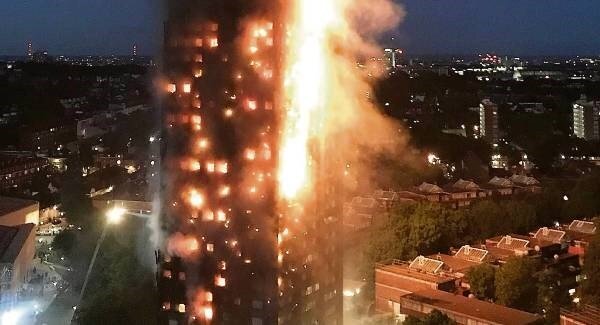
Another week and more secrets tumble out from behind the walls of the Celtic Tiger’s finest. On Monday it was reported that owners of an apartment complex in Dublin have been told they must fork out €3m to rectify fire safety defects.
There are 119 apartments in the St James’s Wood complex in Dublin 8. They will have to pay around €26,000 each to have the matter addressed.
There is also the possibility of the complex being evacuated if the fire authority deems there is a danger to human life. This is the latest in a long line of apartment complexes and housing schemes in which fire safety defects have been discovered years after construction.
St James’s Wood was built in 2000 — earlier than any of the other buildings where this issue has come to light. It was built by Cosgrave, a company of long standing with a good reputation heretofore. The company has declined to comment on the St James Wood issue.
For the last five years, this newspaper has been highlighting the problem about fire safety defects. This latest case throws up a few issues that require further exploration.
The defects came to light in a number of reports, the first of which was commissioned in 2013. Yet the fire authority — Dublin Fire Brigade — was not informed about the discovery.
When fire safety defects are discovered, nobody is obliged to inform the fire authority. The consultant who makes the discovery is not obliged to do so. He or she owes primary allegiance to the client. If, for instance, a consultant was to inform the fire authority directly, complications could arise in the discharge of any fee for the consultancy work.
Notwithstanding that, the consultant who discovered the fire safety defects in Longboat Quay in 2014 — first reported on in this newspaper – considered the situation so serious that he did inform Dublin Fire Brigade. (In that case, the client was Nama, so receipt of a fee would not have been in doubt).
As such, there is quite obviously a conflict-of-interest for any fire consultant in this regard. At what point should a consultant be obliged to inform a fire authority that a potential danger exists in a building?
Neither is there any obligation on the owner or management company of a building discovered to be a fire trap to inform the fire authority.
The other issue that arises is the remote prospect of legal remedy. In most of the cases that have come to light, the developer who built the offending building is corporately dead. The prospect of a legal remedy in these instances is one that would likely involve long years, deep pockets and a lot of luck.
For instance, the owners of 800 units in Dublin’s South Beacon Quarter, a high-profile case that came to light in 2017, were told they would need around €750,000 to fund legal action. The bill for remedial work on the fire safety defects in their complex is €10m. They have been told the prospect of legal remedy would be particularly remote as the development company which built the complex in 2005 no longer exists.
In James’s Wood, the developer is still in existence should a legal case be pursued. Other obstacles abound, however. There is a statute of limitations of six years on any action in relation to property contracts.
This is a highly contentious issue that was ruled on most recently in the Supreme Court in November 2017. The court ruled that the clock begins ticking on the six years once any damage is “manifest”. The ruling at the time interpreted manifest “to mean the date on which damage is capable of being discovered and proved by a plaintiff”.
Take the James’s Wood case. The complex was built in 2000. Defects were discovered over a period of time from 2013. If the complex was not built according to design — and that would have to be proven which it has not been yet — when did the damage become “manifest”?
Was it when the building was signed off as compliant?
Or when the first home was purchased? Or was it when the fire safety defects were first discovered? If any court were to determine that the building was defective, when were the defects “capable of being discovered”?
This legal minefield was touched on by construction lawyer, Deirdre Ní Fhloinn, in the Oireachtas Housing Committee report, Safe As Houses.
“An action may also be statute-barred before an owner has had the opportunity to identify and investigate a defect in their home,” she told the committee.
The Law Reform Commission recommended a change in law to deal with this in a 2011 report in order that time for bringing proceedings would start once the owner knew or ought to have known of the defect, but this has not been implemented.
The Safe As Houses report was published just over a year ago. There has been no attempt to address this problem in the interim.
Neither has there been any effort to address the financial consequences for those who discover their homes may not be properly protected in the event of fire.
A redress scheme was recommended in the report. There is a compelling case for such a fund on the basis that building was not regulated in any meaningful way during the years of illusory boom.
The Beacon South Quarter group has initiated a campaign for a redress scheme and it will be interesting to see if their efforts gain traction.
However, so far this whole issue of fire safety defects has been regarded in official circles as one in which it is most expedient to just keep heads buried in the sand, hope the stricken homeowners will just go away, and pray that no tragedy occurs.


CONNECT WITH US TODAY



Be the first to know the latest news and updates