In the pipeline: A Russia weakened by natural-gas technology
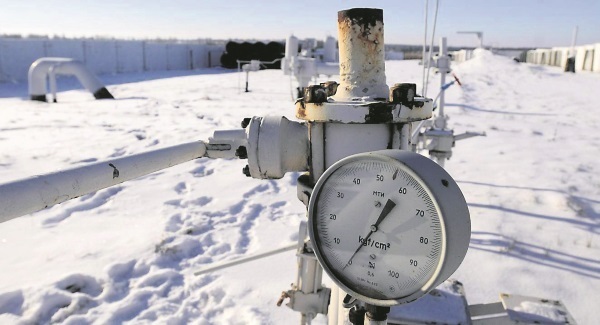
AS President Vladimir Putin reinforces Russia’s position as a global power, by means of nuclear sabre-rattling and military campaigns in Ukraine and Syria, the next US administration will have to contain him and co-operate with him.
That may become easier in the years ahead. The reason: The transformation of the world’s natural-gas markets is weakening Moscow’s economic toolkit. And that will make Putin’s pipeline politics — his use of natural resources for foreign-policy purposes — obsolete.
Russia will make a last stand to hold onto its natural-gas market in Europe. Last week, the European Union granted Russian gas behemoth, Gazprom, access in Germany to the Opal pipeline, which connects to central and eastern European markets. Other Moscow plans include building new pipelines in the Black and the Baltic seas.
Recently, Putin signed an agreement with his Turkish counterpart, Recep Tayyip Erdo?gan, to build the on-again-off-again Turk Stream undersea gas pipeline, which will allow Moscow to strengthen its position in the European gas market. In addition, Moscow is ignoring strong opposition from such EU member states as Poland, Hungary, the Czech Republic, and Slovakia to bulldoze ahead with its planned Nord Stream II pipeline, which will bypass Ukraine to bring Russian gas to Germany.
Even if these pipelines are built, which is increasingly unlikely in the case of Nord Stream II, Russian energy politics are coming to the end of their heyday. Since the late 2000s and the early 2010s, the global gas sector has experienced a significant shift, following the boom in US shale-gas development.
The breakthroughs in hydraulic-fracturing and horizontal-drilling techniques have irreversibly altered the American natural-gas industry. The US is the world’s leading gas producer and, since 2016, a liquefied-natural-gas (LNG) exporter to Brazil, India, United Arab Emirates, Argentina, Portugal, Kuwait, Chile, Spain, China, Jordan and, most recently, the United Kingdom. This creates competition for Russian gas, both inside and outside Moscow‘s traditional European turf.
Outside of the rise of shale-gas production, growing global LNG trade, and the expansion of gas-transport infrastructure have transformed the markets, too. International sales of this previously localised resource have boomed. By the end of 2015, global LNG trade rose to its highest-ever, 244.8m tonnes (about 270 US tons), having surpassed 241.5 tonnes (267 tons) in 2011. There are 19 LNG-exporting countries — the largest include Qatar, Australia, Malaysia, Nigeria, and Indonesia — and 37 importing countries.
Two newcomers, Colombia and Ghana, entered the import market in 2016 and 2017, respectively. In Europe and beyond, this spells competition for Russian gas pipelines, because importing states can increasingly turn to liquefied natural gas and new pipelines — such as the planned Southern Gas Corridor — not controlled by Moscow.
These developments have changed the geopolitical rules governing traditional gas suppliers, like Russia, and consuming states. In this new age of gas, all suppliers face increased competition and greater market pressure; the era of monopolists and near-captive markets is gone.
Long-term gas-supply relationships still matter, but there are abundant opportunities for spot trading and the establishment of mutually beneficial, short-term relationships.
Large-scale infrastructure, with its sizable investment requirements and long-term commitments, still plays a significant role, but new technology (such as floating LNG, compressed natural gas, and other innovations), offers buyers more options.
Russia, which has a history of using natural gas supplies for foreign policy purposes, will bear the brunt of this change. It is already losing its monopoly, and its accompanying political leverage.
This will force Gazprom to make commercial concessions, such as lowering prices, removing destination clauses that restrict gas re-exports to other markets, moving away from long-term contracts, and allowing more spot-trading and hub-based natural-gas pricing versus oil-linked pricing.
A case in point: Before Lithuania, hitherto 100% dependent on Russian gas, built its LNG import terminal, in 2014, it renegotiated from Gazprom a 20% discount in its new contract.
Meanwhile, Russia’s efforts to shift its gas exports from Europe to China demonstrated that it will be Beijing, not Moscow, setting the terms of their gas relationship, at a time when liquid global markets give importing states the upper hand.
Putin’s Russia still presents Europe and the United States with a number of challenges.
One will include Moscow’s last stand to use Turk Stream and Nord Stream II to remain a dominant supplier to the European gas markets. But between Moscow’s weakening economy and Washington’s new energy power, the strongman in the Kremlin is much weaker.
Agnia Grigas, non-resident senior fellow at the Atlantic Council, is the author of The New Geopolitics of Natural Gas (Harvard UP, 2017) and Beyond Crimea: The New Russian Empire (Yale UP, 2016).

CONNECT WITH US TODAY



Be the first to know the latest news and updates