Russia and Iran might need to cooperate with the West to defeat Islamic State

The attacks in Paris by individuals associated with the Islamic State (IS), coming on the heels of bombings in Beirut and the downing of a Russian airliner over the Sinai Peninsula, reinforce the reality that the terrorist threat has entered a new and even more dangerous phase.
Why IS decided to stage its attacks now is a matter for conjecture; it may well be that it is going global to compensate for its recent loss of territory in Iraq.
But whatever the rationale, what is certain is that a clear response is warranted.
Actually, the challenge posed by IS calls for several responses, as there is no single policy that promises to be sufficient.
Multiple efforts are needed in multiple domains.
One is military. More intense attacks from the air against IS military assets, oil and gas facilities, and leaders is critical.
But no amount of air power on its own will ever get the job done.
A substantial ground component is needed if territory is to be taken and held.
Unfortunately, there is no time to build a partner force on the ground from scratch.
This has been tried and failed, and Arab states are unable or unwilling to constitute one.
The Iraqi army has also come up short.
Iranian-backed militias only make matters worse.
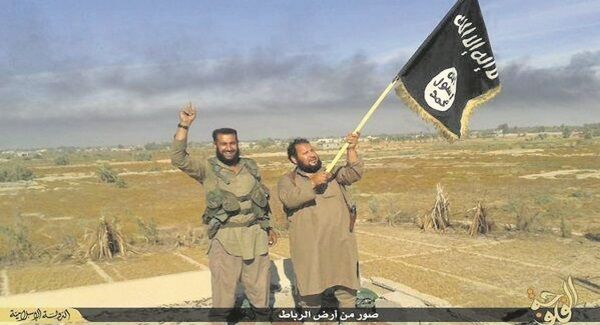
The best option is to work more closely with Kurdish troops and select Sunni tribes in both Iraq and Syria.
This means providing intelligence, arms, and being willing to send more soldiers — more than the 3,500 Americans are already there, and possibly on the order of 10,000 — to train, advise, and help direct a military response.
Such an effort must be collective.
It can be informal — a ‘coalition of the willing’ that would include the US, France, the UK, Arab states, and even Russia under the right circumstances — or carried out under Nato or UN auspices.
The packaging matters less than the results.
Symbolic declarations of war, though, ought to be considered with caution, lest IS appear to be winning every day it does not lose.
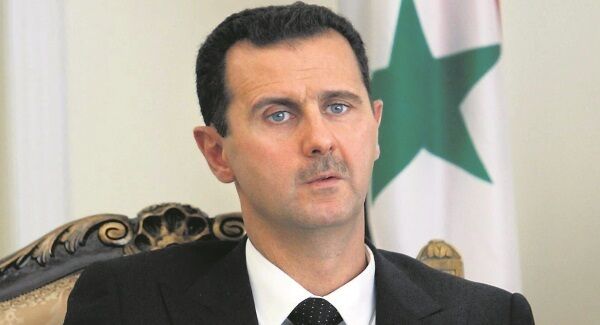
A diplomatic component is no less essential to any response. Syrian president Bashar al-Assad is a recruiting tool for the Islamic State and must go.
But any successor government must be able to maintain order and not permit IS to exploit a power vacuum, as it has done in Libya.
Moreover, orderly political change can be brought about only with Russian and Iranian support.
One near-term option worth exploring is a coalition Syrian government still headed by a representative of the Alawite minority, a concession that could well be the price of moving Assad out of power.
In principle, and over time, a more representative national government could come about, although talk of holding elections in 18 months is fanciful under any scenario.
However, reaching a compromise along these lines could well be impossible.
This is why increased military effort is needed to bring about larger and more secure enclaves that could better protect civilians and take the fight to IS.
Syria is not a normal country in any sense, and it will not be for a long time, if ever.
A Syria of enclaves or cantons is a more realistic model for the foreseeable future.
Other indispensable elements of any effective strategy include expanded help for or pressure on Turkey to do much more to stem the flow of recruits to IS.
And Turkey, along with Jordan and Lebanon, need more financial assistance as they shoulder the bulk of the refugee burden.
Arab and Muslim leaders can do their part by speaking out to challenge IS’s vision and delegitimise its behaviour.
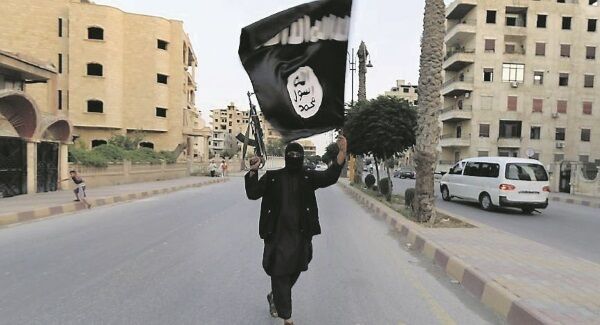
There is also a domestic dimension to policy. Homeland security and law enforcement — increasing protection both at borders and within them — will have to adjust to the increased threat.
Retail terrorists — individuals or small groups carrying out armed attacks against soft targets in open societies — are extremely difficult to deal with.
The threat and the reality of attacks will require greater social resilience and quite possibly a rebalancing of individual privacy and collective security.
What is also required is a dose of realism.
The struggle against IS is not a conventional war.
We cannot eradicate or destroy it any time soon, as it is as much a network and an idea as it is an organisation and a de facto state that controls territory and resources.
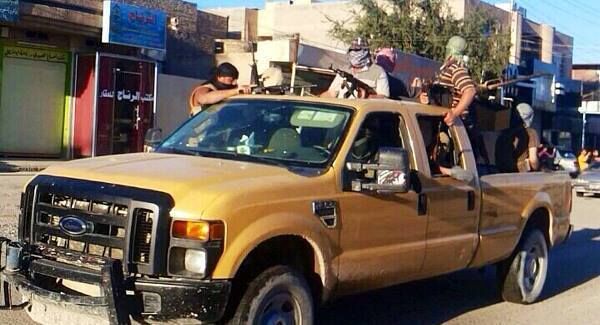
Indeed, terrorism is and will continue to be one of the scourges of this era.
The good news, though, is that the threat posed by IS to the Middle East and the rest of the world can be dramatically reduced through sustained, concerted action.
The main lesson of the attack on Paris is that we must be prepared to act over time and place alike.

CONNECT WITH US TODAY



Be the first to know the latest news and updates