Law of unintended consequences
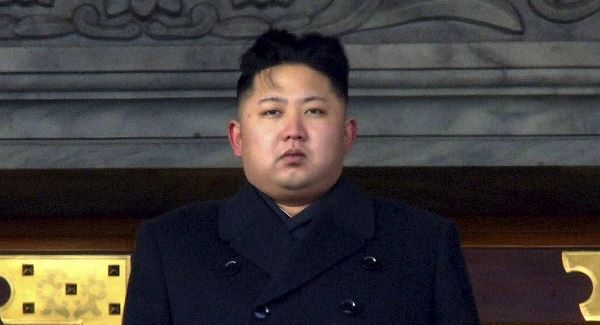
North Korea’s sabre-ratting against the US has actually left its strongest ally, China, feeling that it is being encircled, writes Paul Eckert.

Law of unintended consequences

NOBODY but Kim Jong-Un knows what he hopes to achieve with his sabre-rattling campaign, but the young North Korean leader probably didn’t set out to aid the United States — the sworn enemy of three generations of Kims — at the expense of his country’s main ally, China.

In a boon for US policy that can only add to China’s frustration with Kim, North Korean bellicosity has helped reinforce an American strategy of rebalancing its security policies toward the Asia-Pacific region.

To a China that often sounds more wary of Washington than of Pyongyang, months of North Korean missile and nuclear tests followed by a daily stream of bloodthirsty war threats may be worrisome, but the US reaction is even more troubling.

“We understand what kind of regime North Korea is, but we also understand games,” said Sun Zhe, director of the Centre for US-China Relations at Beijing’s Tsinghua University.

“Most importantly, we are complaining that the United States is using military drills as an excuse to continue to do this [rebalancing], putting up B2s and other advanced weapons systems,” he said.

B2 and B52 bombers, radar-evading F22s, and anti-missile system vessels like the USS John S McCain represented the initial US response to North Korea’s repeated, explicit threats to launch nuclear strikes against the United States.

The US also said it would shift THAAD (Terminal High Altitude Area Defense System) to defend Guam from missile attack. And Tokyo’s Yomiuri Shimbun newspaper said Japan would permanently deploy Patriot Advanced Capability-3 (PAC-3) anti-missile systems in Okinawa to counter North Korean missiles.

The US deployments, although focused on North Korea and mostly temporary, could be adapted or expanded to counter the extensive array of anti-access military capabilities Beijing has built up to delay or prevent the arrival of American forces to areas near China in the event of conflict.

Chinese President Xi Jinping may have underscored his nation’s ambivalence when he did not specifically name North Korea when he said no country “should be allowed to throw a region and even the whole world into chaos for selfish gain”.

Xi’s remarks at the Davos-like Bo’ao Forum on the Chinese island of Hainan might have been targeting Washington as well as Pyongyang, reflecting Chinese unease at the US “rebalancing” or “pivot” policy of winding down wars in southwest Asia and paying renewed attention to the Asia-Pacific region.

“In China, it’s widely believed that the pivot is a containment strategy of China. Almost everyone sees it as that,” Stephanie Kleine-Ahlbrandt, a Beijing-based China analyst for the International Crisis Group.

In a talk in Washington explaining the rebalancing policy and the Pentagon’s response to North Korea, US deputy defense secretary Ashton Carter did not mince words in addressing Chinese complaints.

“North Korea’s behaviour is causing not just the United States, but others in the region to take action,” he told the Centre for Strategic and International Studies.

“If the Chinese find them the kinds of things they don’t like to see, there’s an easy way to address that, which is to talk to the North Koreans about stopping these provocations.”

Carter was forceful and unapol-ogetic in present-ing the rebalan-cing as a continu-ation of post-war US policy that allowed allies Japan and South Korea, followed by South-East Asia, China, and India “to develop politically and economically in a climate that has been free from conflicts”.

“It’s good for us and it’s good for everyone in the region. And it includes everyone in the region. It’s not aimed at anyone, no individual country or group of countries,” he said.

Carter said the coming drawdown of forces from Afghanistan would allow the US navy to shift to the Pacific region surface combatant ships, carriers and other intelligence, surveillance and reconnaissance vessels.

Analysts who accept the rebalancing as based on sound geo-strategic principles nevertheless say Pentagon statements and force deployments should not be the most visible face of the Obama administration’s core Asia policy.

“We’ve oversold the military and undersold the diplomatic and economic components of the integrated strategy of the rebalance,” said Douglas Paal, a former US official who heads Asian studies at the Carnegie Endowment for International Peace.

“The reaction we’re getting from China is ‘they’re coming to get us, we’ve got to respond, we’ve got to step up our military development’”, he said.

When US secretary of state John Kerry visits China, Japan, and South Korea later this week in his first trip to the region as the top US diplomat, he will need to adjust his rebalancing sales pitch to China while he engages in Korea crisis diplomacy.

That will be a tall order in Beijing, where new President Xi is consolidating his rule with a political and military elite that is highly suspicious of US motives.

“When the economic, political and cultural elements were tacked on to the pivot, the Chinese said ‘oh, so now we’re being encircled economically, politically, and culturally, too’,” said Kleine-Ahlbrandt.

“The problem with trying to disabuse someone of a conspiracy theory is that any argument you make becomes part of the conspiracy, so I don’t know if it’s possible to convince the Chinese that it’s not about encircling them.”

x

More in this section

Revoiced

Newsletter

Sign up to the best reads of the week from irishexaminer.com selected just for you.

Cookie Policy Privacy Policy Brand Safety FAQ Help Contact Us Terms and Conditions

© Examiner Echo Group Limited