Hope for stranded Irish
ALTHOUGH I have lived in Ireland since 2001, I was born and raised on Boston’s southern fringe in what remains the “most Irish” area in the US.
This populace includes not just those who, like me, identify themselves as Irish-Americans, but many who are Irish-born. A majority of my friends’ parents are Irish emigrants, having opted for a new life in Boston as young people in the 1950s and 1960s.
The young men who my parents hired to undertake work on our house were invariably Irish. And in my various travels as a boy, I became nearly as accustomed to hearing a strong Irish accent as I did to hearing a strong Boston accent. There was never a sense in my mind that these people were any different to me; these were, in fact, my people.
Indeed, that ethnic identification, together with a shrewd political calculus, led my uncle, former US congressman Brian Donnelly, to draft and fight for the legislation that became known as the Donnelly Visa. The Donnelly Visa allowed thousands of Irish men and women who fled the difficult economic times this country experienced in the 1980s — many of whom I came into contact with as a boy — to become US citizens and to fully realise their American dreams.
The Donnelly Visa was followeda few years later by the Morrison Visa, which assisted tens of thousands more. Yet still, there were many who fell through the cracks, and many others who arrived in the US in later years and have had little or no opportunity to regularise their status.
A number of these men and women became my friends. Some did succeed in gaining green cards and/or citizenship; some returned home; some went to other countries; and some stayed in the US, opting for a life in the shadows of America over a life back in an Ireland that had been transformed beyond all recognition by a fleeting Celtic Tiger boom.
This latter group has been joined by thousands more young people who see no future in Ireland and, often because of extended family connections, are willing to take a chance in America. The anecdotes I hear from friends and relations back in Boston is that they are seeing and hearing new Irish in places such as Dorchester and Quincy all the time.
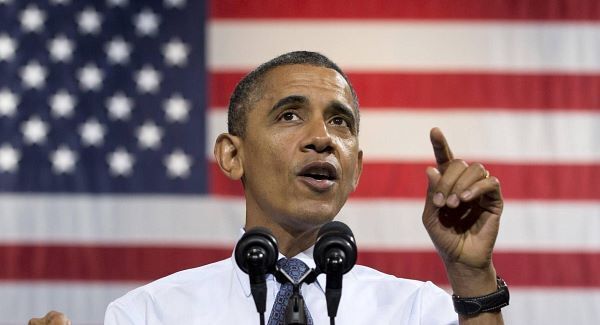
It is with this life experience as context that I became hopeful in the days after Barack Obama’s re-election on Nov 6. In his speech on election night, the president broadly hinted that comprehensive immigration reform would be part of his second-term agenda.
A more forensic examination of the election results in the days afterward quickly revealed why this is now on the agenda, for real.
The outcome of the hotly contested presidential election was in doubt in many quarters right up until election day. A number of “in-the-know” pundits, including the very highly regarded Michael Barone, author of The Almanac of American Politics, actually predicted that Republican Mitt Romney would rather handily triumph over Obama.
Barone and others attributed their forecasts to a sense that there was a decline in enthusiasm for the president that would depress turnout among the groups that supported him in 2008, especially young people and racial minorities. And turnout was down slightly among young people.
The turnout among Hispanic voters, however, was higher than it was in 2008. They now make up 10% of the American electorate. What’s more, the president’s share of the Hispanic vote improved in 2012.
The reason for the improvement is manifest. In 2004, President George W Bush, who favoured comprehensive immigration reform, received 44% of the Hispanic vote. In 2008, Republican John McCain, forced to disavow his earlier support for comprehensive immigration reform by the hard-right of his party, received just 31% of Hispanic votes.
It is no surprise then that, in 2012, Mitt Romney, who advocated “self-deportation,” received just 27% of Hispanic votes.
Sensible Republicans, who realise their party is staring electoral oblivion in the face unless they change the perception that they are anti-immigrant, have expressed their support for comprehensive immigration reform in the weeks since the election. They are joined by increasing numbers of previously reticent labour union leaders and evangelical Christians.
Now, a bipartisan group of eight US senators, including conservative Republicans such as Lindsey Graham and Marco Rubio, have proposed their own plan of reforms.
President Obama has just outlined his own reform proposal, which is similar to the Senate group’s. The key question, however, is whether there will be enough votes for comprehensive immigration reform in the US House of Representatives, which remains in the control of conservatives.
Whether, when, and how many House Republicans can be swayed by the prominent conservatives urging a rethink of the immigration issue are all open questions.
In the end, the process of devising and implementing comprehensive immigration reform will be complex, hard fought and drawn out. Reform campaigners rightly point out they have believed that progress was on the horizon in the past, only to have been cruelly disappointed.
But President Obama’s apparent willingness to spend hard-earned political capital to achieve it, and the rapidly changing demographics of the US, combine to provide more reason now than in a long time to believe that something will be done.
As the inevitable wrangling on Capitol Hill unfolds, my thoughts and prayers will be with the undocumented Irish — both those I know and those I don’t — back in my home city, where they add so much to its cultural and social fabric. I’m sure I’ll be joined by their families and loved ones throughout this island, as well as in Boston. Irish groups across the US are cautiously optimistic. Here in Ireland, so am I.
*Larry Donnelly is lecturer and director of clinical legal education in the School of Law at NUI Galway and legal counsel to Democrats Abroad Ireland
CONNECT WITH US TODAY



Be the first to know the latest news and updates