Five things to watch out for in Budget 2027
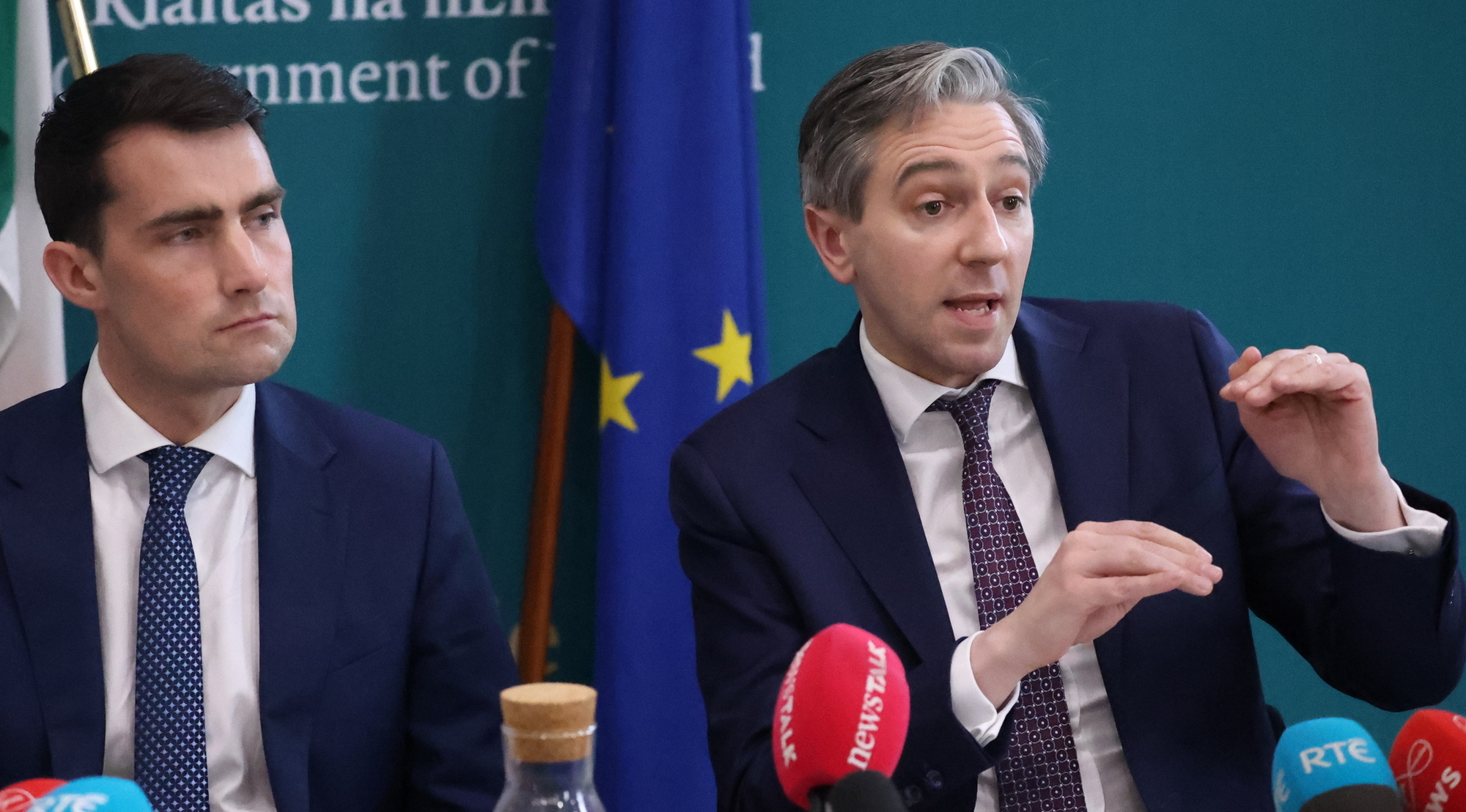
Jack Chambers (left) and Simon Harris (right) will unveil the Government’s Budget plans in the Dáil from 1pm on Tuesday. File picture: Stephen Collins/Collins Photos
Tax cuts, childcare, energy bills and welfare are all in the mix — but the real question is who will actually feel better off when Simon Harris and Jack Chambers unveil the Government’s Budget plans in the Dáil from 1pm on Tuesday.
After weeks of leaks, lobbying and increasingly fraught coalition negotiations, Budget 2027 is finally almost here.
But, even with an overall package of around €8.5 billion — including roughly €7 billion in additional spending and €1.5 billion in tax reductions — ministers have warned that nobody will be happy as the Budget is spread too thin.
But beyond the headline numbers and the grousing, what should households actually be watching for?
The Government has spent months promising a Budget for people who “get up early in the morning”, and an income tax package is now expected to be one of its centrepieces.
The big question is how far the Government goes with the tax bands and credits.
After last year’s Budget largely avoided changes to the main income tax bands and credits, even a relatively modest adjustment could produce a noticeable difference for middle-income workers.
The political calculation is obvious: the Coalition wants people in work to see something tangible in their payslips. It is largely expected that the entry rate for the higher 40% rate of tax will rise from €44,000 to €46,000. This would lead to people saving €400 a year (€33 a month).
But don't expect everyone to emerge a big winner. The overall tax package is limited, and the Government has other competing priorities.
The new higher-rate threshold, changes to tax credits and — crucially — whether USC gets any attention.
This could be one of the most significant measures for younger families.
The Government is preparing a "substantial" expansion of the National Childcare Scheme, targeted particularly at younger children.
Families with a child in full-time creche could save up to €1,000 a year, though that support is expected only to extend to children in Junior and Senior Infants who need after-school care.
The detail matters, though. How much will the subsidy increase? Which children qualify? When will the scheme kick in? And will the benefit actually reduce the bill parents pay, or be absorbed elsewhere in the childcare system?
While €1,000 a year is a lot of money in real terms, it is around €83 a month when some families are paying around €900 or more for a creche place.
The weekly and monthly saving for parents and exactly which age groups are covered and, crucially, when the cuts come into force. Previous increases to the NCS kicked in from the following January for Budget 2023, but from the following September — a full 11 months later — for Budget 2024.
Energy and fuel could be the most politically contentious part of the Budget.
The Government has already signalled that it intends to halt planned carbon tax increases on kerosene and home-heating oil for the remainder of its term. The Taoiseach has also confirmed a double Christmas payment for social welfare recipients.
A €5 weekly increase in fuel allowance is also expected, while the Government has been wrestling with whether to provide a wider energy intervention as prices remain elevated.
For households filling an oil tank or driving long distances, these measures could matter considerably more than an income tax adjustment.
Whether the Government extends reduced fuel excise rates, what happens to home-heating oil and whether there is any broader cost-of-living payment.
The Government appears to have settled on increases of around €10 a week for the State pension and other core welfare payments and there is also expected to be a €500 cost-of-disability lump sum payment, while the fuel allowance is likely to rise by €5 a week.
Those measures will be closely watched because the Government is trying to strike a difficult balance: provide meaningful help with higher prices without returning to the very broad, expensive cost-of-living packages seen in previous years.
There could also be more targeted help for people living alone, an issue ministers have been examining as energy costs rise.
The exact weekly welfare increase, the scale of the disability payment and whether additional targeted supports make it into the final package.
This may be the most important story underneath all the giveaways. Departments have been fighting hard for extra money, while public expenditure minister Jack Chambers has been pushing to keep spending growth at around 6%.
The Budget comes with a sizeable spending envelope, but much of the €7 billion increase is already effectively committed to areas such as inflation, demographics and existing public service pressures — as well as a public sector pay deal.
Meanwhile, Government negotiations have been described as unusually difficult, with some suggesting that ministers felt that Mr Chambers would not commit to his summertime statements about the tightness of this year's Budget.
Then there is the tax take. Corporation tax receipts have surged, creating more room for manoeuvre — but the Government remains wary of treating unusually strong revenues as permanent money.
So tomorrow's real test isn't simply about who gets what. It is whether the Government can deliver noticeable improvements for households while convincing economists and voters that the spending is sustainable.
For most households, the Budget will ultimately come down to a handful of numbers: what happens to your tax bill, your childcare bill, your energy costs and your weekly welfare payment.
The Government has clearly decided that this is a Budget where people need to feel some benefit. The question on Tuesday is whether they will feel it enough.
And, perhaps just as importantly, whether they will still feel it when the bills arrive next year.
- Paul Hosford, deputy political editor


CONNECT WITH US TODAY



Be the first to know the latest news and updates