Teachers 'in this for the long haul' after first day of work-to-rule industrial action
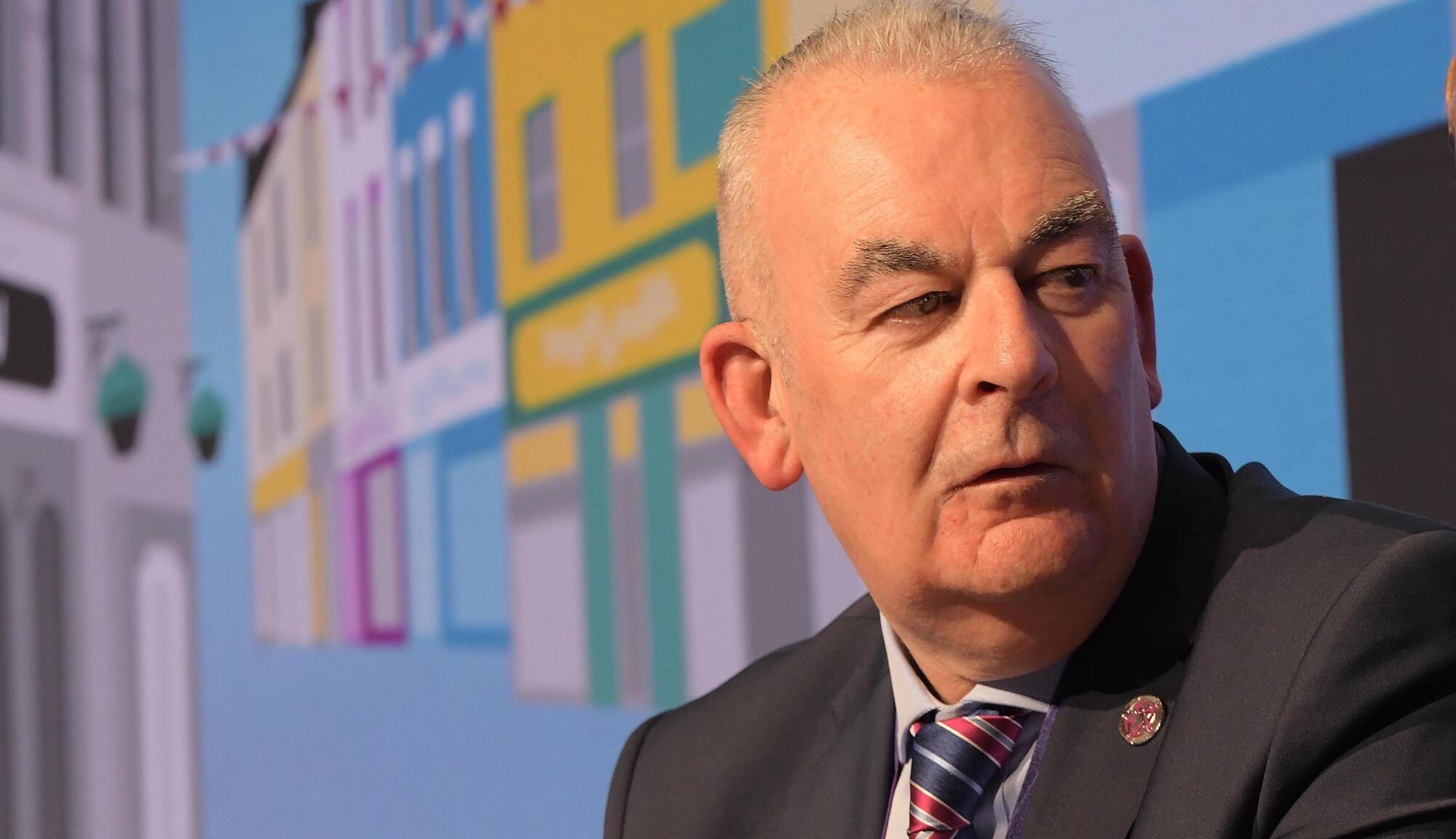
iNTO general secretary John Boyle said the primary teachers’ union was prepared to increase action if necessary. File picture: Moya Nolan
Teachers taking industrial action are “in this for the long haul” as preparations ramp up for expected national strike action later this month.
Monday marked the first day of work-to-rule by members of the Irish National Teachers’ Orgnisation (INTO) and the Association of Secondary Teachers Ireland (ASTI).
From next Monday, the Teachers’ Union of Ireland (TUI) will also begin its industrial action, ahead of an expected 24-hour work stoppage as part of a proposed countrywide strike on Wednesday, October 14.
Should this action go ahead, thousands of schools across the country will shut for the duration of the stoppage.
On Monday, general secretary of the INTO John Boyle said the primary teachers’ union was prepared to increase action if necessary.
"We'll have to ratchet up the work-to-rule action, as most other unions will be doing as well, because we're in for a long battle here,” Mr Boyle told RTÉ.
INTO Central Executive Committee representative Edel Polly said teachers wanted the Government to commit to a discussion on pay ahead of negotiating any new pay deal for the public sector.
“The feeling from teachers on the ground is that we’re in this and we’re in this for the long haul,” Ms Polly said.
“The teachers themselves are okay about it, some principals are concerned about health and safety, but we can’t offer supervision in the morning or afternoons because it comes out of our Croke Park hours.
“The feeling is ‘we’ve started, we’re in it and we’re in it until we get what we’re looking for', which is simple enough. All we want is for the Government to come to talks and we talk about money first, instead of productivity first.”
Monday marked the "initial" stages of industrial action ahead of proposed strike action on October 14 and 21, said Linda Kelly, the new ASTI general secretary.
"We’ve had extensive discussions internally around what phase two, and possibly a phase three will look like, but certainly we see this as a tiered approach until there is a meaningful set of pay proposals from Government.”
Teacher and ASTI member Gavin Murphy said the action beginning on Monday was “relatively new” for a lot of more recently qualified teaching staff.
“There’s a sense amongst staff that we’re going to take things very seriously, and the fact that the ASTI vote was 95% in favour [of industrial action] is an indication as to the level of support.
“I think teachers would like to see meaningful negotiations and to get a resolution as quickly as possible,” he said.
Monday also marked the beginning of industrial action taken by the Irish Federation of University Teachers (IFUT) which staged one-hour demonstrations at university campuses across the country. IFUT is also due to join the proposed countrywide strikes on October 14, as is union Unite, which also represents college staff.
A spokesperson for the Department of Public Expenditure said: “The trade unions and representative associations have made a decision to move to industrial action rather than engaging in substantive talks, and this action has now commenced across many areas of the public service.
“It is deeply unfair on the general public for there to be significant disruption to their daily lives because unions are unwilling to sit down and negotiate a new agreement.”
Public expenditure minister Jack Chambers said he had “repeatedly indicated” the Government’s desire to reach a new agreement.


CONNECT WITH US TODAY



Be the first to know the latest news and updates