Ireland can use its EU presidency to fight extreme far-right influence
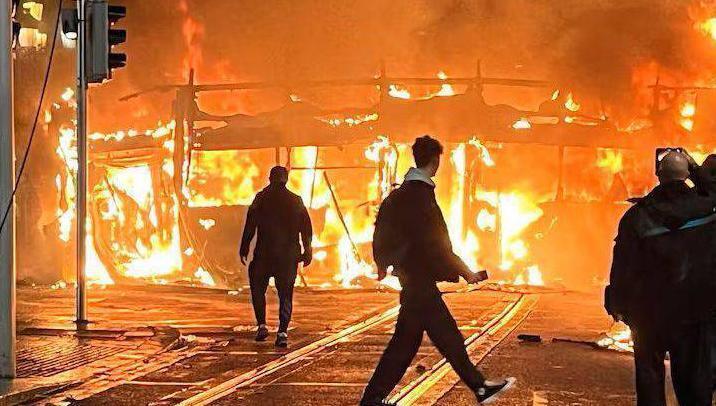
Racism is on the rise in Ireland. People are being forced to leave their homes. Houses and premises continue to be burned out.
The EU can be instrumental in the fight against extreme far-right influences, hatred, and racism, and the Irish government would do well to put this on top of its priority list for the EU presidency.
There is a window of opportunity to push this agenda right now, with political indicators that people can be won over again to more consensual politics, away from the hard right.
Only last week, the US Supreme Court rejected Donal Trump’s attempt to amend the constitution, and reaffirmed birth on US soil as a guarantee of US citizenship.
In a UK opinion poll reported on June 21, two thirds of British people backed a move for the UK to re-enter the EU. This coincides with the loss of two by-elections by Nigel Farage’s Respect party in recent times, at Makerfield a fortnight ago to Labour, and another at Gorton and Denton four months ago to the Greens.
Almost immediately, with Andy Burnham installed as a newly-elected MP a fortnight ago, a presumed Burnham-led Labour government brought the Labour voting share to 27%, the most popular party in the UK, narrowly outflanking Respect at 26%. Significantly, most Labour voters indicated they would be voting tactically in future, voting either Labour, Liberal Democrats or Greens.
Read More
In Ireland, a political opinion poll in late June registered the highest vote ever for the Social Democrats at 12%, hardening a consistent vote increase over several polls. The same poll indicated a drop of 2% in support for Independent Ireland, a party widely identified as typifying right-wing ideology.
But all these are still very new and fragile signs of hope that people and society are starting to reject the politics of the hard right. Despite this hope, the situation on the ground in Irish communities is gravely concerning and shows no signs of abatement.
Racism is on the rise in Ireland. People are being forced to leave their homes. Houses and premises continue to be burned out. In the past year, there has been an increasing prevalence, particularly in Dublin, of vacant housing being vandalized, or being spray painted with ‘Irish only’.
It is almost beyond belief now that on seeing a plethora of Irish tricolour flags in local communities, the immediate instinct is to view them as symbolic of racist, hard-right sentiment, and not a sense of pride in Irish national identity.
Most people will have noted that hard-right views are now hugely dominant on social media platforms and various publications’ comment sections. The dominance of the hard-right on social media is not an accident. It is well-planned.
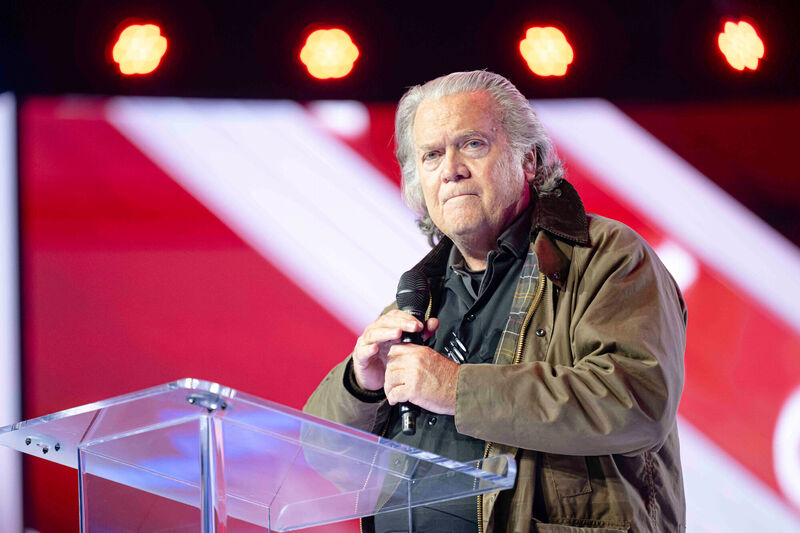
It also has a global reach, particularly to the MAGA movement in the US. It has been widely reported that Steve Bannon, the architect of Trump’s first election, has a presence in Ireland, and is a strong supporter to Independent Ireland. Bannon’s praise for Cork TD Ken O’Flynn has also been well reported.
There is a sophisticated use of social media by the far right to push it’s racist, anti-immigration ideology. The in April reported that there has been a huge surge in AI-generated fake influencers on Tik Tok, Instagram, Facebook, and YouTube, ahead of the US mid-terms.
The ability of far-right social media tactics to influence public opinion can be highly effective and seductive.
One tactic used by the far right on social media, as described by media researchers at NUI Maynooth, is the creation of ‘a sense of shared intimacy’, a sense of ‘we are all in this together’ between the influencer and audience.
One TD on the far right in Ireland is known to send out birthday wishes via text messaging to people not personally known to them, for example. But, once this type of relationship is built up, other more politically-motivated messages can follow.
Another tactic used by the far right is to stage viral stunts in real communities to gain attention and promote their message.
One notable far-right influencer/politician in Cork recently went to an area in the city where social housing was to be allocated, and filmed the people entering the houses, noting any differences in nationalities, while stoking racist sentiment, often to the cheers of an assembled audience.
The viral stunts amplified on social media often use bot-farms — essentially electronically set-up, automated trolls, which are programmed to design right-wing messages and likes based on themes of racial difference, and urging action against immigration.
A case in point was a meeting held last week by Cork Communities United against Racism. In a matter of hours of this meeting being reported on a local online news site, there were over 1,000 comments railing against the meeting, espousing hard-right sentiments.
Clearly, there were not 1,000 actual people commenting; most were bot-generated.
So, we are witnessing virulent levels of racism on the ground in Ireland, though there are early and tentative signs that party politics and voting attentions have started to swing more towards social justice, away from racism, hatred, and back to a more pluralist and fraternal national mindset.
This needs to be rapidly harnessed and built up as a central priority of the Irish presidency of the EU.
Opportunities for the mobilisation of hard-right sentiment, based on government actions, needs to be eliminated. Last week, the extension of the cuts on excise duties has deprived the hard right of planned opportunities to set up road block protests.
But far more deep-seated, people-centred policies, need to be expanded. Burnham has signalled a commitment to a more socially just suite of public policies. Our Government should do likewise, along with advocating for more progressive, caring, and redistributive welfare state policies across the EU.
The EU was founded and expanded by those such as Schumann and Delors, who knew that curtailing income and wealth inequalities, and the creation of caring and socially just welfare states was central to the EU’s mission.
They had learned that nazism had grown due to the social and economic misery in Germany of the 1930s.
The EU social model was placed centre stage since 1958, but has been eroded dramatically since the 1990s, alongside the surge in neoliberal economic and social inequalities.
Right now, Ireland needs to champion the re-discovery of the 'social model', the absence of which has created rampant poverty, homelessness, and societal disintegration across the EU in recent years.
The EU Central Bank has reported that median net wealth for those in the bottom 20% of households stood at €2,000 across the EU, rising to €1m for those in the top 20%. Meanwhile, the numbers of the ultra rich, holding more than €26m in wealth, increased by 26% over the past five years.
With EU house prices rising by 53% and rents by 17% from 2015 to 2024, largely driven by market speculation, EU homelessness has risen to 1.3 million. Even in a rich country like Germany, there are 530,000 people without permanent shelter.
Property speculation, not immigration, is the single biggest cause of house price growth, driven by increasing levels of wealth inequality.
Economic and social conditions such as these are fertile ground for the rise of fascism, and the setting of human beings in EU communities at each other’s throats.
The EU needs to rediscover its 'social model'. Ireland can lead this charge during its presidency.
- Tom O'Connor is an economic research and communications consultant, and a former head of department, applied social studies, MTU (Cork)
CONNECT WITH US TODAY



Be the first to know the latest news and updates